
Electrolux Washing Machine Error Code E43
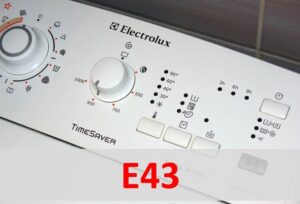 What components are affected by the E43 error in an Electrolux washing machine? The answer to this question is in the machine's manual. The code indicates a malfunctioning door locking device. A damaged triac, which controls the door locking device, could also be the cause. Let's figure out what to do in this situation.
Getting to know the design of the machine lock
If you notice a fault code on the display of your Electrolux washing machine, decipher the meaning. A description of each error is provided in the equipment instructions. After this, it will become clear which details of the “home assistant” to pay attention to.
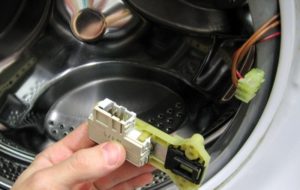
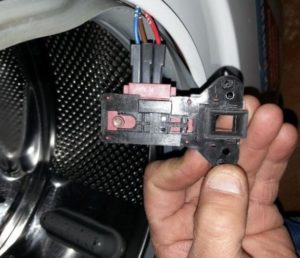
Error E43 indicates a faulty locking mechanism. Before diagnosing and repairing it, it's important to understand how the washing machine lock works. Modern Electrolux washing machines are equipped with bimetallic locking mechanisms. This is a rather complex mechanism consisting of: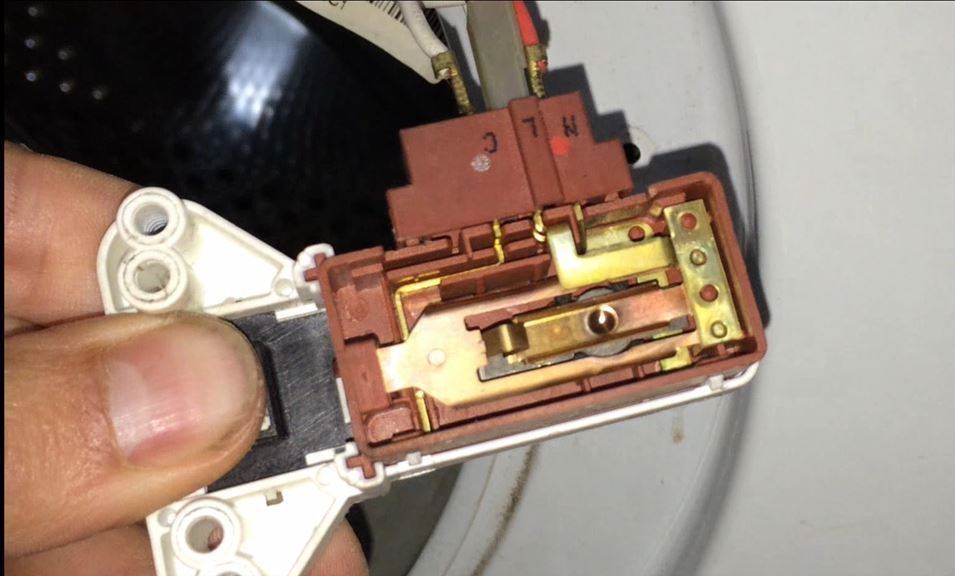
- bimetallic base;
- thermoelement;
- retainer.
Modern automatic Electrolux machines are equipped with bimetallic locks.
The operating principle of such UBLs is as follows:
- The washing machine control module supplies current to the thermoelement;
- the sensor heats up in a few seconds and transfers a charge to the metal plate;
- the plate expands, putting pressure on the “tongue”;
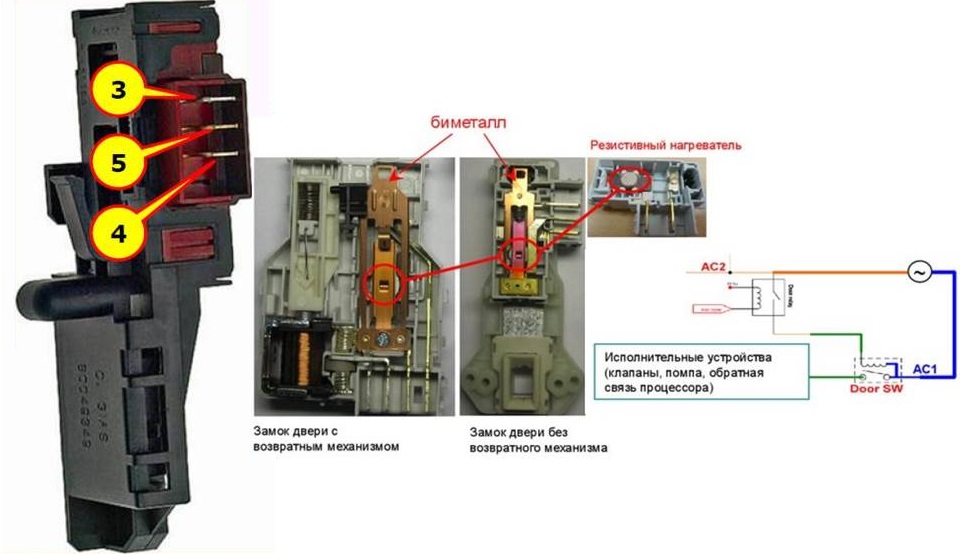
- the retainer falls into a special groove;
- the locking mechanism is activated, the washing machine door is locked;
- The washing machine starts filling the tank with water.
A distinctive click indicates the door lock has been activated. This means the system is now sealed. Only then does the machine begin to spin the drum and fill the tank with water.
The door opens in a similar manner. After the current is cut off to the heating element, the metal base cools, shrinks, and the latch returns to its original position, falling out of its groove. The machine is then unlocked. This process typically takes 2 to 5 minutes. If the washing machine still cannot be opened after this time, there is a malfunction in the mechanism.
Extraction and inspection of the UBL
Checking the lock yourself is easy. You don't even need to disassemble the washing machine to remove the lock. Here's how:
- de-energize the Electrolux washing machine;
- disconnect the machine from communications;
- open the washing machine door;
- unscrew the screws holding the door lock;
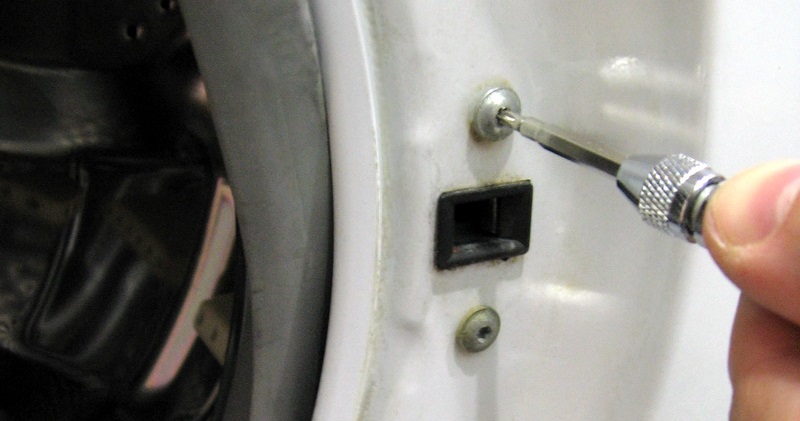
- remove the two bolts securing the washing machine housing cover;
- remove the top panel of the machine;
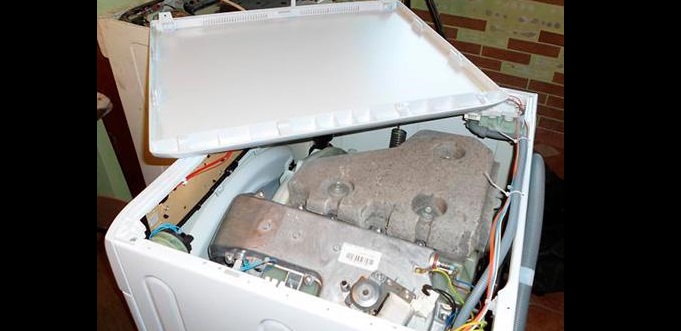
- run your hands down to the location of the UBL;
- disconnect the wiring connected to the blocker;
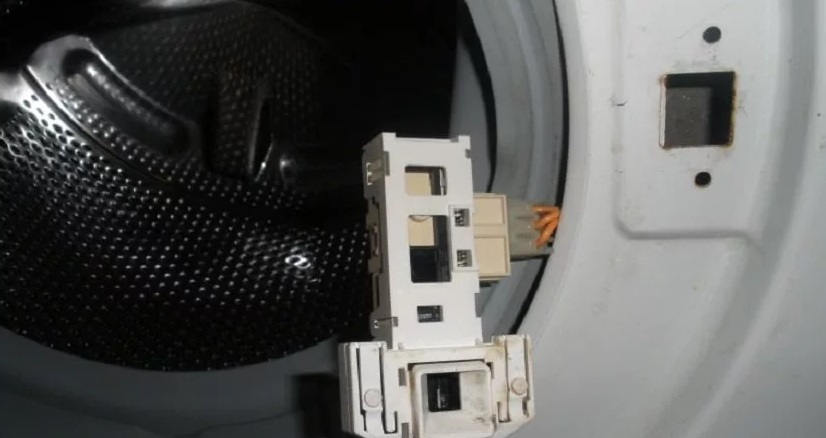
- get the lock.
Next, you need to check the hatch locking device. For this, you'll need a multimeter. Set the tester to ohmmeter mode, then apply its probes to the "hot" and "neutral" wires of the lock. The device's display should show a three-digit number; if not, the hatch locking device will need to be replaced.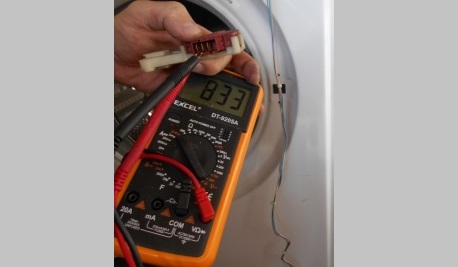
If the multimeter displays a three-digit reading, you can proceed to the next step. Connect a "dummy wire" to the common terminal of the locking device, and the other to the "hot" terminal. Then, use a screwdriver to slide the locking device's latch. Connect the circuit to the power supply. You should hear a click. If the lock doesn't click, it will need to be replaced.
When purchasing a new UBL, tell the seller the model and serial number of your Electrolux washing machine.
The new blocker is installed in a similar manner. First, the removed wiring is connected to it, then it is secured in place with bolts. Next, the top panel of the washing machine is attached, the machine is connected to the utilities, and a test cycle is run.
Finding and replacing the UBL triac
If no problems are detected during the door lock diagnostics, you'll need to check the control module. More specifically, the triac that controls the lock's operation. This will require removing the electronic unit from the washing machine housing.
This is done as follows:
- disconnect the washing machine from the power supply, water supply and sewerage system;
- unscrew the two bolts holding the top wall of the case, remove the “cover”;
- remove the powder compartment from the machine;
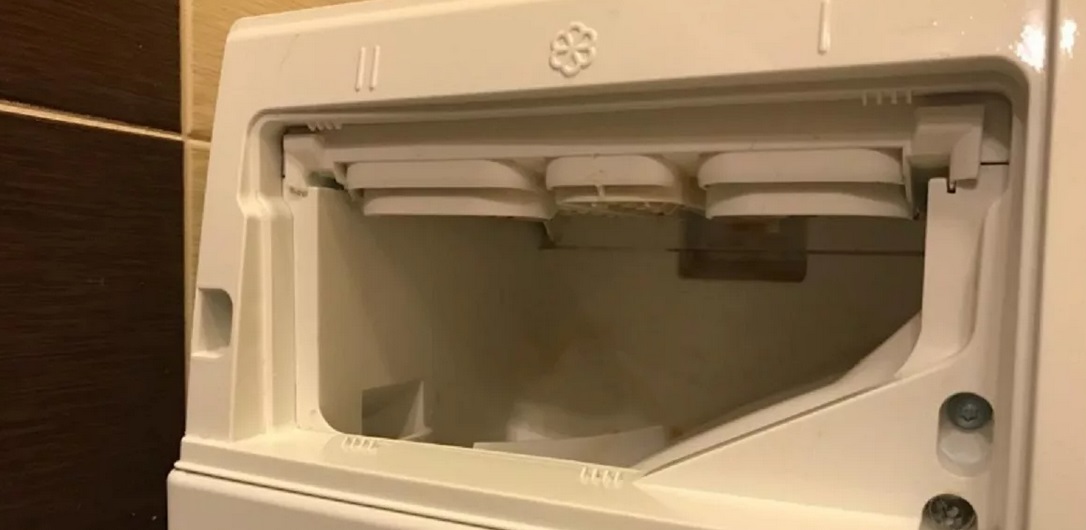
- remove the screws holding the dashboard;
- Having dealt with the latches, remove the dashboard;
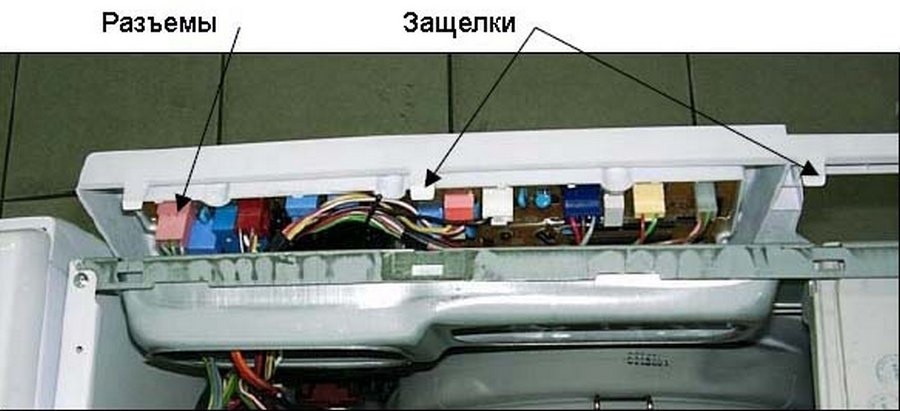
- Take a photo of the wiring diagram from the control panel to the module;
- remove the wiring, move the dashboard to the side;
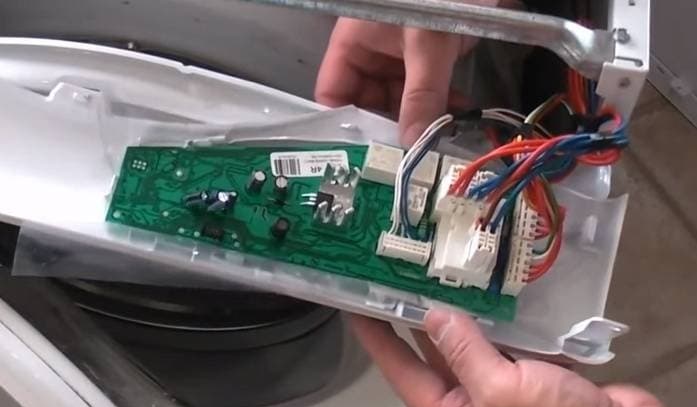
- Unscrew the bolts securing the electronic module;
- remove the board from the machine.
Triacs are semiconductors that continuously open and close throughout the entire cycle. They ensure the transmission of electric current in both the forward and reverse directions. Each element is responsible for the operation of a specific component of the washing machine.
A triac consists of a pair of crystals facing each other and a control electrode. The latter ensures the opening and closing of the semiconductor element. An open circuit can easily occur in the circuit, and the triac can also burn out due to a short circuit.
The location of the triac that controls the operation of the door locking device can be seen in the image below: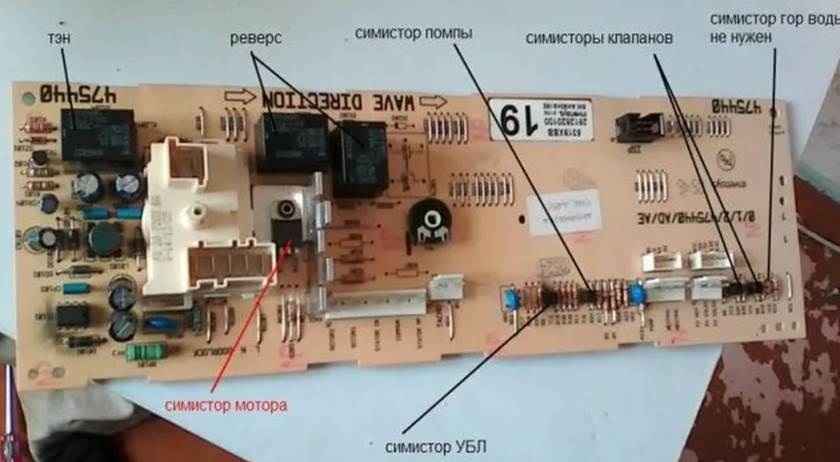
The triac is tested with a multimeter. Testing can be performed:
- with soldering of the semiconductor;
- directly on the control module.
The second method is much more convenient, as it allows you to test the triac without any additional manipulation of the board. However, the first method will provide the most accurate results.
How to test a semiconductor? The UBL thyristor has 3 contacts: a pair of power contacts and one control contact. The first ones are marked with the letters A1 and A2, the remaining one is G.
The multimeter is set to continuity mode, and its probes are placed against the power contacts of the triac. The tester display should show 1 or OL. This indicates the semiconductor is functioning properly.
Next, place one tester probe against the control contact, while the other remains on the power terminal. If all is well, the multimeter screen will display a value between 100 and 200 V. The faulty triac will need to be desoldered and a new one installed in its place. If you're unsure of your ability to handle the repair, it's best to entrust the work to a professional.
Interesting:
Readers' comments
Headings
Washing machine repair




For buyers




For users


Dishwasher




Add a comment