
Electrolux Washing Machine Error Code E50
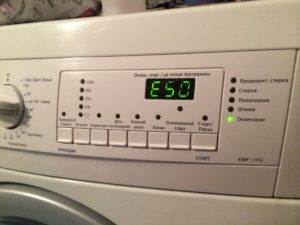 When your Electrolux washing machine suddenly refuses to continue its cycle, the first thing to do is check the control panel. Models with a display will display an error code, while those without a display will start flashing indicator lights in a specific pattern. If the E50 error is the culprit on your Electrolux washing machine, then we can confidently begin searching for the problematic "core." What and where to look?
Initial actions
If your Electrolux washing machine displays error code E50, there's no need to immediately disassemble the unit and look for the fault. This combination indicates a whole range of problems, from the tachometer sensor to the control board.So, first, we "query" the machine. Simultaneously press and hold the "Start" button and the button next to it until a different code appears on the display. This is the code that needs to be remembered, as it will help us pinpoint the nature of the problem.
You can fix the E50 error either with the help of a service center employee or independently at home.
The two-button method will also reset the machine. It's quite possible that a sudden system failure occurred, and there was no actual error in the machine's operation. You can also reset the washing machine the old-fashioned way: by turning it off and then on again.
Another common problem that triggers the E50 code is a malfunctioning drain. Almost every machine owner knows how to fix this: check for blockages in the drain hose, the debris filter, and the pump impeller. If restarting and checking fails, you'll need to take further action.
What causes the code?
Inaction is an option – the problem requires immediate attention, diagnosis, and repair. But making a correct diagnosis for the E50 error code can be challenging. This difficulty stems from the large number of possible malfunctions with the washing machine: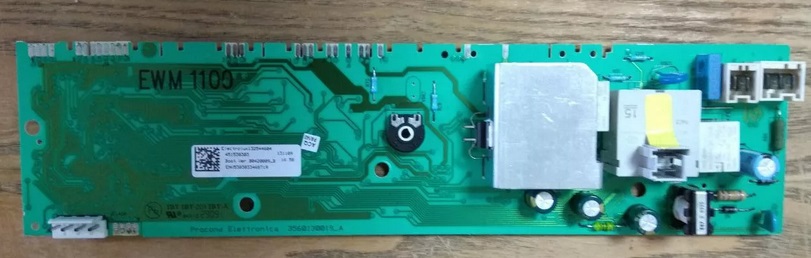
- short circuit of the control triac;
- failure of the tachogenerator;
- faulty motor;
- problems with the control board.
Error E50 indicates problems with the tachogenerator, engine and control board.
The extent of the upcoming repair depends on the nature of the problem. Most often, a quick and inexpensive replacement is required, but sometimes a costly one is necessary. control board firmwareTo avoid guesswork, it's recommended to troubleshoot sequentially, moving from simple to complex. First, check the Hall sensor and motor, and lastly, address the washing machine's "brains."
Let's check the tachometer
The first thing on the diagnostic list is the tachogenerator. To check it and repair it if necessary, you first need to locate the device. This shouldn't be a problem: all washing machines, regardless of brand, model, or year, have a Hall sensor in the same location—on the motor shaft. Accessing the device is easy.
- We disconnect the washing machine from the power supply and disconnect the drain and water supply hoses.
- Prepare screwdrivers and a multimeter.
- We unscrew the back panel of the case.
- We remove the drive belt.
- We find an electric motor.
- Pay attention to the small metal ring on the motor shaft – this is the Hall sensor.
It is not possible to remove the tachogenerator from the engine immediately; the engine must first be removed entirely.
- We mark the wiring connected to the engine or record all phases on the camera, otherwise there is a high risk of making a connection error during reassembly and burning out the motor.
- We unscrew the screws holding the engine.
- Using both hands, rock the engine from side to side, then quickly lift it out of its mounting location. Be prepared for this part to be very heavy.
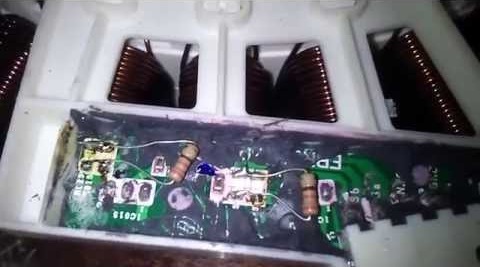
Once the engine and tachogenerator are in hand, diagnostics can begin. First, we conduct a visual inspection: for the presence of external mechanical damage and the reliability of the fasteners. Often the clamps in the terminals become loose or the contacts come loose, and the solution to the problem is to restore the previous balance.
If everything appears to be OK visually, it's time to test it with a multimeter. There are two ways to do this. First, set the device to measure ohms, then release the contacts and connect the probes to the exposed contacts. Next, evaluate the display: if 60-70 ohms is displayed, the sensor is working properly.
Another option is to measure the current generated by the tachogenerator. To do this, turn on the "Voltage" mode on the multimeter, attach the probes, and accelerate the engine by hand. If the display shows a value within 0.2 volts, the Hall sensor is working. Otherwise, replace the faulty device with a new one.
We carefully check the engine
If the tachogenerator is working properly, but the Electrolux display still shows the E50 error, then we need to look at the engine. To determine the cause of the engine failure, a comprehensive engine diagnostic is necessary. Typically, the following system components are at fault:
- collector lamellas;
- rotor and stator windings;
- electric brushes.
The most common "sufferers" are the lamellas, which deteriorate after a short circuit in the windings. Current surges cause the contact plates to overheat and peel off, which disrupts the motor's operation. The "layers" are fixed with an adhesive solution directly to the commutator, and the electrical connection is achieved by forming special hooks in the rotor section. The latter connection is often impossible if a fault causes the cord to break at the joint.
The situation is much worse when the lamellas delaminate during heating. Then, the current flowing through the lamellas and windings exceeds the operating level and can lead to unpredictable consequences. Delamination can be confirmed by slowly rotating the rotor with one hand: if a clear cracking sound is heard, there is a defect. Operation of such a unit is prohibited.
Peeling doesn't occur by accident. It can be caused by seized bearings or running the washing machine with the slats half-open during vertical loading. Such defects can also indicate serious motor problems or improper operation. If the peeling is small, up to 0.5 mm, it can be corrected by resurfacing the commutator on a special machine. Don't forget to perform a visual inspection, clean the housing of chips and dust, and manually smooth out any uneven areas.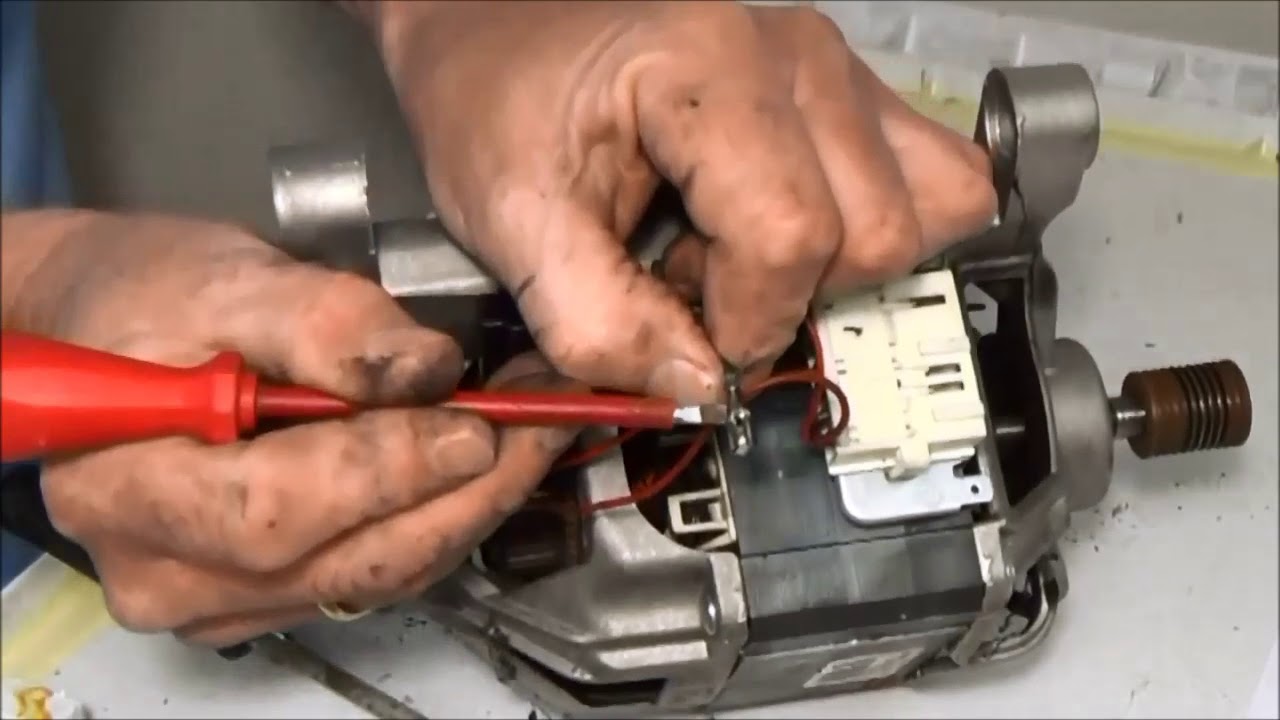
Another problematic area on the motor is the brushes. If they wear out, using the machine becomes risky. This is because when the carbon tips wear out, the brush body begins to rub against the motor housing, causing sparks. To minimize the risk of fire, the old pair should be replaced with a new one.
Electric brushes are changed only in pairs, even if one of them is almost completely worn out.
Choosing new parts should be approached with the utmost care. Replacements can be purchased through specialized stores, service centers, or online. In the latter case, simply enter your search query into any search engine, select your preferred company, contact their support team, check part availability, or place an order. You can navigate the range by the serial number of the washing machine, the motor, or the old model. There are no universal brushes—each engine requires its own tips. Hardness is also important, as too-hard carbons can damage the commutator.
If there are no problems with the brushes, winding, or fins on the motor, there's only one possible cause: a faulty control board. There could be several possible causes, but attempting to diagnose the problem yourself is not recommended. It's cheaper and more reliable to immediately contact a professional, as the electronic module is an extremely fragile and expensive system.
Interesting:

Readers' comments
Headings
Washing machine repair




For buyers




For users


Dishwasher




Add a comment