
Electrolux Washing Machine Error Code E60
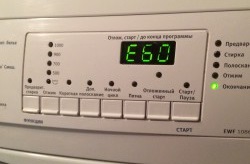 While the E60 error in an Electrolux washing machine is virtually unknown to city dwellers, those living in smaller towns and villages encounter it quite frequently. It's caused by power surges, which can occur outside of large cities and cause the interference filter to burn out. We suggest taking a closer look at this problem and learning how to fix it yourself.
The main reasons for the appearance of E60
The main cause of the E60 error code on an Electrolux transmission occurs not in the transmission itself, but elsewhere. A burned-out or overly sensitive interference filter is the culprit. The former is rare. As soon as the device detects a sharp drop or increase in voltage in the electrical network, a danger signal is transmitted to the control board and, for safety reasons, the system pauses the machine's operation. Even high-quality software sometimes cannot save from jumps and their smoothingstabilizer – the device still detects current fluctuations and switches on the protective mode.
The cause of the E60 error is often hidden in the sensitive interference filter.
There's only one solution: abandon the sensitive Electrolux washing machines and purchase a surge-resistant circuit breaker for your dacha or cottage. Currently, there's no other option, as the manufacturer isn't accommodating Russian consumers and doesn't adapt the interference filter to Russian conditions. Furthermore, it's impossible to reconfigure the machine even by changing the factory settings yourself, as the company doesn't supply the necessary software or provide any instructions.
How to test a noise filter?
When the display displays error E60, the first thing to check is the interference suppression filter. This requires finding it, testing it, and, if necessary, replacing it with a working one. It may have burned out, and without it, the system will not be able to start a new cycle. To diagnose the filter, you need to: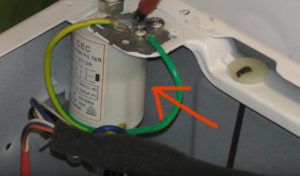
- disconnect the machine from the power supply, water supply and sewerage system;
- remove the top cover of the washing machine;
- find the hole through which the network cable passes;
- find the interference filter - a small part in a white or black plastic case that looks like a battery;
- remove the part by disconnecting the connector.
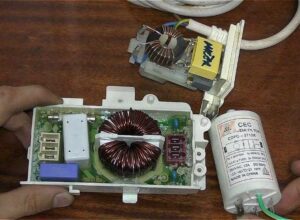
After taking the filter in your hands, you need to carefully examine it for traces of burning. In 98% of cases, burnt contacts and an unpleasant smell indicate a faulty part. When the symptoms are obvious, replacing the device can resolve the issue without further testing. If the battery appears intact, use a multimeter and check the part using the following procedure:
- we set up the tester for dialing mode;
- we apply the probes to the capacitor contacts;
- We measure the voltage at the input and output. If the device doesn't show current in the second case, the filter needs to be replaced.
It is impossible to repair a burnt-out interference filter; only replacing the semiconductor will help restore the machine's life.
If the filter burns out, your washing machine doesn't need repairs—even a novice technician can easily remove the faulty part and install a new one. You just need to select the right replacement semiconductor. A safe bet is to use the removed "battery" as a sample for the store sales assistant.
It's also easy to figure out what to do next. Bring the filter home, put it back in place, replace the lid, and connect the washing machine to the power supply. It's difficult to make a mistake during assembly, so there's a good chance the test wash will run without a hitch.
Interesting:


Readers' comments
Headings
Washing machine repair




For buyers




For users


Dishwasher




Add a comment