
Error E60 in a Zanussi washing machine
 Many technicians consider troubleshooting the E60 error code on a Zanussi washing machine quite challenging. The error code seems easy to decipher at first glance: "equipment overheating," but identifying the specific part that's overheated is challenging. Even diagnosing a range of components isn't always successful.
What exactly broke?
If your Zanussi washing machine displays error code E60, it means the water temperature set by the program has exceeded the set temperature. Do not operate the machine with this error, as it could permanently damage the machine. The most common factor leading to the occurrence of this error is considered to be incorrect operation of the temperature sensor. There are two signs that indicate this malfunction:
- The Zanussi washing machine overheats the water on any setting, bringing it to a boil - steam comes out of the open door, and the body becomes very hot;
- At a temperature set at 60-90 degrees, the water, on the contrary, does not heat up - twenty minutes after starting the machine, the door remains cold.
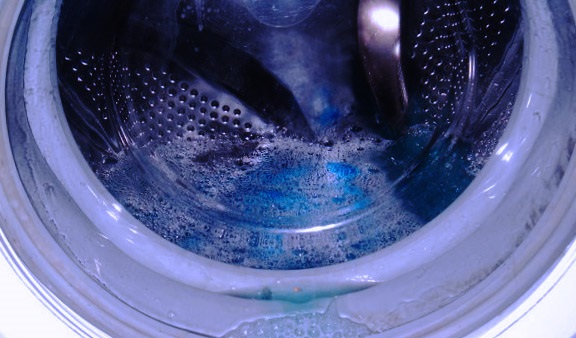
What should you do in this situation? If the heating is insufficient, you'll simply end up with poorly washed laundry. However, if the E60 error code indicates overheating, the heating element may be faulty. Replacing the heating element will be quite expensive, so it's best to turn off the appliance and try to repair it. This will require removing the old sensor and installing a new one, after performing a test first.
Testing the sensor correctly
The temperature sensor is located inside the heating element. Repairing it will require some disassembly of the machine. Some Zanussi machines have the heating element located at the front. The disassembly procedure is as follows:
- de-energize the equipment;
- remove the top cover using a screwdriver (unscrew the screws at the back, move the cover towards the hatch and lift it);
- pull the detergent drawer towards you by pressing on the tab inside (it is located in the conditioner compartment);
- unscrew the bolts on the sides of the instrument panel and remove it carefully so as not to tear off the wires;
- carefully separate the decorative panel;
- loosen the clamp on the hatch and insert the seal into the drum (do not remove the rubber, as it will be difficult to install it back);
- remove the wires from the Zanussi washing machine door lock;
- remove the front panel and free the heater from the wires;
- remove the sensor from the heating element.
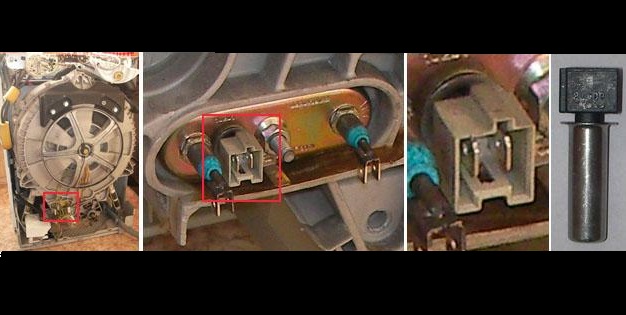
On other models, the heater is located at the rear. To remove the temperature sensor yourself, you'll need to remove the rear panel, first unscrewing the mounting screws. Then, remove the drive belt and the heating element wiring. Finally, remove the thermistor. After that, test the temperature sensor with a multimeter. Follow the instructions for using a multimeter.
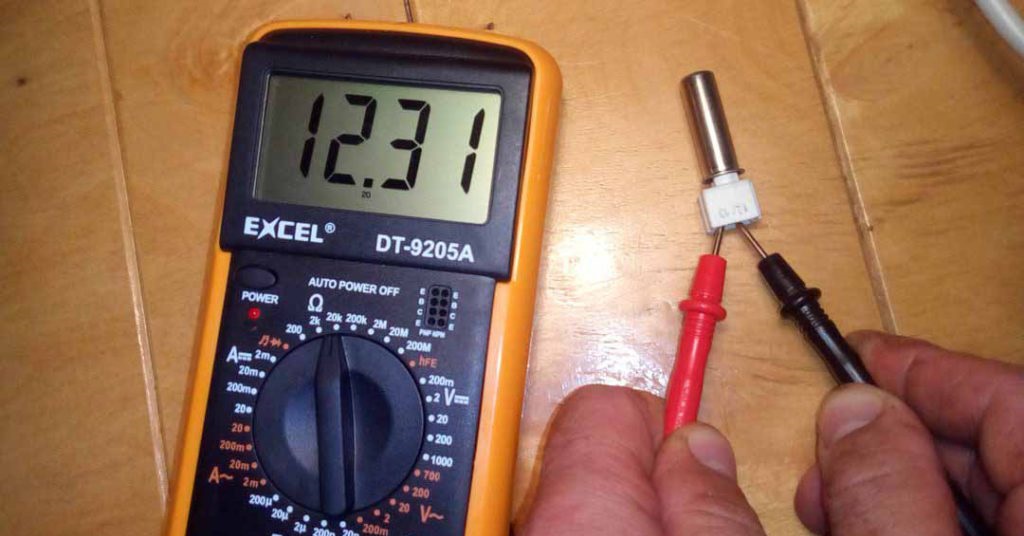
- Set the multimeter to the “Resistance” mode.
- We connect the probes to the sensor contacts.
- Remember that when the sensor is heated to 20 degrees, the resistance value will reach 6,000 Ohms.
- We place the thermistor in hot water and look at the readings.
- If the resistance drops, the device is in working order (at a water temperature of 500, the resistance does not exceed 1350 Ohm).
If you discover that the sensor is damaged, it cannot be repaired. Before purchasing a new part, write down the serial number of the old part. Keep in mind that improper or poorly installed rubber seals or sensors can cause leaks, so do not remove the heating element unless absolutely necessary.
Important! The thermistor must be inserted into its socket very tightly to prevent leaks. Do not use glue or sealant to ensure a secure connection.
After replacing the part, reassemble the washing machine in reverse order. First, connect the wiring to the heater, then replace the panel, door lock, rubber seal, control panel, dispenser, and lid. Then run a test cycle without laundry or detergent.
Interesting:




Readers' comments
Headings
Washing machine repair




For buyers




For users


Dishwasher




Add a comment