
Error EF0 in an AEG washing machine
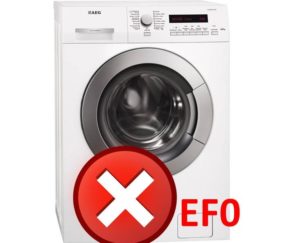 When owners see the EF0 error code on their AEG washing machine's display, they begin to tackle the problem in their own ways. Some try diagnosing the float sensor, others immediately replace the power filter, and still others reflash the control board and completely damage the machine. To avoid experimenting and risking the machine, it's best to know in advance that this code is generic and requires clarification by running a self-diagnosis cycle. How do you run a test wash, and what are the consequences?
How to enter service mode?
Repairing a washing machine is a complex undertaking, so before you begin, it's important to be honest about whether you can handle the potential problems and whether the effort is worth it. If the risks are not justified or there are any doubts, it is better not to tempt fate and call a professional from a service center. Especially if the machine is still under warranty.
Error EF0 is general, and to determine the cause of the failure, it is necessary to run the self-diagnostic system.
Confident and experienced owners can try to resolve the EF0 error themselves. Modern machines have a smart self-diagnostic system that alerts to malfunctions through specific patterns. To correctly read the "message" from the washing machine, you'll first need to erase the displayed code and then run a test wash.
- We check that the machine is not washing, but do not turn off the machine from the power supply.
- Press and hold the “Start/Pause” buttons and the “Delayed start” button located next to it.
- While pressing the keys, switch the programmer to the first position. If the dashboard lights start flashing, the first stage has been completed successfully.
- Release the buttons and move the gear selector forward clockwise. In this position, the washing machine will pause and begin testing the system for possible malfunctions.
- Move the switch to position 10, labeled "Women's Lingerie." The system should display the EF0 error again.
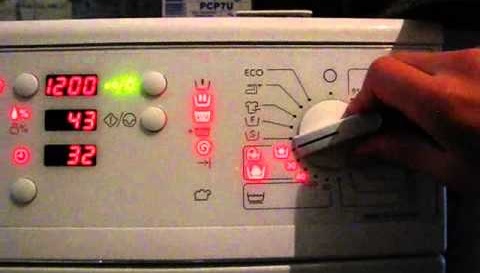
Now you need to simultaneously press the "Start/Pause" and "Delayed Start" buttons again to clear the error from the device's memory. If after 2-4 seconds the machine displays the E00 code, the task is complete and the system has been updated. All that remains is to unplug the machine, wait a couple of minutes, and then restart it. As soon as "ELE" appears on the screen, the machine will attempt to correct the error and begin a test cycle.
Why did we do this?
As soon as the washing machine starts self-diagnostics, you need to be nearby and monitor the machine’s display. The system will prompt you what to do next by displaying a new code on the screen or making characteristic sounds. It's best to immediately write down the displayed combination on a piece of paper or take a photo, since there's a 95% chance the updated error will pinpoint the problem.
Knowing the final code, you can easily identify the cause of the failure. You just need to correctly decode the system signal:
- C1, E10 or a single beep – problems with water intake;
- C2, E20 or 2 signals – you will need to clear the blockage in the drainage system;
- C3, F3, EF3 or triple beep – the Aquastop system has been activated;
- C2, E40, 4 signals – UBL;
- C9, E50, 9 signals – engine malfunction, imbalance;
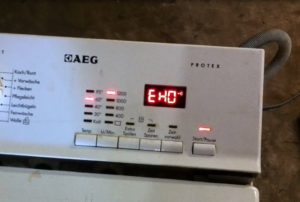
- Eb0, EH0, beeping sound repeated 11 times – problems with electronics;
- EF1, EF2, 15 signals – pump clogged or increased foaming;
- CE – problems with the dispensary;
- CF or T90 – control board failed;
- E80, 8 – the programmer is faulty (you need to “set” zero).
The test cycle does not threaten the warranty, you just need to report the test performed.
Once the problem is identified, you can repair the machine yourself. The key is to follow the instructions, and if in doubt, contact a professional.
Interesting:
Readers' comments
Headings
Washing machine repair




For buyers




For users


Dishwasher




Add a comment