
Error F03 in a Leran washing machine
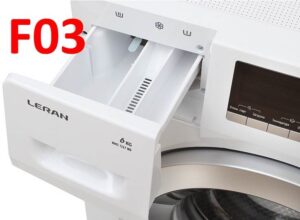 What does error code F03 mean in a Leran washing machine? This code indicates a drainage problem. The washing machine is unable to drain wastewater from the drum into the drain.
Typically, the error code appears on the display mid-cycle, when the machine finishes washing and begins rinsing. In some cases, the error appears immediately after turning on the washing machine. Let's figure out what to do if the F03 error code appears on the display.
Why doesn't the waste go away?
Having noticed error F03 on the display, you need to find the cause of the malfunction. The problem could be a clogged debris filter, a burnt-out pump, or a faulty electronic module. Complicating matters is the fact that "dirty" faults have similar symptoms. Therefore, it's necessary to check all the draining components one by one.
Draining waste from the washing machine becomes difficult due to internal or external blockages, problems with the drainage hoses, or failures of the pump and control module.
So, the reason for the incorrectly functioning drain may be:
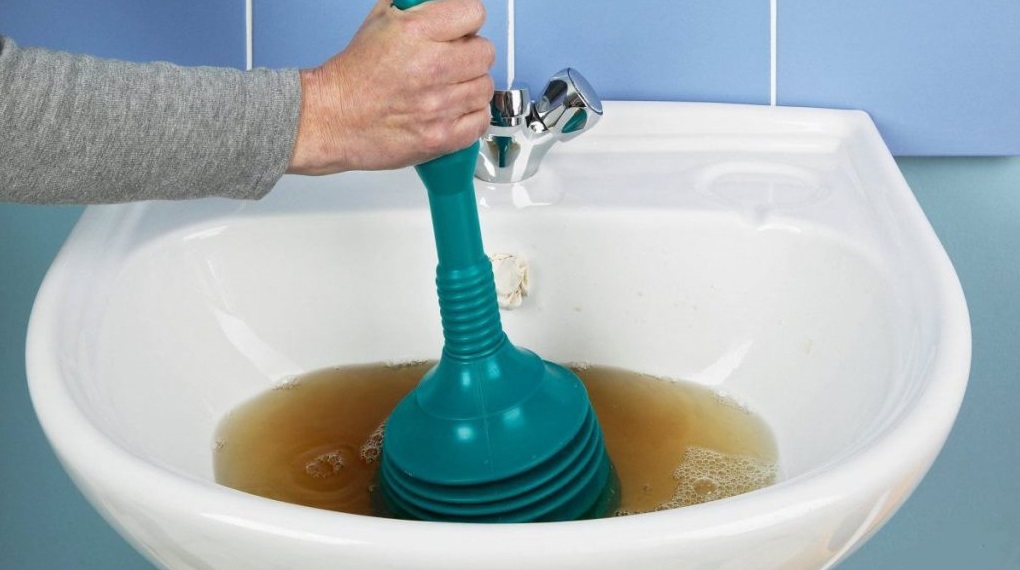
- a blockage in the siphon or sewer pipe (to rule out the problem, check how the water drains from the sink or bathtub);
- internal blockage of the drainage system elements (we are talking about the debris filter, drainage hose, and the pipe connecting the tank and the pump);
- A failed pump. A broken pump makes a loud noise when trying to pump water, but fails to direct it into the sewer. The part fails due to normal wear and tear or a short circuit. Sometimes the cause is debris wrapped around the impeller blades;
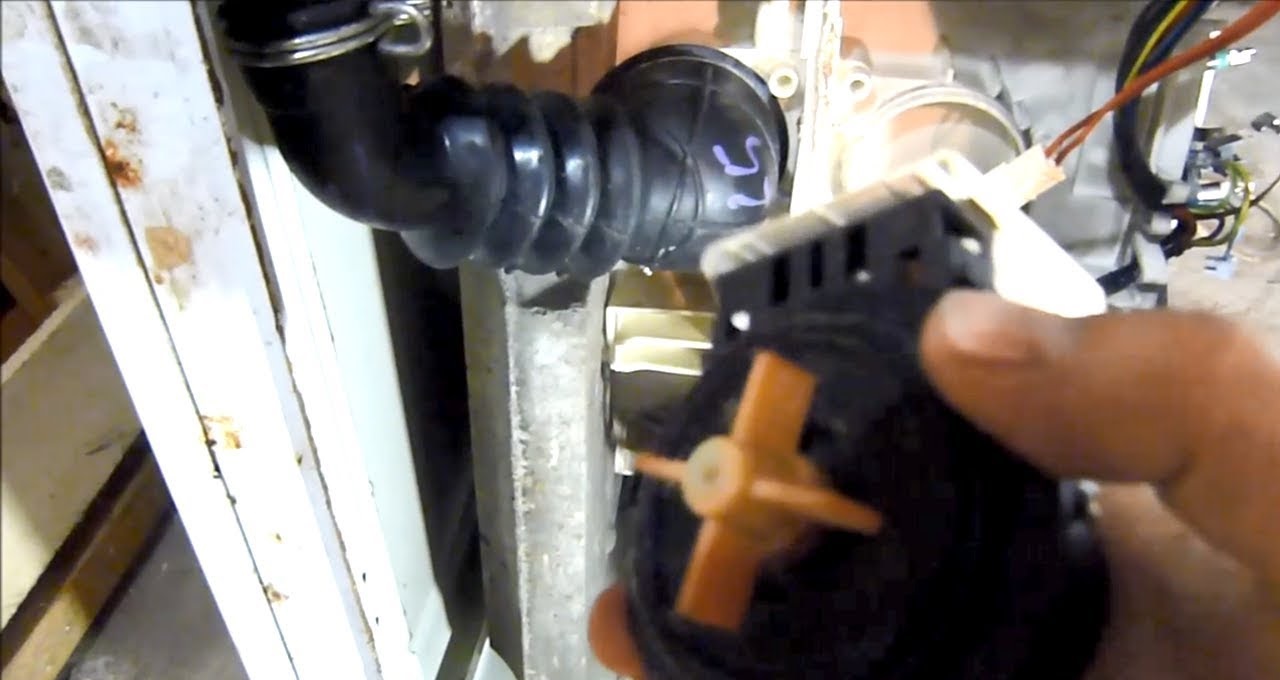
- A faulty electronic module. The control unit can fail due to a manufacturing defect, power surges, a short circuit, moisture on the board, or a simple technical glitch;
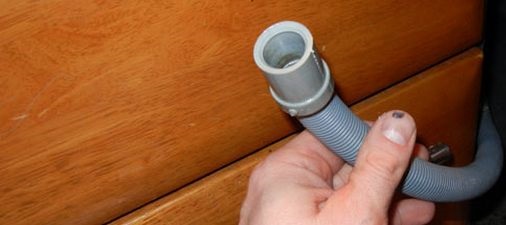
- Incorrectly selected drain hose. Leran washing machines, like those of any other manufacturer, have pumps with a specific capacity. If you connect a 2-3 meter corrugated hose to the appliance instead of the standard 1.5 meter hose, the pump will not be able to pump water into the sewer.
Most problems can be resolved on your own. A specialist's help will be required if the problem is a damaged control module. Let's figure out how to begin repairing a Leran washing machine that displays the F03 error.
First, let's remove the waste water
If your washing machine displays an error code mid-cycle, it's stuck with a full tank of water. The first step is to drain the water from the washer and remove the laundry from the drum. There are three forced drain options:
- through a trash filter;
- through the emergency drain hose;
- through the drain hose.
It's easier and faster to drain the water through the main hose. Most Leran washing machines don't have a check valve in the hose, so there won't be a "siphon effect." Simply lower the corrugated hose below the drum level, and the water will drain by gravity into the drain. After unlocking the door lock, open the drum door and remove the wet laundry.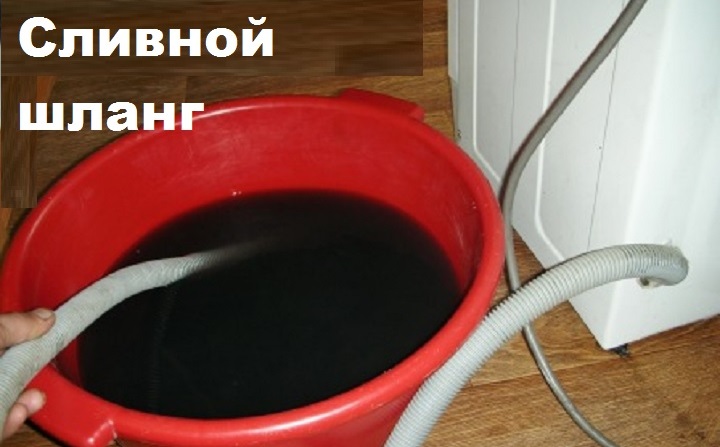
Some Leran models are equipped with an emergency drain hose. In this case, it is recommended to drain the water through it. The hose is located at the bottom of the housing, behind the access door, near the debris filter.
The final option is to drain the water through a filter. In this case, the procedure is as follows:
- disconnect the washing machine from the power supply and water supply;
- prepare a low but capacious container to collect water;
- open the service hatch and find the trash filter;
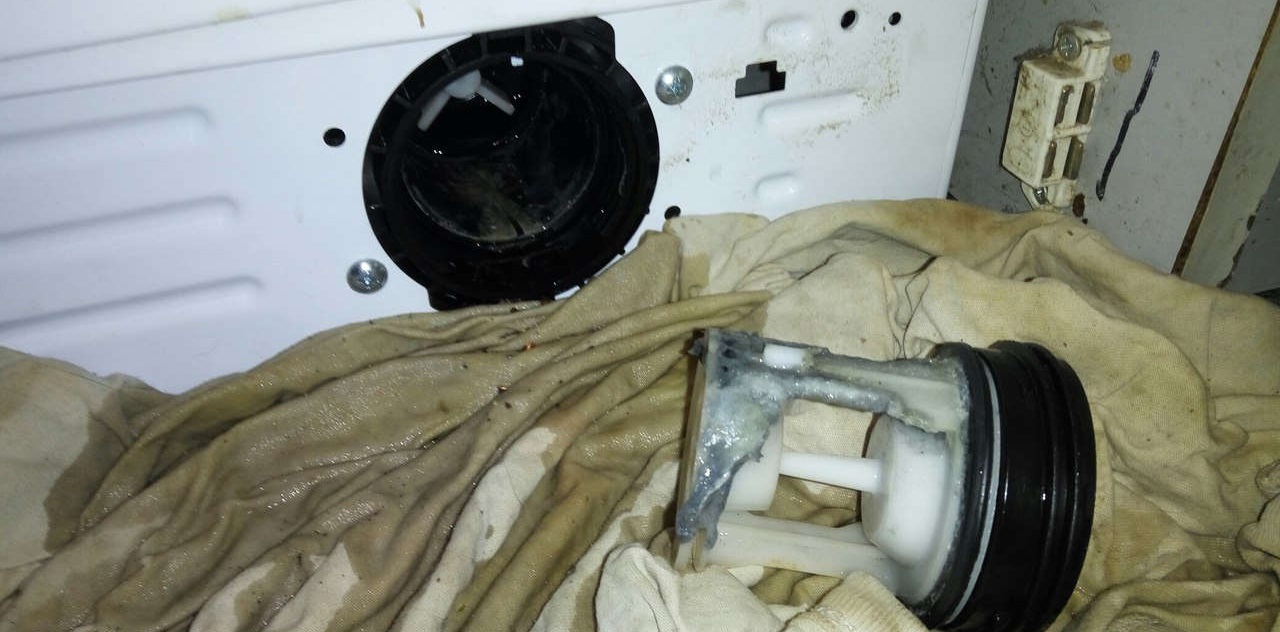
- cover the floor near the washing machine with rags;
- Place a container under the machine to collect water, in the area where the waste filter is located;
- turn the drain plug half a turn and wait until some of the water drains;
- Unscrew the filter completely.
If the waste filter is unscrewed and the water does not drain, then the cause is a clogged drain pipe coming from the tank.
Then you'll need to disconnect the drain hose. Once the washing machine is empty, you can begin troubleshooting. We'll explain the next steps.
Troubleshooting
An empty and de-energized washing machine can be repaired. If you drained the water through the drain hose or emergency outlet, you'll still need to remove the debris filter. The elements of the drainage system are checked in the following order: trash can, hoses, impeller, pump.
First, inspect the filter element. Scale and limescale often accumulate on the coil. If deposits are present, they need to be cleaned off.
The filter also stops flowing water when foreign objects—socks, coins, matches, paper—get stuck in it. Clean the coil.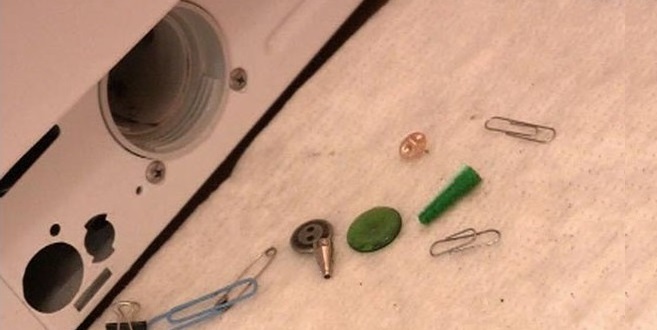
Be sure to check the filter housing. Debris and dirt can accumulate in the hole. Wipe the walls with a damp cloth.
Next, check the machine's main drain hose and the drain pipe connecting the tank to the pump. If any seals are visible, you'll need to disconnect and clean the components.
The drain pump's operation is ensured, among other things, by the impeller. When hair and threads become tangled around the impellers, the pump stops working. Therefore, shine a flashlight onto the filter seat and clean the impeller of any debris.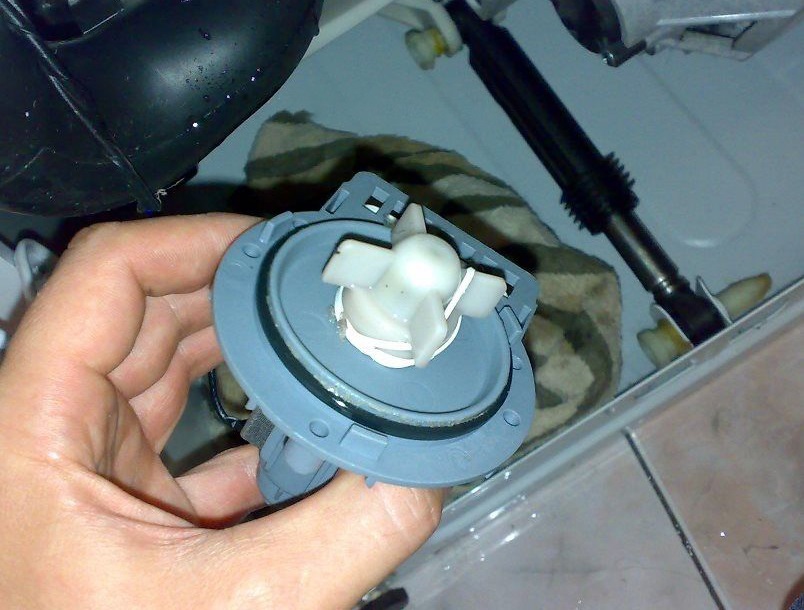
If a clog isn't the issue, you'll need to check the pump. To access the pump, you'll need to disconnect the power to the machine, lay it on its side, and remove the bottom. Then, unscrew the bolts holding the part in place and remove the element from the housing.
It's usually difficult to visually determine whether a pump is working properly. Pump diagnostics are performed with a multimeter. A burnt-out part cannot be repaired; new components will have to be installed.
The pump will have to be replaced.
If the machine was making a loud humming noise while attempting to drain the water before displaying the F03 error code, the pump is the culprit in 99% of cases. A broken pump cannot be repaired; the part will need to be replaced. The procedure is as follows:
- de-energize the washing machine;
- disconnect the drain and inlet hoses from the machine;
- lay the washing machine on its side (on the side where the powder dispenser is located);
- detach the body pan;
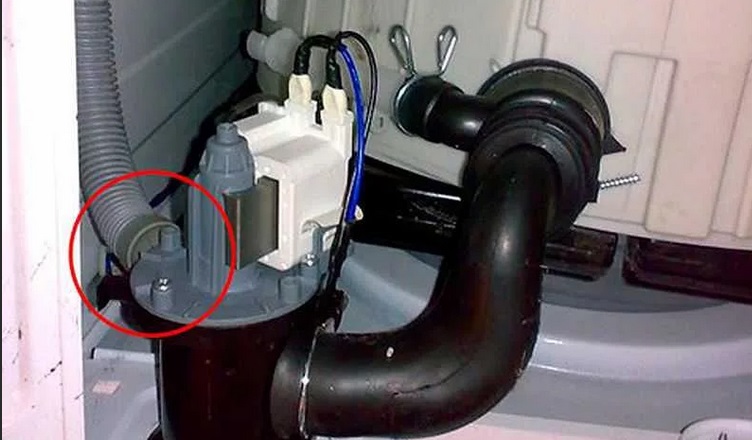
- unhook the pipes and wiring from the old pump and remove the part;
- fix the new pump in place, connect the hoses and wires to it;
- screw the bottom and return the washing machine to the vertical position.
Next, run a test wash. Water should start draining. If replacing the pump doesn't help, you'll need to check the control module. It's best to leave this job to a professional.
Interesting:

Readers' comments
Headings
Washing machine repair




For buyers




For users


Dishwasher




Add a comment