
Error F12 in a Bosch washing machine
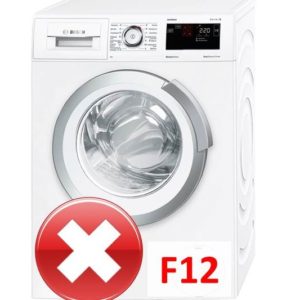 The beauty of modern washing machines is that they automatically run diagnostics and notify the user if any problems are detected—via a code on the display or LED indicators on the control panel. In any case, the cause can be quickly identified and corrected. However, to plan a course of action, it's necessary to correctly decipher the signal. If error code F12 appears on a Bosch machine, the self-diagnostic system has detected a malfunction in the electric motor. Let's take a closer look at what exactly is wrong and how to fix it.
F12 in Russian
To decipher the F12 error code, simply consult the manual. A quick glance will tell you there's a problem with the electric motor.The self-diagnostic system won't give you a more precise answer; you'll have to run a more extensive check.
Before removing the engine, let's outline the possible problems. The following issues can cause F12:
- worn tips on electric brushes;
- peeling lamellas;
- broken winding.
Most often, the Bosch displays “F12” due to worn out electric brushes.
To more accurately determine the cause of the failure and what to do next, it's necessary to check each designated point in turn. It's best to start with the brushes, as they're easy to replace at home. If problems with the fins or windings are causing the F12 error, replacing the motor and contacting a service center will be necessary.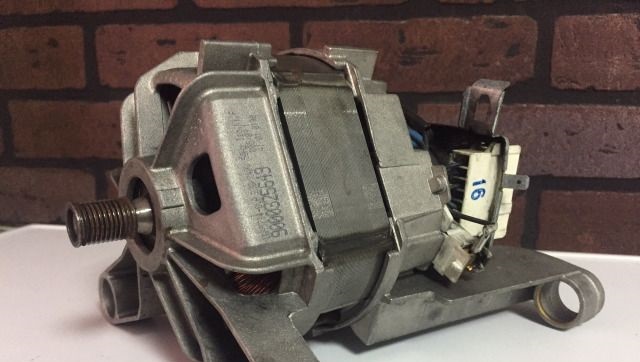
Motor test progress
In any case, the cause of the F12 error is hidden in the electric motor. Therefore, it's necessary to remove the motor from the washing machine and check each affected component for proper operation. Here's the procedure:
- disconnect Bosch from the power supply and sewerage system;
- we turn it with the back facing us;
- remove the back wall of the machine;
- we find the engine located in the lower part of the body;
- remove the drive belt from the pulley;
- loosen the central retaining bolt;
- We rock the engine and pull it towards ourselves, removing it from its seat.
Before disassembling the washing machine, make sure that the equipment is disconnected from the power supply!
Before attempting to repair the motor, it's worth delving a little into its structure. Remember that Bosch automatic machines use brushed motors, which are compact and powerful. The motor's power is transmitted to the drum shaft via a drive belt.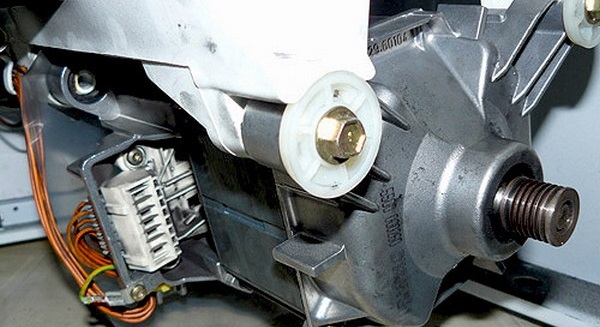
Now about the "insides." The motor housing houses a tachogenerator, which monitors its rotation and transmits speed data to the control board. Next to the sensor, on both sides of the motor, are electric brushes that smooth out friction. Two other integral components are the rotor and the stator.
First of all, it is necessary to check the overall performance of the engine.
- We establish contact between the stator and rotor windings.
- We supply them with 220V voltage;
- We evaluate the result (if rotation has started, then everything is ok).
However, this test has its own risks and complications. Firstly, it's impossible to test the motor's operation in different modes. Secondly, applying voltage directly to the motor runs the risk of short-circuiting due to engine overheating. To reduce the risk of overheating, it is recommended to include a heater in the circuit, which will take on the main power from 220 V. Has the motor passed the test? So, next up is a spot check—an assessment of the condition of the brushes, fins, and windings.
Start with brushes
It's best to start with the brushes. Over time, the carbon tips wear against the motor housing, preventing friction from being smoothed out and causing sparks. This leads to poor engine operation and the F12 error code.
The integrity of the brushes is checked simply: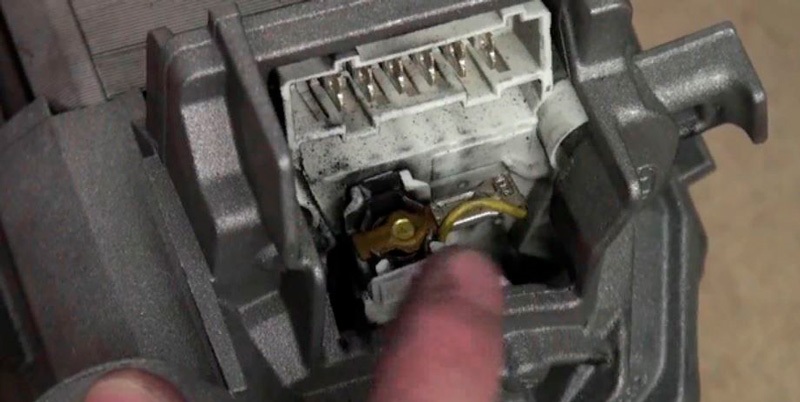
- we find the brushes located on both sides - there are two of them;
- we loosen the screws holding them;
- we deal with the spring mechanism and remove the brushes;
- we open each case;
- We measure the length of the “coals” (minimum – 1.5 cm).
Two electric brushes are changed at once!
If the carbon tip is worn out, the problem has been detected. In this case, you should purchase two identical brushes and replace the old ones with them.
Other engine components
Have the brushes passed the test? So, let's move on to diagnosing the lamellas. These are the metal plates that are bonded directly to the shaft and transmit current to the winding. If they delaminate, the transmission is disrupted, and the motor cannot operate at full power. Repairing minor delaminations is limited to resurfacing the motor on a lathe; severe deformations require replacement of the entire assembly.
Damaged lamellas are identified by the presence of delamination and “burrs”.
A damaged winding can also cause the motor to stall. Most often, the problem is a current leak, a short circuit, subsequent motor overheating, and thermistor tripping. The control board detects the problem and displays an error code. This is confirmed as follows: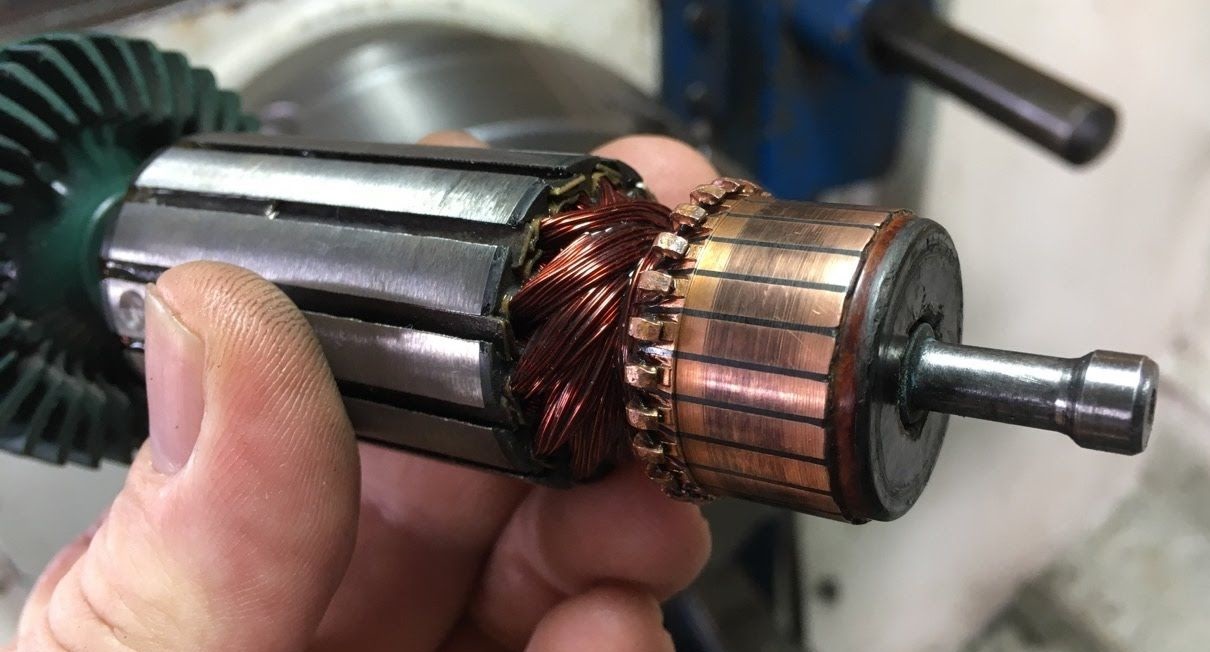
- turn on the multimeter to measure ohms;
- we connect to the lamellas;
- We compare the result with the norm of 20-200 Ohms.
At the end, we check the stator and the buzzer. If there's a beeping sound, the motor will need to be replaced. Repairing a damaged winding is very troublesome and expensive – it's easier and more cost-effective to buy a new motor.
Interesting:

1 reader comment
Add a comment
Headings
Washing machine repair




For buyers




For users


Dishwasher




The brushes and motor are in good working order. The wiring is intact. The tachometer is normal. The diagram showed brush dust. I cleaned it. In any mode, it throws an F12 error 10 seconds after turning it off. Entering service mode doesn't help. The error disappears and then reappears. Bosch Maxx Advantage. Could you tell me if I'm entering service mode incorrectly? I hold down the start button and turn the selector counterclockwise two positions.