
Error code F13 in a Hisense washing machine
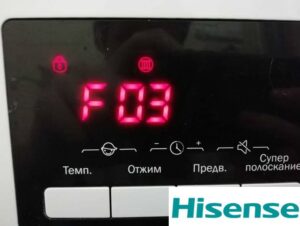 In most cases, the F13 error code appears on the Hisense washing machine display a couple of minutes after the cycle starts. The machine doesn't even begin to fill with water. Instead, it freezes and waits for further user input. Less often, the code appears at the end of the wash cycle.
Let's figure out what causes the F13 error code. What fault does your Hisense washing machine indicate? Can you fix it yourself or will you have to call a technician?
Try pushing the door
Sometimes this code can be reset in a second. Error F13 informs that the washing machine hatch door is not closed. The system remains leaky, so the machine cannot start filling with water.
Sometimes the cause is as simple as not pushing the door shut enough. Try pushing the door near the handle. It's likely that the locking mechanism will engage, a click will be heard, the F13 error will disappear, and the washing machine will begin filling with water.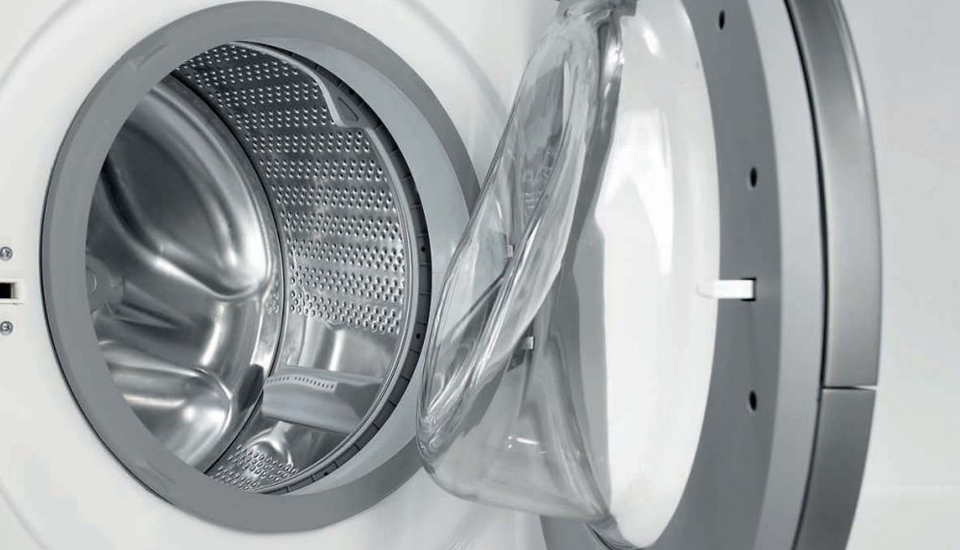
To prevent this from happening again, adjust the washing machine door. The hinges may be slightly warped, causing the lock to malfunction. After adjusting the door, the problem will resolve.
The problem might not even be with the locking mechanism. Sometimes users load the laundry carelessly, leaving it sticking out. Clearly, even a small piece of fabric will prevent the door from closing. Therefore, check that nothing is stuck between the washing machine body and the door.
Why did the code arise?
To repair your washing machine yourself, you need to understand the other possible causes of the F13 error code. Typically, these are problems with the lock, but there are other possible issues. The locking mechanism may not work due to:
- sagging hinges;
- displacement of the lock tongue;
- UBL malfunctions;
- damage to the lock guide;
- wear of the rubber cuff;
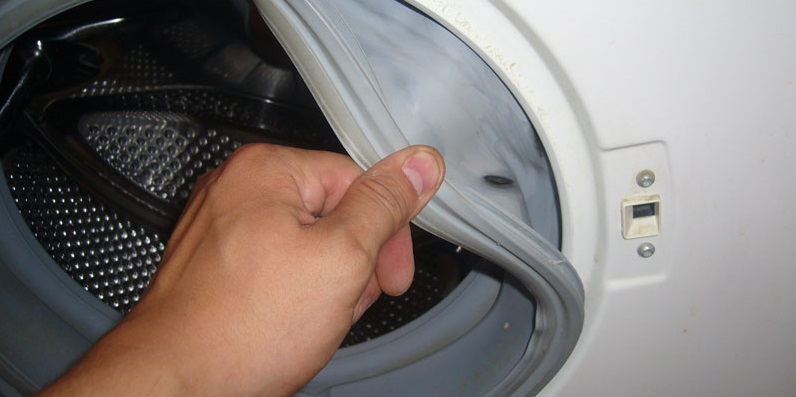
- wiring break;
- failure of the control module.
The Hisense washing machine will not start washing until the door is locked.
The problem could be either mechanical or electronic. In either case, the machine won't start with the F13 error. Therefore, you'll need to diagnose the problem and repair your "home assistant."
Malfunction of the mechanical part of the door
First, the door is inspected for mechanical damage. This includes internal breakage of the lock, sagging, or warping of the door. Such problems arise as a result of careless handling of the hatch:
- strong slamming;
- hanging wet, heavy items on the door;
- children riding on the hatch.
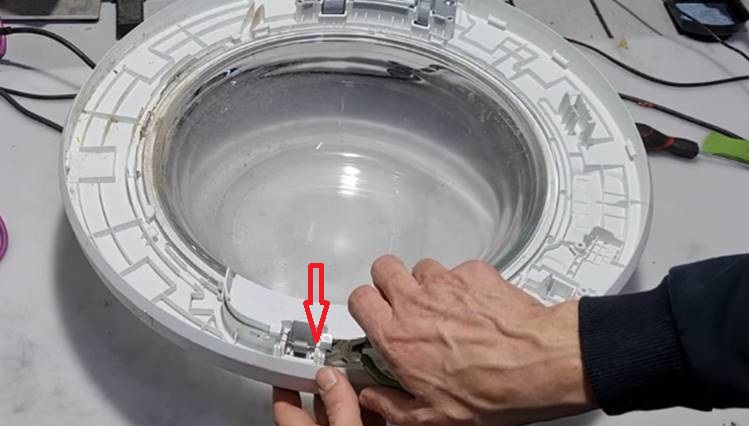
If the washing machine door doesn't close at all and there's no audible click, the problem is mechanical. You can identify the problem by the machine's behavior. Let's look at the main symptoms.
- The door won't close at all, not even engaging the grooves. This means the problem is misalignment. The door hinges are sagging, and the lock tongue won't engage the opening on the washer body. Tightening the hinges and adjusting the door will help reset the error.
- The door closes but doesn't lock. Here, you need to pay attention to the lock tongue. The metal rod holding it in place may have fallen out or become crooked. You'll need to disassemble the handle and return the parts to their proper positions. If this isn't possible, the entire locking mechanism will need to be replaced.
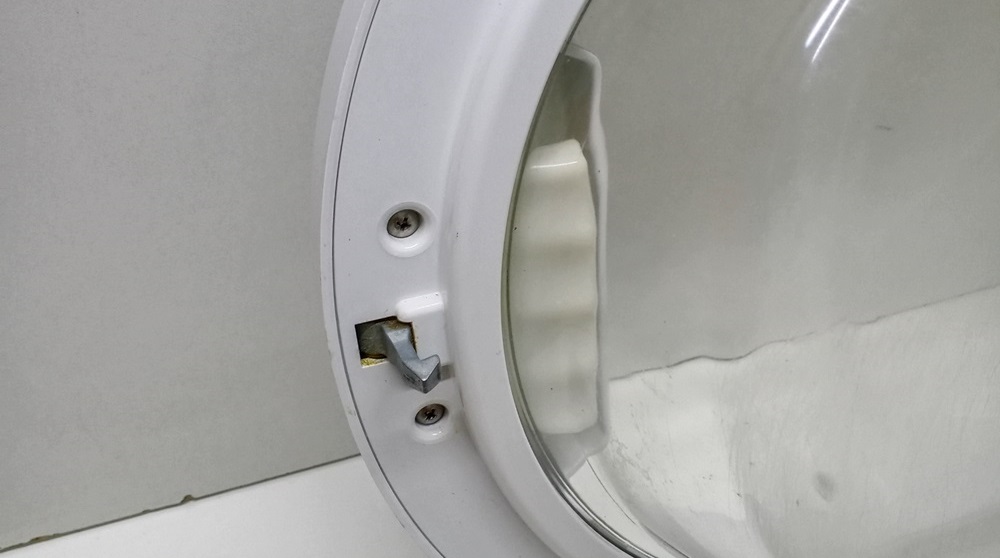
- The hatch slams shut and locks into place, but there's no click. The door guide is most likely the culprit. This is a thin plate that secures the door leaf. This part can wear out or become misaligned. Then, the lock's "hook" won't engage.
The first thing you need to do is inspect the door. You can visually detect whether the hinges are warped. You can tell if the latch is coming out by pressing the door handle. Listen for a clicking sound—this is crucial for a proper diagnosis.
The lock doesn't work
If the initial click is present, there are no problems with the mechanics. The door lock mechanism then takes over. The lock is responsible for additional, electronic fixation of the washing machine door.This is the final step when closing the washing machine.
If the door lock fails, the door can be opened at any stage of the cycle. This is unsafe, so the machine's "brain" will not command the water to be filled, but will display the error code F13. Even with a completely sealed system, but without electronic protection, the intelligent system will not initiate the wash cycle.
If the door locking system is faulty, the washing machine door will not lock and the machine will display error F13.
Why electrofixation may not work:
- wear of the blocker plates (they wear out and lose electrical conductivity);
- blockage of the locking device (debris may get inside the UBL, which will interfere with the normal operation of the mechanism);
- problems with the control module (the blocker loses connection with the control board and stops receiving commands).
When the plates are worn out, repairs won't help. A complete replacement of the door locking device is required. A new locking device for the specific Hisense washing machine model is purchased.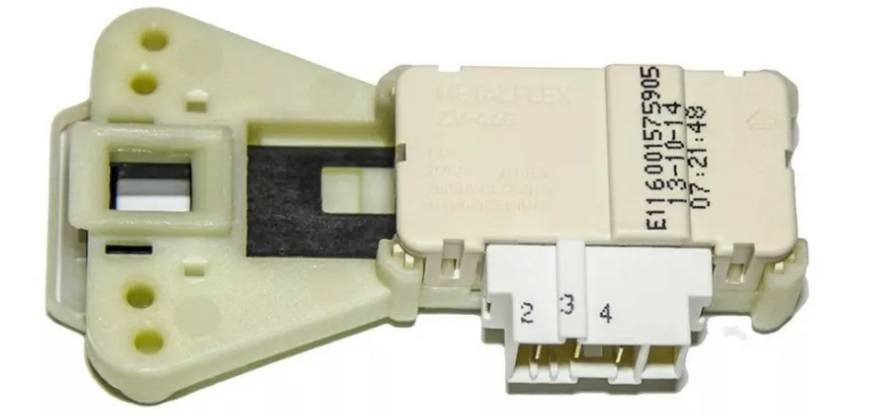
Why might the door locking system lose connection with the control module? This can happen if tracks or semiconductors on the board burn out. It could also be due to a one-time system failure. Therefore, the first thing you should do is reboot the machine. This may help clear the error and restore the washing machine.
If resetting the washing machine doesn't help, you'll need to diagnose the control board. Identifying the problem yourself without experience and knowledge is difficult. The module is littered with numerous tracks and semiconductor components. Therefore, it's best to entrust repair of the electronic unit to a service center.
You can check the door locking system for wear and clogging yourself. It's best to leave work on the electronic module to a professional. The control board is a very fragile and expensive component, so there's no room for error.
We will check and change the lock.
To confirm your suspicions, particularly regarding damage to the door lock, you need to check the functionality of the door lock with a multimeter. Before beginning diagnostics, disconnect the power to the Hisense washing machine and turn off the water supply. The door lock will need to be removed from the washing machine.
If the washing machine didn't close and displayed error F13, this will be easier. Opening the door should be effortless. It's a different matter if the error code appears at the end of the cycle, and now the door won't open.
The initial task is to open the washing machine door. If the F13 error occurs at the end of the cycle, the door opens as follows:
- remove the top cover of the washing machine housing;
- Tilt the machine back so that the drum moves away from the front wall;
- Reach your hand inside towards the lock and use your finger to push the latch to the side.
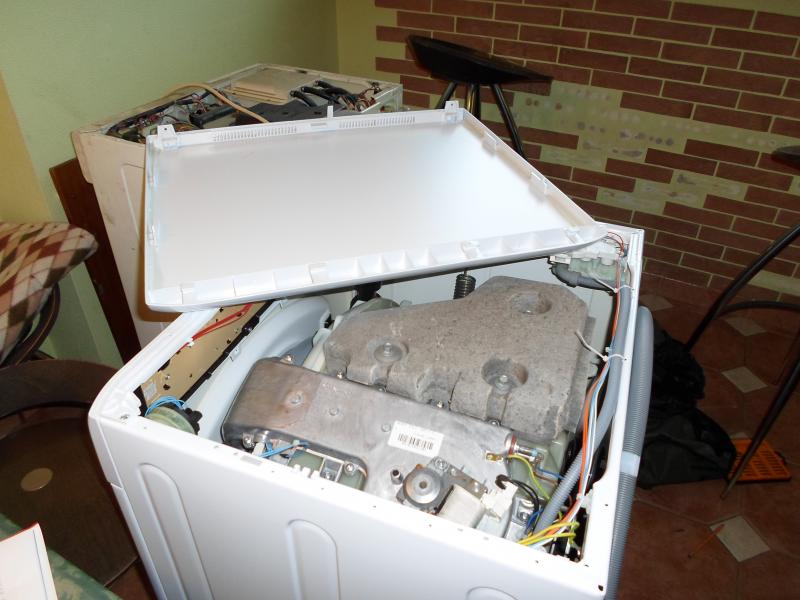
After opening the washing machine hatch, proceed further:
- loosen and remove the outer cuff clamp;
- insert the sealing rubber into the drum;
- find the UBL, unscrew the bolts that secure it;
- reset the wiring connected to the device (before this, it is better to take a photo of the connection diagram so as not to make a mistake with the location of the wires later);
- remove the UBL from the machine.
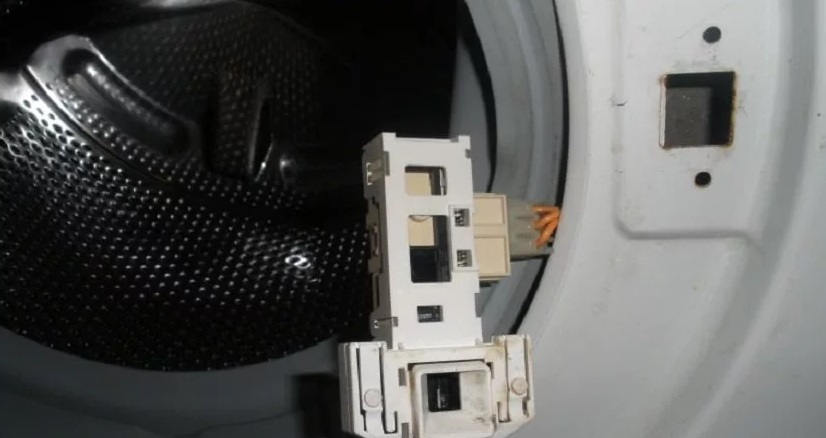
Now you can begin diagnostics. First, study the electrical diagram for the part (it's included in the Hisense washing machine's manufacturer's manual). Next, set the multimeter to resistance mode and connect its probes to the live and neutral terminals of the blocker. Now, evaluate the readings on the tester's screen.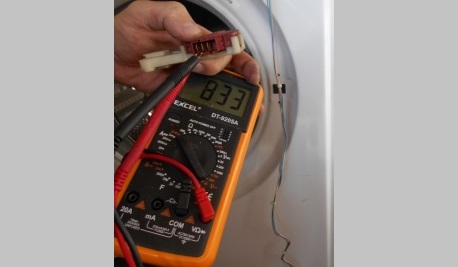
If the multimeter displays a three-digit value, the locking system's electronics are OK. Next, touch the probes to the neutral and common terminals. The tester should display "0" or "1."
There is no point in repairing a faulty door lock; you will have to buy and install a new one.
The locking device's components are disposable. The device is inexpensive, so there's no point in repairing it. Purchase a new locking device for your specific Hisense model (using the serial number) and install it in its original location. Connect the wires according to the diagram (which you photographed during disassembly).
Interesting:

Readers' comments
Headings
Washing machine repair




For buyers




For users


Dishwasher




Add a comment