
Error F54 on a Gorenje dishwasher
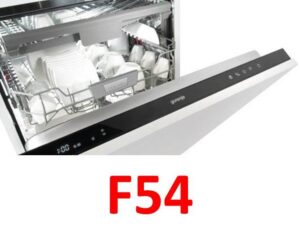 A lot can go wrong with delicate household appliances, so it's no surprise that manufacturers have created dozens of error codes to cover every possible scenario. Error F54 is a common error among homeowners, so many have probably learned its causes. The code appears on the display when the appliance overflows with water during its operating cycle, preventing it from continuing to operate. Let's explore why this might happen and what can be done about it.
List of possible problems
The strange F54 error in a Gorenje dishwasher always occurs due to drainage problems. This may happen due to a simple blockage, or it may arise due to a breakdown of one of the dishwasher’s key components. To understand what to do, you must first examine each of the possible causes of the malfunction.
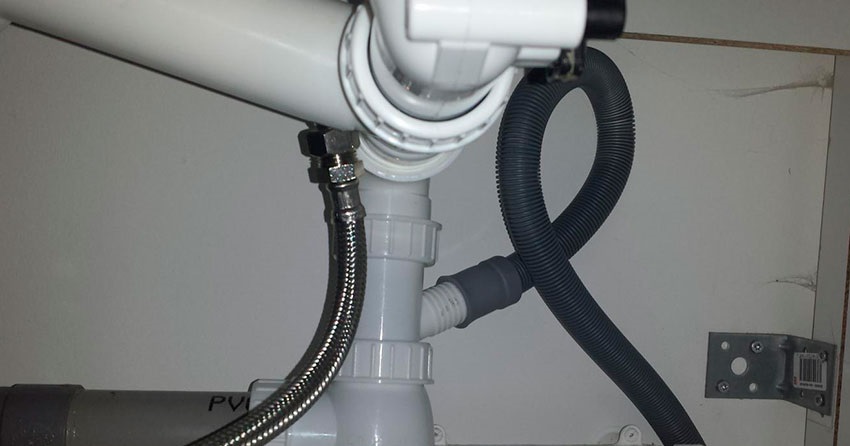
- The user may have accidentally kinked the drain hose, preventing water from draining. In this case, simply straighten the hose and try again. This happens quite often, so don't rule it out.
- The coarse filter is completely clogged, causing the waste water to become trapped. To prevent this, always clean your dishes beforehand to remove any food debris, pits, tea bags, napkins, toothpicks, and other debris. This will eliminate the risk of future clogging and ensure water always drains freely from the reservoir.
- The drain section is clogged. This also occurs due to food debris and other contaminants that may have passed the debris filter but are now blocking the outlet pipe, drain hose, or pump.
- The pump is out of order.
- The water level sensor is broken.
- The control board of the Gorenje dishwasher is damaged.
Experts always recommend starting with the most basic causes and gradually moving on to more serious damage. This will prevent wasting time if the error code was caused by something simple that doesn't require complex repairs or replacement.
We clean the machine and change the pump.
If your washing machine displays error code F54, first disconnect it from all power supplies. Then, inspect the appliance for blockages, starting with the drain hose, which is the most common cause of clogs. To do this, disconnect the hose from the drain, lower it into a container or bathtub, and check if water flows. If water flows, the drain trap or drain line is clogged. If no waste water flows, the clog should be located within the appliance. We'll start by cleaning the filters.
- Open the car door.
- Remove all dish baskets.
- Remove the cover of the debris filter located at the bottom of the washing chamber.
- Remove the filter cup and then the filter mesh.
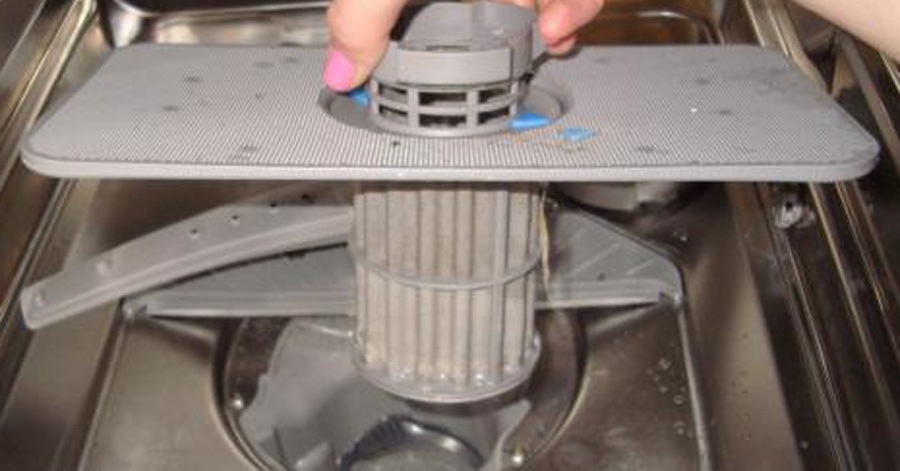
- Rinse the filter elements under a powerful stream of hot water.
If dirt has become embedded in the parts, an old toothbrush can help clean them, as can a citric acid solution in which the filters can be left for several hours.
- Open the pump cover and carefully use your finger to test whether the impeller is rotating. Debris, as well as broken dishes, could have gotten into it if they broke during washing.
Next, you need to return all the components to their original positions and test the appliance during an idle run. If all these steps fail, you'll need to partially disassemble the appliance to access the internal components of the Gorenje dishwasher. Let's start with the pump.
- Drain all the used liquid from the dishwasher, which can be done manually by scooping water out of the tank, or by tilting the dishwasher forward to drain all the water.
- Remove the drain filter.
- Turn the appliance over onto its back to remove the tray, which is secured with screws.
Do not pull the tray with force under any circumstances, as some Gorenje dishwasher models have an Aquastop sensor attached to the tray, which must first be removed by disconnecting all wiring.
- Disconnect the sensor if present.
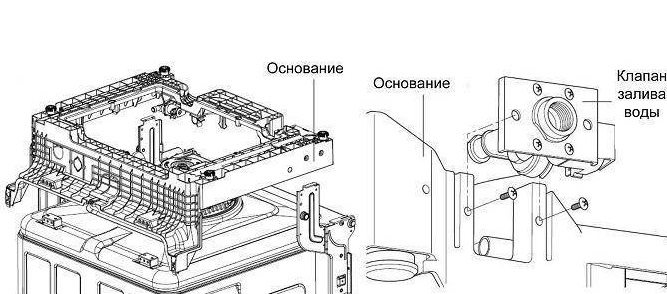
- Remove the tray.
- Unscrew the pump, removing all hoses from it.
- Check the impeller to see if it rotates smoothly. If not, you'll need to purchase a new part and install it in its place.
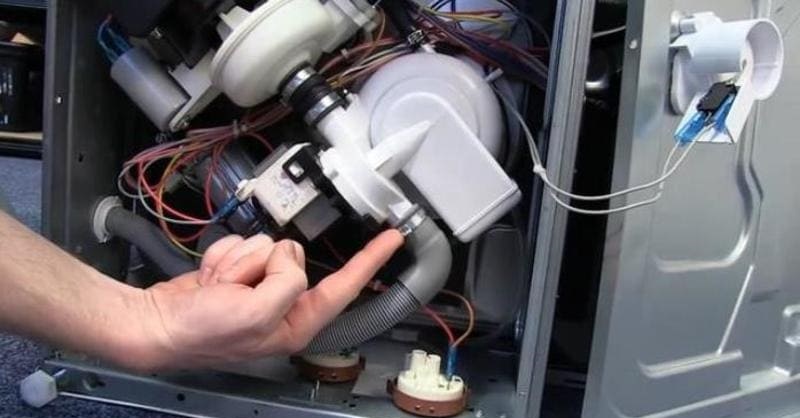
- Measure the element's resistance by connecting the probes of a simple multimeter to it. Normal resistance will be around 200 ohms.
- Additionally, you can check whether voltage is supplied to the pump from the Gorenje dishwasher control module.
If the pump is truly faulty, it can only be replaced, preferably with an original spare part, to ensure the machine's performance does not decline due to a defective component.
The level sensor or the dishwasher's "brain" is to blame
If the F54 error has left waste liquid in the tray of your Gorenje appliance, this could also be due to the pressure switch. The reason is that if there is a problem in the high-pressure tank or in the sensor tube itself, the data about the current water level may be transmitted with errors. In this case, even if the sump is full, the pressure switch won't send a drain command to the control module, which won't start the pump. In this case, the water level sensor will need to be replaced.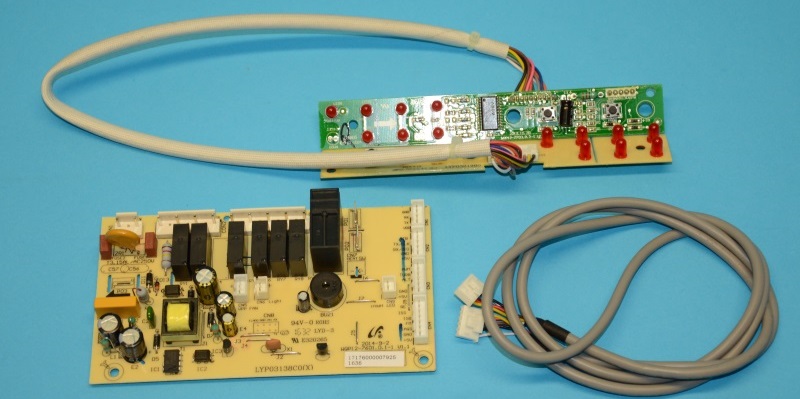
Finally, if the pressure switch is working properly, the only remaining problem is the dishwasher's control board, as it won't transmit the signal to drain the water. This could be due to a one-time failure, an operating system error, or simple wear and tear. The control module is considered the "brain" of the entire system, so its repair or replacement should be performed by a professional to avoid further damaging the appliance.
Simply resetting the F54 error isn't enough – be sure to run a test cycle after getting your "home assistant" up and running. This will help you determine whether the problem has been resolved or if professional assistance is required.
Interesting:
1 reader comment
Add a comment
Headings
Washing machine repair




For buyers




For users


Dishwasher




Hello, could you please tell me where I can order an electric car lift like this for car repairs?