
Error code Fd in Haier washing machines with dryers
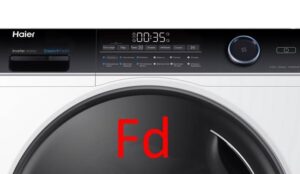 Modern technology can automatically detect system malfunctions and notify users. The Fd error code is one of the most common in Haier washing machines and dryers. What should you do if this code appears on the display? Let's figure out how to fix the problem and restore your washing machine to working order.
Let's decipher the Fd code
Modern washing machines are equipped with self-diagnostic systems. If they detect a malfunction, they immediately respond and notify users of the problem. Error code Fd informs about problems with the drying heating element. Therefore, if you notice this code on the display, immediately turn off the power to the device and do not touch the body under any circumstances - this will be unsafe.
Another possible cause of the error is a malfunctioning control module. In any case, you'll need to disconnect the power to the machine, being careful not to touch the casing. Let the washer sit for 15-20 minutes, then plug it back in. If the problem persists, you'll need to check the dryer's heating element and its wiring.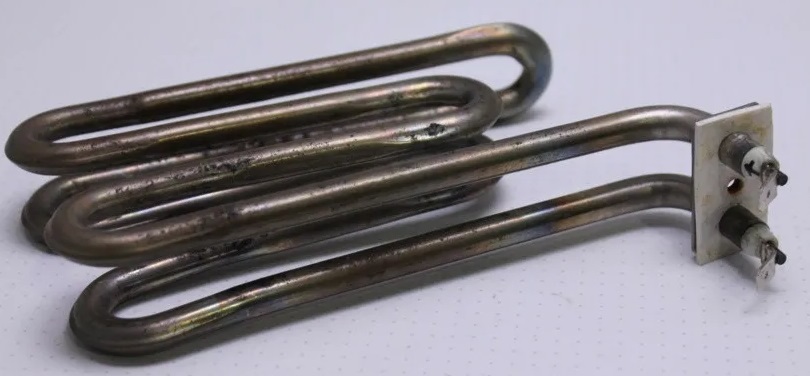
This type of malfunction is not considered a minor one, so it's best to seek help from a service center, especially if the warranty period has not expired. If the warranty has already expired, you can attempt self-diagnosis. It's important to follow safety precautions during the process to avoid harming yourself or the equipment.
Checking the heating element of a Haier washer-dryer
You can diagnose a Haier washing machine displaying the Fd error code yourself. First, inspect the dryer's heating element. There are three ways to check the heating element:
- for ringing;
- for breakdown;
- by load current.
Before starting work, be sure to unplug the washer-dryer. To check the dryer's heating element, remove it from the system. Follow these steps:
- remove the bolts holding the top panel of the washing machine;
- put the lid aside;
- find the heating chamber and open it;
- disconnect the heating element contacts;
- remove the screw holding the heating element;
- remove the heating element.
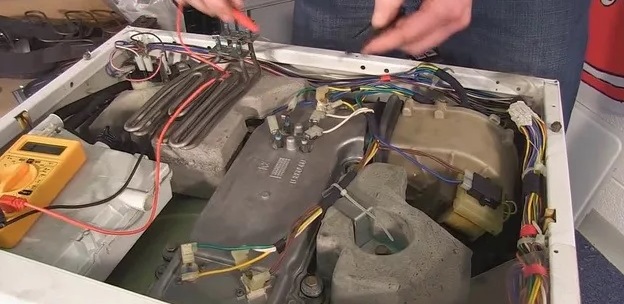
If you're disassembling a washing machine for the first time, be sure to read the manual. It shows the location of the main system components. This will help you figure out where to find the heating element on a Haier washing machine with a drying function.
To check the heating element of the dryer, you will need a special device - a multimeter.
First, it's recommended to test the heater. To do this, set the multimeter to resistance mode. Place the tester probes on the corresponding contacts of the heating element.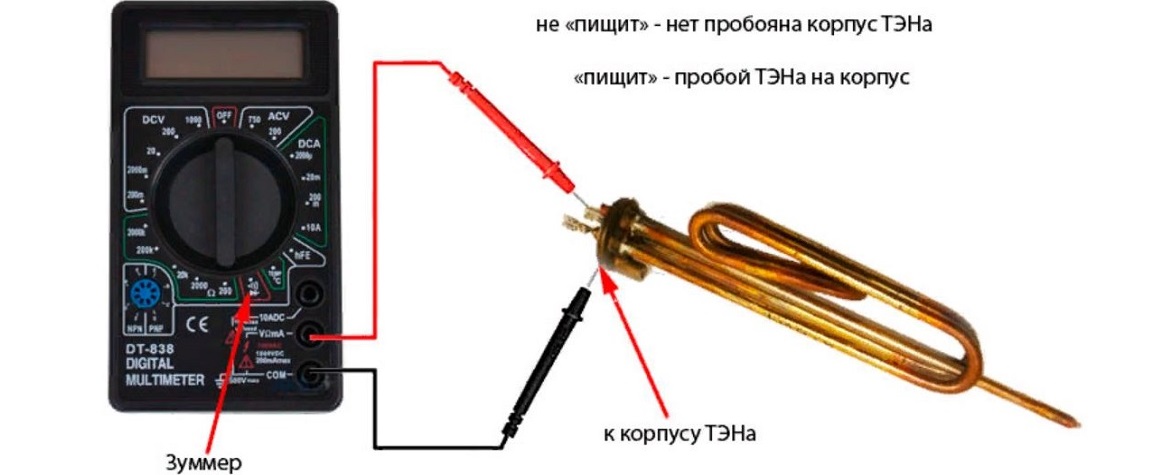
Next, look at the tester screen. If the heating element is working properly, the multimeter display will show a value within several tens of ohms (from 20 to 40 ohms, depending on the power of the heating element). The device itself will emit a characteristic sound. If the test is silent and the display shows 0 or 1, the heater is faulty and needs to be replaced.
The next step is to check the heating element for breakdown. The multimeter remains in resistance mode and should be set to the highest range, ideally 200 megaohms. The next step is as follows:
- Place one probe of the multimeter on the heater contact and the other on the heating element body;
- evaluate the readings on the tester display.
A functioning heater will show no readings on the multimeter, meaning the original value on the display will remain unchanged. If the tester displays any numbers, it indicates a faulty heating element.
When testing a heating element for breakdown, it's important to keep in mind that it needs to be heated before testing. To do this, connect the element to the power supply for 5-8 seconds (using a two-terminal power cord) or simply place it in hot water (without immersing the contacts). Once the element is warm, you can use a multimeter.
It often happens that a "cold" heating element shows no breakdown. However, when testing a warm element with a multimeter, current leakage to the housing is detected. Therefore, it is so important not to neglect the "heating the part" rule.
If a breakdown is detected in the heating element, the heating element will have to be replaced to fix the error.
The third diagnostic method is to check the heating element's current load. To determine the normal current draw of the heater, you need to remember the formula P=IxU, where:
- P – power (W);
- I – current (A);
- U – voltage (V).
That is, the current consumed can be calculated by dividing the element's power rating by the voltage value. For example, when testing a 1900-watt heating element, we get the following figure: 1900/220 = 8 Amps.
Next, using a multimeter, we check whether the standard readings correspond to the actual ones. To do this:
- reconnect one probe of the multimeter to 20 Amp;
- connect the power cord terminal to one contact of the heating element, and the terminal with a clamp on the back side to the second contact;
- connect the clamp to one probe of the multimeter;
- connect the other tester probe to the network terminal;
- Turn the multimeter lever to the “AC 20A” position;
- evaluate the readings on the device screen.
Normally, a 1900-watt heating element should draw a current of approximately 8 amps. If the readings on the multimeter display vary significantly, the heating element will need to be replaced.
If the dryer's heating element has passed all three stages of testing, inspect the power supply wires for damage. If this is also correct, you'll need to rule out a faulty main control module. It's best to leave the board diagnostics to a specialist.
Interesting:


Readers' comments
Headings
Washing machine repair




For buyers




For users


Dishwasher




Add a comment