
Error SE on an LG washing machine
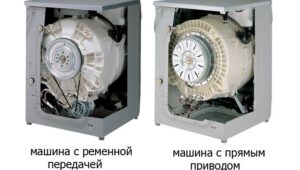
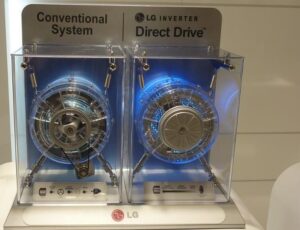
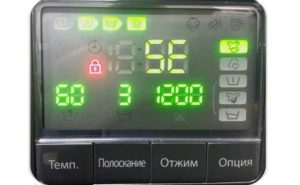 What should you do if a washing machine that worked perfectly yesterday stops working today and displays an unexplained error? It's important to pay attention to the signs of malfunction. The SE error on an LG washing machine appears on the display when the machine fills with water normally, but stops working when it starts the program. This malfunction is typical for LG DirectDrive washing machines, both those with direct drive and those with a belt drive and a quiet three-phase electric motor.
The source of this error
What should I do if my washing machine displays a code? Error SE indicates a malfunction in the electric motor. The drum can't spin the laundry because the motor shaft isn't rotating. If your LG washing machine displays the SE code, there could be many reasons for this behavior.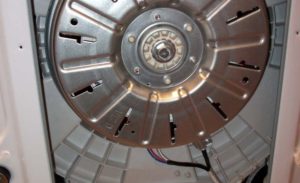
- Failure of the tachogenerator.
- Contacts may be loose or poorly connected. In this case, the user will need to inspect each connector connected to the electric motor. Sometimes they become slightly loose, causing signal interruptions. It's also a good idea to inspect the wiring harness leading from the motor to the main control unit. If any wiring defects are detected, the damaged sections of the wiring should be replaced.
- A system failure. In this situation, the solution is quite simple. Unplug the washing machine for 10-20 minutes. When you plug it back in, the SE fault should reset. If rebooting the machine doesn't help, you need to immediately repair your "home helper."
Damage to other components of the washing machine may also be a possible cause. This includes the electronic control unit, the electric motor itself, and so on. Once the issue is resolved, repairing the machine will be easier.
Symptoms of a breakdown
What should I do if my washing machine consistently displays the SE error? The problem is most likely a faulty Hall sensor. This element controls the drum rotation speed. The sensor is located directly on the motor.
When the Hall sensor is faulty, the system “does not recognize” the drum rotation speed set by the intelligence and displays an error on the display.
Most often, the tachogenerator cannot be repaired and is simply replaced with a new one. In some cases, it's not the sensor itself that burns out, but a resistor in the same circuit. Replacing the faulty resistor can often solve the problem of the drum not spinning.
If the code appears on the screen frequently, it's likely that the washing machine's motor isn't functioning at full capacity. You'll need to diagnose the motor and replace it with a working one, if necessary.
If your LG washing machine doesn't spin the drum and displays the SE error code, it's also possible that the control module has failed. In simple terms, the microchip that controls the entire washing machine has become damaged. Repairing the electronic module is best left to a professional. This will require re-soldering some circuits on the board and replacing any burnt-out components responsible for the motor's operation.
A likely cause of the SE error code appearing on the machine's display is faulty wiring between the control module and the electric motor. During operation, vibrations occur, which can cause frayed wires. A thorough inspection of the electrical circuit for damage and the final repair of any frayed cables will help correct the situation.
We're fixing the problem
According to statistics, in 90% of cases, the SE error code displayed on the screen indicates a damaged Hall sensor. This sensor is essential for regulating the drum speed. When the tachogenerator is broken, the drum “doesn’t understand” at what speed to rotate, so the intelligence detects an error. SE. It is also possible that the cause is not the tachometer sensor, but a faulty resistor; the situation can be corrected by replacing it.
When diagnosing the SE error, be sure to check whether the tachogenerator (the part is located on the electric motor shaft) is working properly.
The algorithm of actions will be as follows: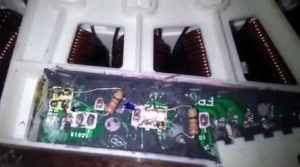
- remove the back wall of the washing machine body;
- carefully pull the belt off the engine shaft;
- unscrew the electric motor mounting bolts;
- remove the motor from the housing;
- release the Hall sensor contacts and measure the resistance of the part using a multimeter (the optimal value is 60 Ohm);
- Switch the tester to voltage measurement mode, check the sensor while simultaneously turning the electric motor (normally the detected value will be 0.2 V).
If a faulty tachogenerator is detected, the washing machine can only be repaired by replacing it. To do this, disconnect the wiring from the sensor and remove the cover. Remove the device from the motor and install the new one in the reverse order.
If your washing machine has a direct drive, you'll need to test the tachogenerator differently. What should you do in this case? Unclip the rear panel of the machine, then carefully remove the motor cover. inverter typeLocate the Hall sensor and use a multimeter to measure the resistance between the contacts. The tachogenerator terminals are labeled as follows: VCC, GND, NC, Sa, Sb.
If the tachometer is fully functional, the resistance between its contacts 1 and 4, and 1 and 5, will be 10 kOhm. If the tester reading is normal, the resistors should be checked. If a fault is detected, replacing the Hall sensor or the resistors individually will resolve the issue.
Interesting:
Readers' comments
Headings
Washing machine repair




For buyers




For users


Dishwasher




Add a comment