
Bosch dishwasher errors
 A self-diagnostic system for Bosch dishwashers is invisibly present in every modern model. Users won't encounter this system until the machine is operating normally. As soon as a malfunction occurs, error codes appear on the display. Depending on the malfunction, these errors may appear sequentially, or only one specific error may appear. In either case, the error code must be deciphered to resolve the problem.
Problems with water heating
It's more convenient to review Bosch dishwasher error code breakdowns in two ways: in a table or as a classification. We decided it would be more convenient to divide them into groups based on the nature of the malfunction, and then examine the breakdowns in a more interrelated manner. After all, as already mentioned, a system error doesn't always "come to the user alone." Let's start by examining the error codes, and you'll understand our idea.
We labeled the first group of system errors "water heating problems." This group includes the following codes:
- E01 (or F01);
- E2 (or F2);
- E09 (or F09);
- E11 (or F11);
- E12 (or F12).
Please note! In some Bosch dishwasher models, the error code letter E is replaced with the letter F, but the number is the same.
E01 (or F01). The heating element contacts are damaged or the heating element circuit is broken. If this error appears on the display, it's highly likely that the heating element has burned out and will need to be replaced. In any case, start checking the heating element. The temperature sensor should also be checked along with the heating element.
E2 (or F2). This system error may appear alternately with the error E01. In this case, it indicates a malfunction of the water temperature sensor. In this case, the heating element will operate at full power all the time because no information is received from the temperature sensor. To confirm the cause of the malfunction, measure the resistance of the temperature sensor contacts with a multimeter (it should be approximately 50 kOhm).
 E09 (or F09). This code indicates a problem with the flow-through heating element. E09 occurs on dishwasher models where the heating element is located within the circulation pump. Replacing the heating element can fix the error, but first, you need to diagnose the unit with a multimeter to confirm that it is faulty.
E11 (or F11). This code indicates that power is not being supplied to the temperature sensor, or that the connection between the control module and the temperature sensor is broken. This error also points to a long list of possible causes, so you'll need to check the following:
- temperature sensor contacts;
- the wiring coming from the temperature sensor for damage;
- control module contacts.
E12 (or F12). This code appears on some Bosch dishwasher models when too much scale or dirt has accumulated on the heating element. Sometimes after restarting the dishwasher, instead of the E12 code, the E09 code appears., but in any case it points to the same problem.
Important! In some dishwashers, the heating element can be removed, cleaned, and then reinstalled, and it will work perfectly.
Problems with water drainage and filling
Malfunctions related to water heating are relatively rare, but error codes indicating problems with the water drain and fill are much more common. We'll list the codes associated with these types of malfunctions.
- E3, F3;
- E5, F5;
- E8, F8;
- E16, F16;
- E17, F17;
- E21, F
The E3 or F3 error code stops the dishwasher if the program fails to fill with water within the specified time period. In this case, modern dishwashers first drain the water automatically, then display the E3 or F3 error code. If your Bosch dishwasher was manufactured 7-10 years ago, the process may be different: the unit will first display an error code and then wait for the water to fill. What can be done in this case?
- Check for water in the water supply.
- Check that the filters installed in front of the inlet hose and at the entrance to the dishwasher are not clogged.
- Check the functionality of the inlet valve.
- Check whether the water level sensor is working or not.
- Lastly, you can check whether the pump is working, since in rare cases such an error occurs because of it.
E5 or F5. The dishwasher tank is full of water. This error occurs when the dishwasher fills with more water than necessary, and the water level sensor is unable to stop this process in time. This means there is a problem with the water level sensor and you need to:
- check if there is dirt in the water level sensor tube;
- Are the contacts or wiring supplying the sensor burnt?
- Is there a problem with the inlet valve? Perhaps for some reason it doesn't close completely and water continues to flow.
Important! In rare cases, this error can be caused by a faulty dishwasher control unit. In this case, contact a specialist.
 E8 or F8. This error may coexist with another similar error—E3 or F3. The cause is the same: the dishwasher is unable to draw the required amount of water into the tray. This prevents the circulation pump from turning on and operating, as does the heating element. To determine the cause, follow all the steps necessary to resolve the E3 or F3 error described above.
E16 or F16. Error codes associated with these errors occur when the dishwasher is unable to shut off the water supply to the reservoir. Simply put, the machine is uncontrollably filling with water. This error most often occurs when debris from the tap water gets caught in the inlet valve and prevents it from closing, resulting in water constantly leaking through, even when the dishwasher is turned off. What needs to be done to resolve the E16 error?
- Check the fill valve and clean it.
- Check the water level sensor (only if water does not flow by gravity when the machine is turned off).
- Check for excess foam from the detergent (if the error occurred during the dishwashing process).
E17 or F17. This code indicates a problem with the water inlet to the dishwasher. This error is specific and most often means that the inlet valve closes with difficulty or cannot close at all due to excessive water pressure. Sometimes this error can be caused by water hammer. In this case, no action is needed; simply restart the dishwasher and it will work normally. If the water pressure is consistently too high, partially shut off the water supply to the riser pipes.
Please note: In rare cases, if errors E17 and F17 occur, the sensor measuring the amount of water supplied should be checked.
E21 or F21. This code appears on the display if there's a problem with the dishwasher's pump, causing it to refuse to drain. When this error occurs, the pump is powered and communicates normally with the control unit and sensors, but it still doesn't function properly. What could be wrong?
- The impeller is jammed and does not rotate (possibly due to foreign objects wrapped around it);
- The rotor is stuck to the walls of the bushing, it needs to be cleaned and lubricated (in this case, error E21 may be adjacent to error E22);
- The pump mechanism is worn out and needs to be replaced.
Problems with blockages
Errors related to various types of clogs are the most common in Bosch dishwashers. Clogs typically occur when users neglect to remove food debris from dishes before loading them into the wash baskets. What system errors are associated with clogs?
- E07 or F07;
- E22 or F22;
- E24 or F24;
- E25 or F25.
 E07 or F07. The cryptic translation for this code is "the hole through which water is pumped out is plugged." This could mean the following. The dishes are not stacked correctly; one of the objects has blocked the hole through which water is pumped out of the dishwasher's hopper. Or the suction hole is blocked by a piece of dirt.
E22 or F22. This error indicates that one of the dishwasher's filters is clogged or there is a problem with the pump (if the impeller is not rotating properly). Error E22 on a Bosch dishwasher, described in more detail in the article of the same name on our website.
E24 or F24. Error F24 has a simple and straightforward meaning: the drain hose is kinked or clogged, the drain is clogged, or the drain outlet is blocked. But in reality, error E24 can occur for the most unexpected reasons. In fact, it can easily coexist with error E22. Error E24, is well described on our website in an article with the corresponding title, so we will not repeat it.
E25 or F25. This error occurs when the pump outlet or drain hose becomes clogged at the base. This means the drain pump isn't powerful enough to pump the dirty water. The sensors signal this to the control unit, which in turn displays the E25 error code and stops the dishwasher. The solution is to clear the outlet and drain hose of any blockages and inspect the pump impeller.
Please note! Error E25 can sometimes coexist with error E22, meaning that when the machine is rebooted, error E25 and then E22 appear. In this case, you should check how freely the pump impeller rotates.
Problems with water sensors and switches
The dishwasher is equipped with a large number of different sensors that help monitor and control the dishwashing process. When these sensors fail, the self-diagnostic system detects this and displays the following errors on the Bosch dishwasher's display:
- E4, F4;
- E6, F6;
- E14, F14;
- E15, F
Let's start with error E4 or F4. This error means that the sensor that controls the pressure and flow of water supplied to the sprinkler isn't functioning properly. It's either faulty or clogged. Hard water often clogs the sprinkler nozzles, preventing water from flowing properly, resulting in an E4 or F4 error.
E6 or F6. The water purity sensor is faulty. This is a special sensor that monitors the quality of water in the dishwasher, which is located next to the heating element. Sometimes it is possible to give it a second life by replacing burnt contacts, but in 95% of cases it must be replaced.
E14 or F14. The sensor that monitors the amount of water entering the dishwasher is malfunctioning. This problem can only be resolved by a specialist; the sensor may need to be replaced.
E15 or F15. This error appears in modern dishwashers equipped with the Aquastop system if there is a leak. Follow these steps:
- inspect the dishwasher tray for leaks;
- inspect the hoses;
- inspect other components for leaks.
Electrical problems
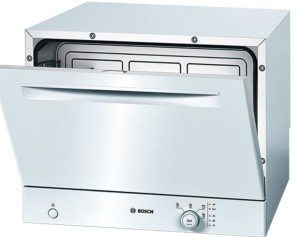 Thanks to the numerous sensors, modern dishwashers have quite complex electrical systems. A burnt terminal or frayed wire is enough to trigger one of the following errors:
- E01, F01;
- E27, F27;
- E30, F
E01 or F01, as well as E30 or F30. These errors indicate electrical or electronic problems with the dishwasher. First, reset the dishwasher using the on/off button; this usually resolves the error. If the error occurs repeatedly, unplug the appliance and call a service technician to prevent further problems.
Important! You can try to find the cause of the problem yourself, but then you'll have to inspect all the wiring and terminals, which is painstaking and unpleasant work, and there's no guarantee you'll find the fault.
E27 or F27. If you connected your dishwasher directly to the power supply, you may encounter error E27. The fact is that voltage surges that periodically occur in the network can have a serious negative impact on electrical appliances, even causing them to fail. Therefore, if you frequently encounter the E27 error on your Bosch dishwasher, connect it to the network through a voltage stabilizer and the problem will be solved.
In conclusion, we'd like to point out that the impressive number of error codes that make up dishwasher self-diagnostics aren't meant to frustrate users, but to help them quickly resolve any issues that threaten their dishwasher. Study the code breakdown you need, and we hope you'll be able to find and fix the problem yourself. Good luck!
Interesting:
3 reader comments
Add a comment
Headings
Washing machine repair




For buyers




For users


Dishwasher




Error e18
Error C7 PMM Bosch.
Don't have an answer to error E19?