
Gorenje dishwasher errors
 The Gorenje dishwasher control module can notify the user or technician if the appliance has a malfunction. How does it do this? By using Gorenje dishwasher error codes, of course. There are very few of these errors in the database, so we have the rare opportunity to describe them in any detail in a single publication. Let's try our hand at it.
What do these or those codes mean?
First, it's important to note that Gorenje dishwashers are still available in two versions: with and without a display. Both machines feature a self-diagnostic system, but it interacts with the user differently. So, let's start by listing the error codes.
- E1 On a washing machine without a display, this code is represented by two illuminated indicators: the first and last. This indicates the activation of a special sensor located in the machine's tray, which protects the machine from leaks.
- E2, E9. The second and final indicator, counting from left to right, lights up. This indicates the pressure switch has detected too much water being poured into the machine.
- E3: The following indicators are lit: first, second, and last, counting from left to right. This error indicates that the system is unable to bring the water to the set temperature.
The water heating temperature is set by a program stored in the control module and can be adjusted by the user. The module monitors the actual heating temperature and compares it with the program's set value.
- E4 The third and final indicator, counting from left to right, lights up. This code appears when communication with the temperature sensor is lost.
- E5 The first, third, and last indicator lights up, counting from left to right. What does this code indicate? It indicates that the water supply to the machine is too slow, or that no water is being supplied at all.
- E6: The second, third, and last indicators are lit. This indicates a problem with the draining of the dishwasher system.
What to do if a leak appears?
When the E1 code appears, the user should immediately turn off the power to the dishwasher, shut off the water supply and check the tray. It's possible there really is a lot of water in the tray, or perhaps the leak detector has simply tripped. Both are equally likely. However, you can look underneath the Gorenje dishwasher. If it's wet, there is a leak. What should you do in this case?
- First of all, restart the machine and see if the error appears again.
- If the error appears again, you need to turn off the machine, take it out and remove the side cover of the case.
- Reach into the tray and feel the bottom. If there's no water, press the sensor float with your finger and see if the machine works.
- If there's a lot of water in the tray, you'll need to drain it. Find a sturdy stand and a basin. Lift the machine and place it on the stand, with the basin nearby. Tilt the machine toward the basin and drain the water.
- Check where the water is leaking from and fix the leak. Most likely, you'll need to replace the hose or the circulation unit housing, but it's also possible that the rubber seal has simply worn out or the clamp has come loose.
- Reassemble the machine and check if the error reoccurs.
If there's no water in the pan and the sensor isn't working, it can be replaced. But first, you should use a multimeter to test the wiring that communicates with the sensor and possibly test the control module. If the busbar that communicates with the leak sensor has burned out, you'll need to call a professional to have this annoying defect professionally repaired.
Water overflow
If you notice the E2 or E9 error code, don't unplug the machine or turn off the water supply. Instead, reboot the machine and see how it responds. Repeat the reboot several times to completely rule out a temporary system failure.
Next, unplug the Gorenje dishwasher, remove the right or left side of the housing, and check the drain pan. If the pan is dry, disconnect the blue wire from the pressure switch. Then plug in the machine and run the first program. If the machine starts draining, the control module can be ruled out as a possible problem. If the machine starts filling with water, the control board is faulty.
The second situation doesn't necessarily require replacing the control board. You'll need to call a technician to reset the firmware or reflash the board. In most cases, this is enough to restore control.
If we have excluded the control module, we need to remove the thin rubber hose from the pressure switch tube and carefully inspect it. The pressure inside the hose must be maintained, and if there is even the slightest damage on it, it must be replaced. Also inspect the level sensor tube. Small debris may accumulate in it and need to be cleaned out. Check the resistance of the pressure switch and its wiring.
If everything is in order, then the last thing to check is the inlet hose. In slightly rarer cases, the pressure switch may malfunction or fail due to a blockage in the inlet hose. A blockage will cause the water to flow unevenly. Air bubbles will form inside, eventually getting into the hose and tube, interfering with its operation. Clearing the blockage will restore normal system operation.
The water is not heating up
 If the E3 code appears on the display, it's worth checking how cold the machine is washing dishes. This is especially noticeable in winter, as ice-cold water accumulates at the bottom of the washing chamber. If the water inside is hot, this indirectly indicates a faulty control module, which is incorrectly reading the temperature sensor. Well, let's not talk about bad news just yet. First, try the following:
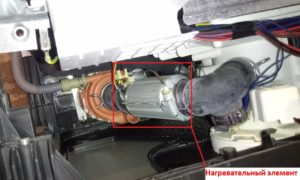
- unscrew the front protective panel, which is located under the dishwasher door, and also unscrew the left side wall;
- Having gained access to the heating element and the temperature sensor, we will not touch them at first; first, we will find the thermal fuse, which is installed on many Gorenje dishwasher models;
- Once we've found this part, take a multimeter and check whether the fuse has tripped or not. A reading close to zero indicates that the fuse hasn't tripped;
- If the fuse is intact, check the resistance of the heating element. If the multimeter shows 25-30 ohms, the heating element is fine; if the value approaches zero, the part needs to be replaced.
- Let's check the thermistor and its wiring; most likely, the problem is hidden there.
In this situation, a faulty control module also cannot be ruled out. If, after doing all of the above, you haven't found any defects, you can call a specialist to test the electronics. You shouldn't attempt this yourself.
The temperature sensor is not functioning
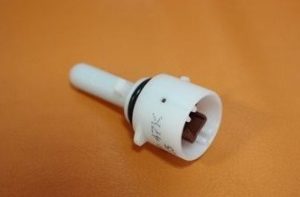 Error code E4 specifically indicates that the temperature sensor requires repair. However, there are some nuances here. The temperature sensor may actually be broken, or perhaps the wiring leading to it is broken. The contacts may also burn slightly, or the control module may fail and stop recognizing the part.
We'll try to avoid thinking about potential electronic issues for now and check the temperature sensor and wiring one by one with a multimeter. Depending on the problem identified, we'll replace the sensor or the broken wire.
No or not enough water
Error E5 occurs when the machine isn't filling with water at the proper rate or isn't filling at all. First, check to see if the inlet hose is kinked. It's possible the water utility has shut off the water supply, which is why no water is flowing into the machine. Once we've ruled out these simple errors, we'll move on to identifying more complex issues.
While you're at it, it's worth checking the inlet valve for blockages. The valve screen often becomes clogged, preventing the valve from functioning properly.
Access the inlet valve through the side wall and check its resistance with an ohmmeter. If the valve is functioning properly, check its power supply wiring in the same way. A fault in the dishwasher's electronics cannot be ruled out.
The waste water does not drain away
When the waste water discharge program is started, the control module records the time it takes for the machine to remove all the dirty water from the system. If the water is discharged slower than 3 minutes, the control module will display error E6. We need to look for the reason.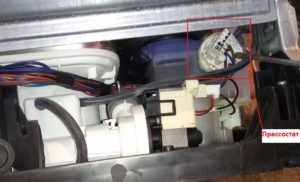
- First of all, you need to make sure that the debris filter is completely clean.
- Next, you need to check the drain hose and siphon for blockages and pinching.
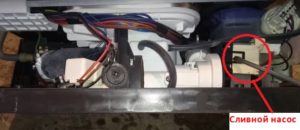
- Turn off the machine, remove the side cover, and check the pressure switch, drain pump, and wiring leading to these components one by one. You'll need a multimeter for this test.
- If you discover a faulty component, don't try to repair it. Only replacement will solve the problem.
So, we've looked at the meaning of various Gorenje dishwasher error codes and, most importantly, how to fix them. Try troubleshooting yourself, but be prudent. If you can't identify the problem yourself, don't hesitate to contact a professional. A qualified technician will be sure to help. You might also find the information in this publication helpful. Gorenje dishwasher repairIt describes some nuances that we omitted in this article. That's where we'd like to end this article. Thank you for reading to the end. Good luck!
Interesting:
1 reader comment
Add a comment
Headings
Washing machine repair




For buyers




For users


Dishwasher




Good afternoon. I have a Gorenje gv52040 dishwasher. After washing and turning it off, the eco and 3h indicators are flashing. It might be working fine, though. What could this be?