
Miele dishwasher errors
 Miele produces some of the best dishwashers not only in Germany but worldwide. While these machines aren't as accessible to residents of Russia and the CIS, they're still quite common in homes, especially in Moscow and St. Petersburg. Miele dishwashers rarely display errors simply because they rarely break down. However, Miele's self-diagnostic system is the most advanced, and we naturally couldn't ignore it.
Features of diagnostics of this technique
When studying Miele dishwasher error codes, certified service center technicians also learn a wealth of nuances related to identifying faults using these codes. A full understanding of what we're talking about requires some experience troubleshooting these machines, but we'll try to briefly explain what we mean using a specific example.
As an example, we'll take error F01. It doesn't just indicate a faulty temperature sensor, as the professional manual states. This code may also appear:
- if the power supply wire of the temperature sensor is broken;
- when the contacts connecting the wiring to the temperature sensor and the control module are oxidized;
Miele dishwashers use high-quality wiring and reliable contacts, but they are also susceptible to various negative influences, especially after a long period of time.
- if a physical failure of the control board occurs (semiconductor elements or tracks are burnt out);
- if problems arise with the control module firmware.
All of these defects can accompany each error code, so they should always be added to the list of defects provided by the standard error code. It's also important to consider that the machine may display not one, but two codes at a certain interval. In this case, it's important to carefully study the error code and understand how these codes are interconnected. Only then will it be possible to identify the defect relatively quickly.
Description of codes F01 through F40
The Miele dishwasher self-diagnostic system contains 32 error codes in its database. This is a very detailed system that can respond to even minor problems. Let's try to describe it and, along the way, discuss the faults these codes respond to.
F01. We already mentioned this code in the first point. It indicates a temperature sensor defect. This code is displayed accompanied by a beep that lasts for 2 minutes. What should you do? First, reset the dishwasher by completely disconnecting it from the power supply for 15 minutes. If the error persists, disconnect it from the power supply, remove the side panel, and check the temperature sensor with an ohmmeter. The sensor should read 15 kOhm. If it is faulty, replace it.
F02. This error more specifically indicates a loss of communication between the temperature sensor and the control module, or, more simply, a broken wire. However, it's also possible that the sensor itself is faulty. In this case, we disassemble the machine in the same way, but we first check the wiring rather than the temperature sensor. If one of the wires is broken, it must be replaced.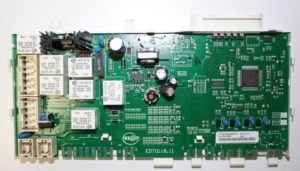
F11. Indicates that the Miele dishwasher is unable to drain wastewater into the sewer. The display may also show "Drain fault." There are four likely causes:
- a blockage has formed in the siphon, drain hose, pump or branch pipe;
- a blockage has formed in the waste filter;
- the pump is out of order;
- The heater relay that determines the pressure in the system burned out.
First, check the debris filter, then the trap fitting, the trap itself, and the drain hose. The blockage could even be in the sewer pipe, in which case you'll need to call a plumber, not a dishwasher repairman. Access the pump through the side of the housing and check for clogs or malfunctions. Lastly, test the heater relay and replace it if necessary.
F12. This error code clearly indicates a problem with the water supply to the Miele dishwasher. The code may be accompanied by the message "Water Intake Fault." To determine the cause of this error, you should first check to see if the cold water supply has been turned off. If there is water in the water supply, but it's a slow trickle, this could also cause the F12 error code. Is the water supply OK? Then you need to remove and inspect the water flow sensor. Remove the hose and blow out its tube, check the resistance, and check the wiring. Next, check the inlet valve; if it's faulty, replace it.
F13. This error is similar to the previous one, but it more closely indicates a problem with the pressure switch. Other reasons why water isn't flowing into the machine can be considered additional, but they shouldn't be discounted. We proceed in the same way as with error F12, but also check the inlet valve filter for blockages.
F14. This code indicates a fault with the heating element pressure switch. If this error occurs, first check the pressure switch with a multimeter, test its wiring, then check the flow meter, and finally check the circulation pump. If one of these components is faulty, it must be replaced.
F15. A rather unusual error that occurs when hot water is supplied to the dishwasher. This occurs when, during improper installation, the technician reverses the connections and supplies hot water instead of cold.
This can happen if the intention was to connect the machine to hot water, but since the hot water hose was connected to the wrong outlet, the Miele machine displays an F15 error.
F18. The inlet valve is constantly open, and water gradually flows into the machine by gravity. Meanwhile, the drain pump is constantly running and trying to pump out excess water. Most likely, the problem is a broken intake valve, it should be checked and replaced. In rarer cases, the control module may be faulty; if so, you should contact a specialist.
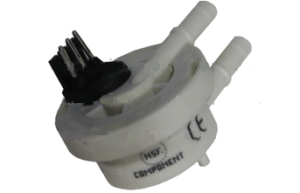 F19. This error indicates a malfunction or blockage of the water flow sensor. This code often appears when the sensor tube becomes clogged with debris, and cleaning the tube can solve the problem. The sensor may simply be burned out and needs to be replaced. Remove it and check it with a multimeter. Don't forget to test the wiring, too.
F24. This specific code appears when there is a problem with the heating element relay. It is usually caused by a short circuit in this component, which could occur due to water or foam ingress. In rarer cases, the code appears if the relay contacts are simply heavily oxidized. Cleaning the contacts or replacing the component resolves the issue.
F25. Error indicates insufficient water heating in the system or an inability to reach the temperature set by the program. How to fix this? Check the temperature sensor, heating element, and control module bus. A serious firmware error could also have occurred. In rarer cases, the error is caused by an excessive amount of detergent. Most often, the heating element or temperature sensor needs to be replaced.
F26. This error appears on the Miele dishwasher display in an emergency, when the heating element attempts to bring the water temperature in the system to a boil. A special sensor prevents this from happening. The cause is a faulty temperature sensor, which is measuring incorrectly and sending incorrect information to the control module. Replacing the temperature sensor resolves the issue.
F32, F33. These codes indicate problems with the door locking device of the Miele dishwasher. These codes can be seen when the door either cannot be opened or, conversely, cannot be closed. To fix a door defect, the locking mechanism is removed. Sometimes it can be fixed simply by cleaning or replacing the spring, but more often, replacement is required.
F36. This error indicates a problem with the door switch. This component should be checked with a multimeter and, if necessary, replaced.
F40. This error is quite serious in its consequences. It indicates very serious physical damage to the control board. In rare cases, this error can be fixed by replacing the firmware, but more often, the entire control board must be replaced. Both should be done by a professional.
Description of codes F42 through F91
F42, F47. These errors occur when there are problems with the electrical network. The sensitive sensors of the Miele dishwasher detect fluctuations and stop the machine, generating codes F42, F47. In this case, you should unplug the machine and wait until the electrical network returns to normal. If the problems occur frequently, you should reconnect the Miele dishwasher to the power supply via dishwasher stabilizerIt will protect expensive equipment from damage caused by power surges.
F51. When this error occurs, the control module stops receiving correct signals from the temperature sensor. The module stops washing dishes and starts the pump, which then begins pumping out water. The solution is to check and replace the temperature sensor, check its wiring, and check the control board bus.
F52, F69. These specific errors may occur when, due to a drop in water pressure in the system, the pressure switch shuts off the heater. The control module also stops the machine. What could have happened?
- There is a blockage near the circulation pump, so it does not work well and cannot create the required pressure.
- Dishes are incorrectly loaded into the baskets (flat, not sideways). Water collects in the plates and pots without returning to the system, causing the pressure to drop and triggering an error.
Modern dishwashers use little water to clean dishes. Even if a liter of water remains in the dishes and doesn't drain back into the system, it can cause a drop in pressure. Store items properly.
- The user added too much powder, which enriched the cleaning mixture, created foam, and interfered with pressure detection.
- The pressure relay has failed.
The user should check how the dishes are loaded in the baskets and reduce the detergent dosage. If this doesn't help, open the housing, check and replace the relay, and also check the circulation pump and circulation unit for blockages.
F53. This code indicates an error in the sensor that determines the program execution speed. The problem can only be solved by replacing the sensor and its power supply wiring.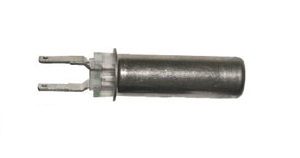
F63. This code is rare, but it does appear when the slide valve on a Miele dishwasher door lock needs repair. Solution: replace the valve, or if the components are missing, replace the entire lock.
F67. This code notifies the user that the circulation pump is running at high or even maximum speed. The circulation pump may be faulty, the connection between it and the control module may be broken, or the control board bus may be burned out. The circulation pump, power supply wiring, or control board repair may be necessary.
F68. This error appears on the Miele dishwasher display when the circulation pump stops responding to commands from the control module to turn it off. However, the pump continues to operate as if nothing happened. Solution: Check the circulation pump and its wiring; replace the part if necessary.
F70. This code indicates that the machine's leak protection system has been activated. The leak sensors in modern Miele dishwashers are protected from sticking, so if the F70 code appears, you should assume there's water in the tray. What should you do?
- Turn off the machine completely and turn off the water.
- Move the machine to the middle of the room.
- Lay down some rags and drain the water from the tray by tilting the body onto its right side.
- Remove the right and left walls of the housing and find the leak.
- Eliminate the leak, lower the sensor float, assemble and check the machine.
F84, F85. These errors indicate a malfunction or defect in the door locking device. The component is not responding to commands from the control module or is executing them incorrectly. You should first inspect the wiring, then the component itself, and then test the control board firmware.
F86. This code indicates that the user did not close the salt reservoir cap properly or forgot to close it altogether. Tighten the reservoir cap, located at the bottom of the Miele washing machine's wash chamber, and the error will disappear.
The sensor on the salt tank lid may break, in which case you can simply replace the lid.
F87. This code can be seen when problems occur with the machine's ion exchanger. It may not be sending a signal because the sensor itself has failed, or the ion exchanger may be underperforming because the user hasn't added salt to the machine in a timely manner. To fix the error, you need to look at the ion exchanger; it will probably have to be replaced.
F88. The water turbidity sensor has become unresponsive. Most likely, the sensor is simply heavily clogged and requires cleaning. The connection between the control module and the turbidity sensor may also be disrupted, or the sensor may have simply burned out. Check the sensor itself and its wiring with a multimeter, and clean it with a cloth if it's dirty. The sensor's conductive tube may also need to be replaced.
F91. This error indicates a faulty sensor that detects the amount of dishes in the Miele dishwasher's baskets. In some cases, the error doesn't stop the machine from running, and after a short pause, the program restarts successfully. If you want this function to function correctly in your machine, you need to replace the load sensor.
So, the Miele dishwasher's control board contains a large number of self-diagnostic codes in its memory. If you decipher them correctly and know how to use them, you can detect a defect in a matter of minutes. This is what experienced dishwasher technicians do, but even beginners can master these skills. The main thing is to study the material thoroughly. Good luck!
Interesting:
Readers' comments
Headings
Washing machine repair




For buyers




For users


Dishwasher




Add a comment