
Samsung dishwasher errors
 Any system error on a Samsung dishwasher catches the user off guard. You need to wash the dishes urgently, but suddenly the machine refuses to work and displays a strange code. To solve the problem, you need a reference book with Samsung dishwasher error codes. But what if you don't have one and the problem persists? Use our article to figure out what error is plaguing your dishwasher and what it means.
Diagnostic features
We'll definitely provide a list of error codes with their meanings below, but now I'd like to say a few words about how to correctly interpret these codes. Many novice repairmen criticize the developers of Samsung dishwasher self-diagnostic systems, claiming they came up with a system of codes that don't indicate a problem at all, but rather confuse the repairman.
In reality, you just need to understand the principles of how to use code decoding and what to look for to accurately determine what's wrong with your machine. And, of course, you need to gain experience. The golden rule: if any system error occurs, the possibility of a control module failure cannot be ruled out. The mechanic must always keep this in mind, and if checking the primary causes does not yield any results, he must look at the secondary causes, the first of which is a defective control module.
It is not easy for a novice mechanic to identify a defect in the control module, let alone eliminate it.
If the defect points to a specific component, such as a pump, you need to check not only that component, but also its power supply wiring, as well as the bus on the control board that controls it.error codes for different dishwashers This is just the beginning. The more comprehensive your approach to troubleshooting, the more successful you'll be.
Meaning of codes
So, we've finally reached the Samsung dishwasher self-diagnostic system. In this section, we'll list the error code, the defects that caused it, and discuss how to fix them. Let's get started!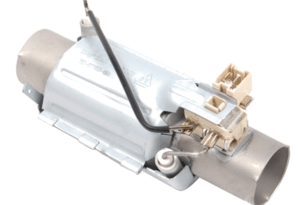
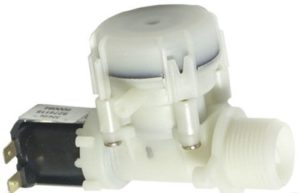
- E1 This code indicates that the machine is taking too long to fill with water. This could be caused by a water supply failure, a clogged or pinched inlet hose, or a clogged flow-through filter located in the inlet valve thread. To resolve this, check the water supply and hose. You should also clean the flow-through filter on the inlet valve.
- E2. Indicates a problem with wastewater drainage. The drain hose may be pinched or clogged. The debris filter or one of the pipes may be clogged, or perhaps the pump itself is the problem; it needs to be checked. First, forcefully drain all the water from the machine using the button, and then check each of the above components one by one. Most likely, there's a blockage somewhere.
- E3: The water remains cold. The heating element is responsible for heating the water, so it's checked first. Second, check the thermostat, and third, pay attention to the wiring and control module bus. All these components can be accessed through the side panel of the Samsung dishwasher.
To check these parts, you'll need a multimeter. If you don't know how to use one, it's best to call a professional.
- E4: The circulation system is overflowing with water. Excessive water may be entering the machine if the inlet valve is not fully closed. The problem may also be caused by the pressure switch (level sensor) or the electronic module. Testing should begin with the inlet valve, then move on to the pressure switch, and then to the electronics. Defective components must be replaced.
- The E5 error indicates insufficient water pressure. Why does this happen? Firstly, because the pressure switch is faulty; it doesn't indicate how much water has already been pumped in or whether the inlet valve should be opened. Secondly, because the inlet valve or inlet hose is clogged. Thirdly, the water pressure in the water supply has dropped significantly. How can this be fixed? You need to start by checking the inlet valve and hose, and then move on to the pressure switch.Focus on the electrical components of the level relay.
- E6, E7 These two errors have the same meaning: a problem with the water temperature detection. Typically, in this situation, the machine simply doesn't heat the water, leading some users to mistakenly assume the heating element is broken. In reality, the temperature sensor needs to be checked and replaced, as this part is not repairable.
- This error code indicates a defective water distribution valve, also known as the alternate valve. To fix the problem, access this valve through the right side wall of the dishwasher, check its resistance, and if it's broken, replace it.
- E9. This code indicates a defect in the button that initiates any dishwasher program. This could be due to a short circuit or worn contacts. You'll need to disassemble the control panel to clean the button contacts. If that doesn't help, you'll need to replace the contacts.
- EA. This error indicates that the machine contains slightly more water than it should. Most likely, the pressure switch is "lying." This issue is usually caused by a clogged water level sensor tube or by the sensor being positioned incorrectly. Solution: check the pressure switch, clean it, and install it correctly.
The point is that the dishwasher pressure switch must be installed strictly in the direction of the water flow. A leftward tilt is acceptable, but no more than 30 degrees.0If the tilt is greater, the sensor may not work correctly. A tilt to the right is unacceptable.
The list of errors beginning with the letter E is exhaustive, but that doesn't mean the self-diagnostic system's database is limited to these errors. There are specific codes consisting of two or even three characters; let's take a look at them.
- 3E2 This code indicates that the signal from the tachometer sensor has been lost. This means the control module doesn't know how fast the engine is rotating. You'll need to locate this sensor on the engine housing, check it, paying particular attention to the power supply wiring, and replace it if necessary.
- Die. This rather specific code indicates that the dishwasher door is not closed. Perhaps the user simply didn't close the door properly, or there may be a problem with the contacts on the lock. If you can't close the door, you'll have to disassemble it and look at the locking device and its contacts.
- Le. This code appears when the leak protection system is activated. Most likely, the tray is full of water, or the contacts on the sensor are simply stuck. Remove the side panel of the machine, reach into the tray, and feel. If there is water, you'll need to drain it and investigate the cause of the leak. If there is no water, move the sensor to clear the sticking point.
- Fe, He. These two codes can appear on machines with a turbo dryer. The first code appears when foreign objects get caught in the fan, and the second indicates a problem with the drying sensor. You need to inspect and clean the fan, and check the sensor. If necessary, both can be easily changed.
So, we've studied and deciphered dishwasher errors. Understandably, you have dozens of additional questions, which we anticipated, but we can't answer them in this publication. Stay tuned for our upcoming articles, and you'll find the answers. Good luck!
Interesting:
Readers' comments
Headings
Washing machine repair




For buyers




For users


Dishwasher




Add a comment