
How to stop an Indesit washing machine during a wash cycle?
 If a breakdown or other urgent need forces you to stop your Indesit washing machine mid-cycle, you need to do it correctly. Simply unplugging the machine and opening the door won't do the trick: you'll flood the floor with soapy water, damage the machine, and leave your laundry unwashed. To stop and unlock it safely and without damage, you need to strictly follow the instructions.
Hardware shutdown options
There can be many reasons why a washing machine stops during a wash cycle: from a passport forgotten in a pocket to an excessively loud and suspicious knocking sound in the washing machine. In any case, you need to quickly get your bearings and choose the safest way to turn off the washing machine. The manufacturer Indesit has provided for several possible scenarios for this situation.
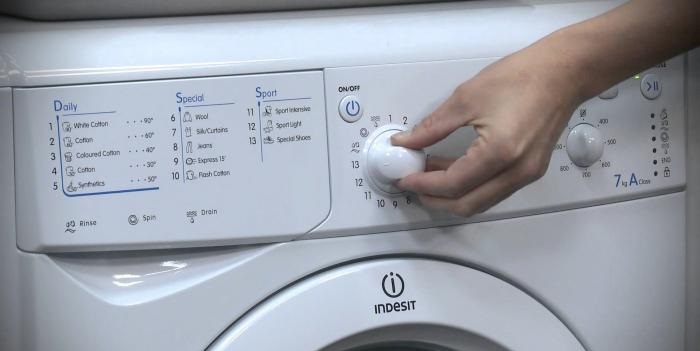
- Pause the washing machine temporarily. If a foreign object gets into the machine or you urgently need to add an item to the drum, you can pause a running program. It's important to do this within 3-5 minutes after starting, otherwise the drum will fill with water, making it impossible to open the door without flooding. To do this, press the "Start/Pause," "Pause," or simply "Start" button, then turn the dial to the "Stop" position. If the machine doesn't have a pause function, turn the dial immediately. The indicators on the dashboard will flash, the cycle will stop, and after 45-60 seconds, the electronic door lock will release. The machine will then unlock without any problems and allow you to fix the problem.
Modern Indesit models are able to remember the program in the event of a forced stop and will continue washing at the same speed after the system is restarted.
- Stop the washing machine completely. The pause trick won't work if the drum is full. Before turning off the system and opening the door, you'll need to assess the amount of water and drain it using a special program or the emergency drain. In the first case, press the "Spin" or "Drain" button, and in the second, unscrew the drain filter. We'll explain how to do the latter in detail below.
Trying to stop the washing machine during a cycle by unplugging the power cord, simulating a power outage, is a last resort. Such an intervention is only justified in the event of a genuine danger, a possible power leak, or significant power surges. Remember that the software in Indesit washing machines is very sensitive to power surges, and sudden surges can damage the control board, including resistor failure or terminal detachment.
Unlocking the door
Forced machine shutdowns don't always go smoothly. Although rare, it does happen that the door won't open after the program is turned off. This situation is considered abnormal and requires the intervention of service center repairmen. But with the right approach, you can handle the door lock yourself. To unlock the door of a stopped washing machine, follow these steps.
- Take a thin rope or wire. The cord should be slightly longer than the diameter of the hatch.
- Thread the wire into the gap between the door and the machine body on the right side.
- Pull the cord so that it presses on the door lock.
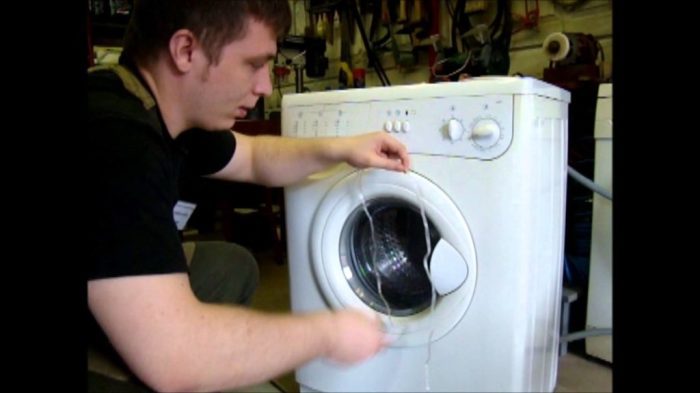
If you can't reach the lock, you can try another method. Take a putty knife, insert it into the gap described above, and press down on the lock tongue. It's important to proceed with extreme caution here, otherwise you could easily damage the washing machine's body and ruin its appearance. If the wire and putty knife fail, try the third method.
- We disconnect the machine from communications.
- We unscrew the two bolts holding the cover from the back wall.
- Push the cover away from you until the latches engage and remove the panel.
- Take a thin “minus” screwdriver and insert it inside the washing machine right up to the lock with the door lock.
- Using a flashlight, we try to find the plastic plate on the locking mechanism and move it to the left.
If everything is done correctly, you'll hear a distinctive click, after which the door lock system will shut off. All that's left to do is grab the handle and pull it toward you. Before opening the door, make sure the drum is not filled with water.
We remove liquid from the tank
Before stopping the cycle and opening the door, empty the washing machine's drum. If the "Drain" and "Spin" programs fail to activate for some reason, you'll have to drain the water manually. It's easier and safer to use the emergency drain valve, which means removing the machine's debris filter.
If the machine was washing items using a program that heated the water to 40-90 degrees, then before unscrewing the filter, you need to wait 20-30 minutes for the washing machine to cool down!
- We disconnect the machine from the mains.
- We find a rectangular or square shaped technical hatch cover in the lower right corner of the Indesit.
- We pry up the hatch cover with a flat screwdriver and unclip the plastic holders.
- We remove the part and on the right side we find a black “washer” – the cover of the debris filter.
- We tilt the body of the unit forward, placing a solid platform (for example, a couple of books) under the rear legs.
- We cover the area around it with rags and place a container under the filter to collect the water.
- We take hold of the protruding “handle” of the filter and unscrew it, turning counterclockwise.
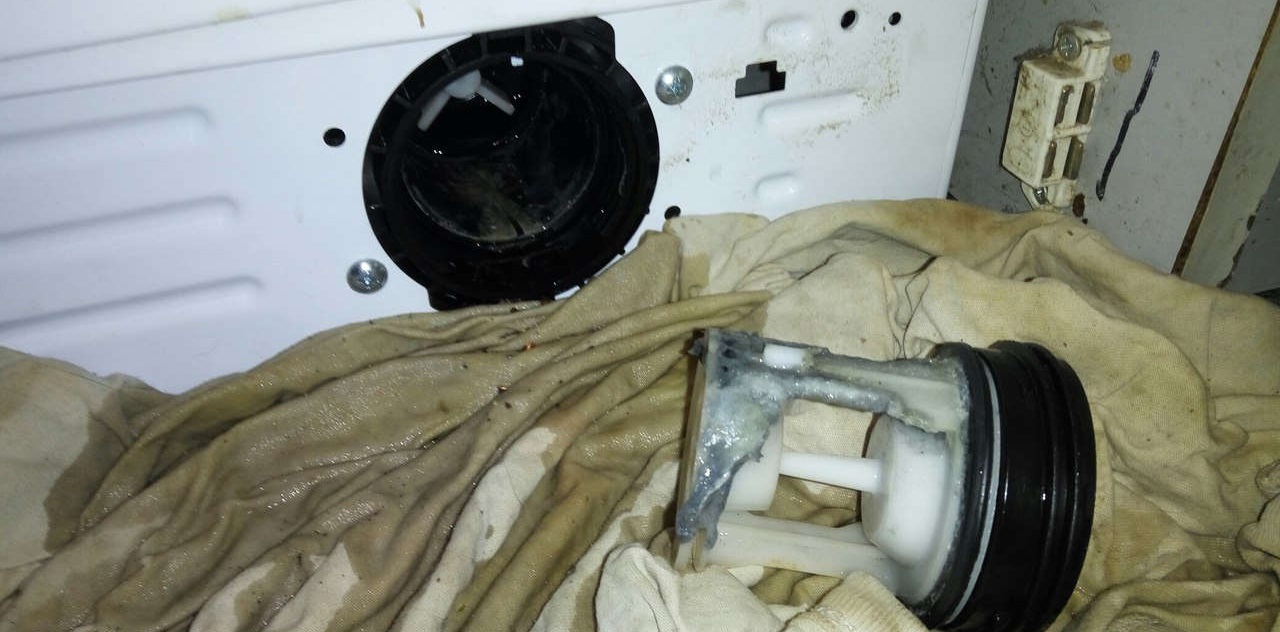
Another option is to drain the water through the drain hose using gravity. Disconnect the hose from the drain, extend it below the tank, and lower it into a prepared basin. This will stop the "siphon effect" and the waste water will automatically drain from the drum.
The equipment does not respond to user commands.
If the “Stop”, “Pause” buttons and turning the programmer do not help, then the only option left is to use the emergency stop of the washing machine. In simple terms, you need to de-energize the machine by removing the power plug from the socket, wait 15-30 minutes and restart the system. In the best-case scenario, the previous settings will be reset, and the machine will allow the cycle to continue. In the worst-case scenario, the reset won't help due to a faulty control board, and you'll have to contact a specialist for a comprehensive diagnosis. However, sometimes the system freezes and fails to respond to user commands for the following reasons.
- Drum overload. Modern washing machines are equipped with special sensors that automatically measure the weight of the laundry loaded and, if the load exceeds the specified limit, prevent further washing. The cycle will not begin until the excess load is removed.
- Inappropriate wash cycle. Some standard programs, such as "Delicates," "Wool," or "Down," do not include a spin or drain cycle. This means the system stops after the rinse cycle and cannot continue. Carefully check the control panel and select the correct button.
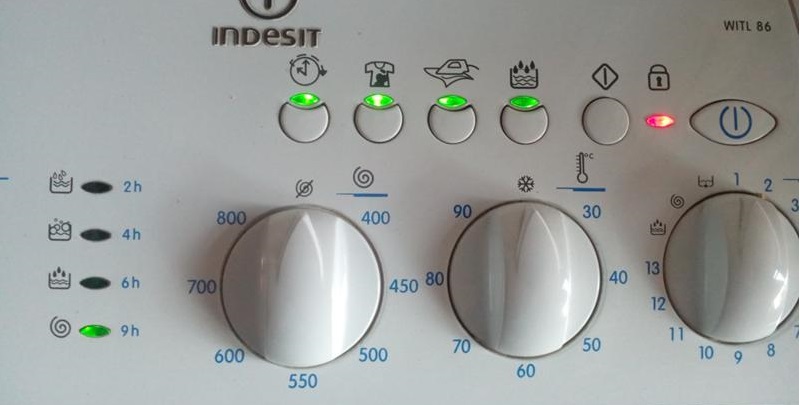
- Imbalance. If the drum stalls mid-spin or after 2-3 spin attempts, the problem is imbalance. Many washing machines have imbalance protection, pausing the wash cycle for safety if items become clumped. Fixing this is simple: open the door and distribute the clothes evenly across the drum.
- Malfunction. When there's no overload or imbalance, and no mismatch between functions and programming, there's only one possible cause for the machine to stop automatically: a malfunction. In this case, pay attention to the display, decipher the error code, and determine the location and extent of the problem.
In addition to the error code, other factors also indicate the nature of the problem. For example, a stop at the beginning of a cycle indicates a problem with the pump or heating element, while a freeze during the spin and rinse cycle indicates a problem with the drainage system. A drum that doesn't spin or an accompanying hum indicates a burnt-out motor.
Interesting:




2 reader comments
Add a comment
Headings
Washing machine repair




For buyers




For users


Dishwasher




Thank you, you helped us!
Thank you, it worked!