
What distance should there be between the washing machine and the wall?
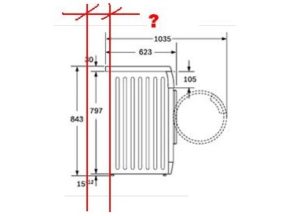 According to manufacturer recommendations, all large household appliances must be placed at a certain distance from walls, other appliances, and furniture. Washing machines are no exception. The main reason why washing machines shouldn't be installed too close to each other is because of how they operate. During the spin cycle, they can bounce, rock, and shift slightly from their original position. Such movements can damage the machine itself and nearby objects. Let's explore the optimal distance from a wall to a washing machine.
Need space for communications
Let's look at why it's important to leave a gap between the appliance and the washing machine. Firstly, there's a water intake hose on the rear wall of the machine. Although it can be positioned along the wall, saving a significant amount of space, a few centimeters of clearance are still necessary. Additionally, some models also have a water drain hose at the rear, which has a slightly larger diameter than the inlet pipe. There is a power cord outlet on the back of the device, and if you move the device too close to the wall, you can easily crush the cable.
There should also be a gap between the wall and the washing machine to ensure the appliance can be easily connected to the building's utilities. If a leak occurs, with the washing machine pressed against the wall, the owner won't be able to quickly respond to the situation and take corrective action. This could leave them having to repair not only their own bathroom but also the neighbors' apartment below.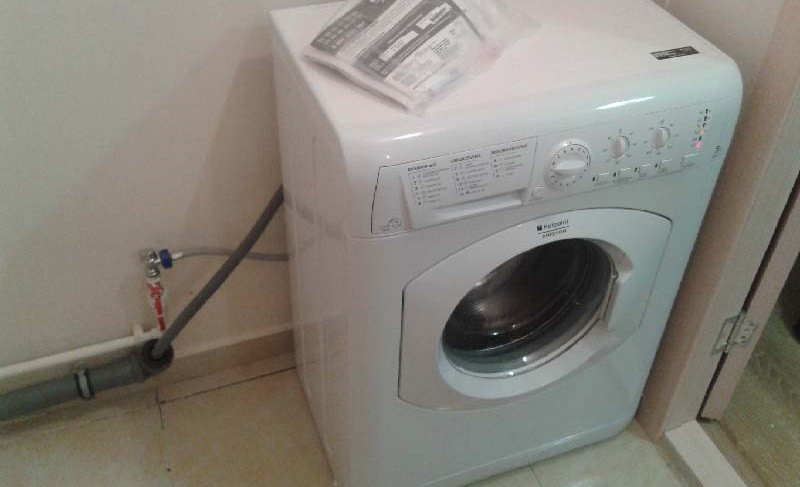
Gap size
What is the optimal distance from the wall to the washing machine? To ensure a smooth connection to the house utilities, leave about 5-10 centimeters. A human hand can easily fit through this gap. This clearance is also sufficient to stop any emergency leaks.
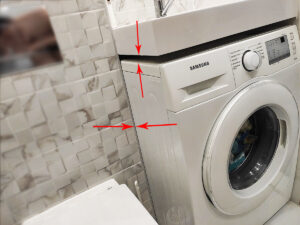
The side clearance from the wall to the washing machine should be at least 1 centimeter. This applies only if the floor and walls are perfectly level. If this is not the case and the machine is not level, it is best to double or triple the recommended clearance (up to two to three centimeters).
To reduce the amount of vibration from side to side during operation, you can purchase special balancing stands for the washing machine body or an anti-vibration mat.
Very often, the flooring under a washing machine becomes slightly deformed. The floor sag isn't noticeable to the owner, but the machine itself tilts slightly to the side. This can lead to malfunctions. Let's look at how this situation affects the machine's performance.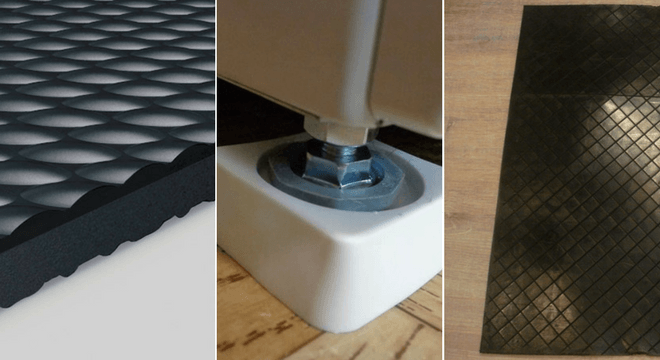
For example, the washing machine has tilted to the right due to a defect on the floor. Now, the load during the spin cycle is distributed unevenly across the body, with more weight falling on the right counterweight. After about six months, the right counterweight will simply fail. The washing machine will begin to "freeze" during operation, as the system sensors will incorrectly read the drum load. Thus, with a maximum load capacity of 6 kg, the user will have to load a maximum of 4 kg to prevent the machine from freezing during the spin cycle.
The installation of an automatic washing machine must be done correctly. It is essential to leave gaps between the device body and surrounding surfaces. It is also necessary to monitor the floor level under the washing machine, install special devices that absorb vibrations and prevent the machine from swinging.
Interesting:

Readers' comments
Headings
Washing machine repair




For buyers




For users


Dishwasher




Add a comment