How to disconnect a washing machine from the water supply?
A washing machine is a kitchen or bathroom fixture that's rarely moved, meaning it's rarely disconnected from the water supply. However, there may be times when instructions on how to disconnect a washing machine may be needed. For example, the machine may have broken down and need to be dismantled and transported to a service center, you may have decided to replace an old unit with a new one, you're planning a renovation in your room, or you may need to transport the washing machine to a new home. So, let's figure out how to properly disconnect the water supply.
Do you need a tool?
Depending on how the machine is connected to the water supply and what type of hose is on the washing machine, you may not need any tools at all.
If the inlet hose has plastic fittings and nuts at both ends, then their connection and dismantling are carried out manually, Because plastic is a fragile material, this type of hose is the most common and comes with the machine. However, it's not always long enough, so it needs to be replaced.
If the hose end has a metal nut, which can rust to the tee or pipe over time, you may need pliers or a small wrench, depending on the size of the nut. If the connection is secured with a clamp, a Phillips-head or flat-head screwdriver will be useful.
WD-40 will help remove rust and make it easier to unscrew the inlet hose.
Shutdown algorithm
Now let's look at the order and what to do when you need to safely disconnect the washing machine from the water supply.
Unplug the washing machine when the cycle is complete. Do not unplug it while the cycle is running.
Turn off the water supply valve to the washing machine. This is typically located behind the washing machine or under the sink if the machine is in the kitchen.
Move the machine away from the wall or out of the kitchen cabinet so you can easily reach behind it. Make sure the inlet and drain hoses aren't too tight.
We take a bucket of water and spread rags on the floor in case water spills.
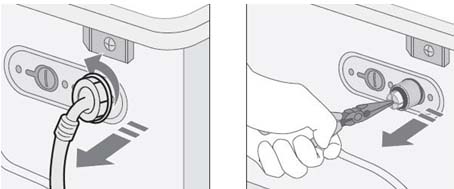
We disconnect the hose from the machine by unscrewing the nut counterclockwise.
When using the tool, do not apply excessive force, otherwise you may damage the nut and strip the threads.
We tilt the hose into the bucket and drain the remaining water.
Similarly, unscrew the hose from the tee or pipe. The inlet hose is now removed.
Dismantling the entire washing machine doesn't end with disconnecting the inlet hose. To be able to move the machine to another room or transport it, you also need to disconnect the drain hose from the sewer. Of course, if the hose was simply thrown over the edge of the bathtub, then practically nothing needs to be done. But When connecting the drain hose to the sewer, it must be carefully disconnectedThe drain hose is removed from the branch of the sewer pipe. The remaining water is drained into a bucket.
Transportation Tips
To transport a washing machine, it needs to be prepared. The power cord needs to be carefully coiled and secured to the back wall with a clamp. If there's no such clamp, it should at least be tied together. The inlet hose is dried and also secured to the clamps on the rear wall of the machine.You can do the same with the drain hose, or you can clean it right away; a description of this work is in the article about Cleaning the washing machine hose.
If the hoses can't be secured to the rear cover, wrap them in a cloth and place them inside the machine. Also, be sure to check for any remaining water in the detergent drawer and wipe the drawer opening with a dry cloth. Drain the water and, at the same time, clean the drain filter.
Important! There should be no water left in the machine, as it could burn out if it gets on the control module when turned on.
After this, plug the hose holes, and secure the tank with shipping bolts. The machine itself can be packed in bubble wrap and transported only vertically.
So, removing the inlet and drain hoses is quite easy. Even a woman can do it, although why bother if there's a strong man nearby? Take care of your equipment and be careful.

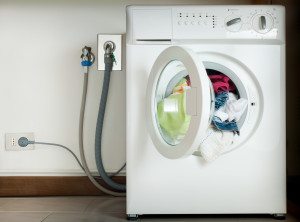 A washing machine is a kitchen or bathroom fixture that's rarely moved, meaning it's rarely disconnected from the water supply. However, there may be times when instructions on how to disconnect a washing machine may be needed. For example, the machine may have broken down and need to be dismantled and transported to a service center, you may have decided to replace an old unit with a new one, you're planning a renovation in your room, or you may need to transport the washing machine to a new home. So, let's figure out how to properly disconnect the water supply.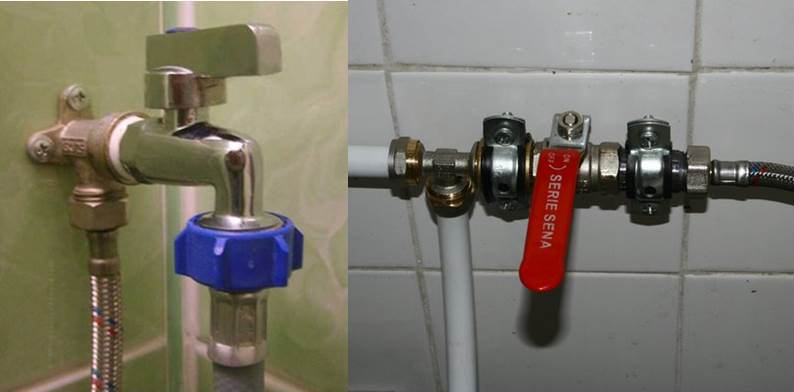















Add a comment