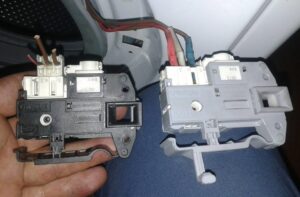
Sometimes replacing the door lock immediately isn't possible: the store doesn't have the necessary part or it's too expensive. Online shopping isn't helpful either—orders typically take 7-14 days to arrive. You're forced to either live without your washing machine during this time or try to "bypass" the electronic lock. A temporary solution is to run the machine with the lock disabled. Let's figure out how to disable the door lock on your washing machine and "trick" the system.
Gaining access to the castle
Disabling the UBL means closing its contacts – then you can start the washing machine without the lock. But first, the device must be dismantled. The easiest way to do this is through the top cover. Here's how:
disconnect the washing machine from the power supply;
open the hatch door;
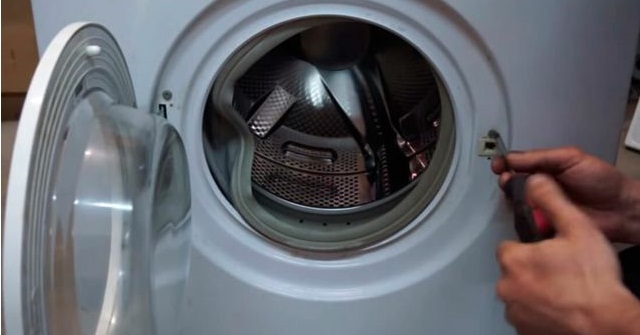
we look at the keyhole - the hole in which the door hook is fixed;
we find two screws next to the well and unscrew them;
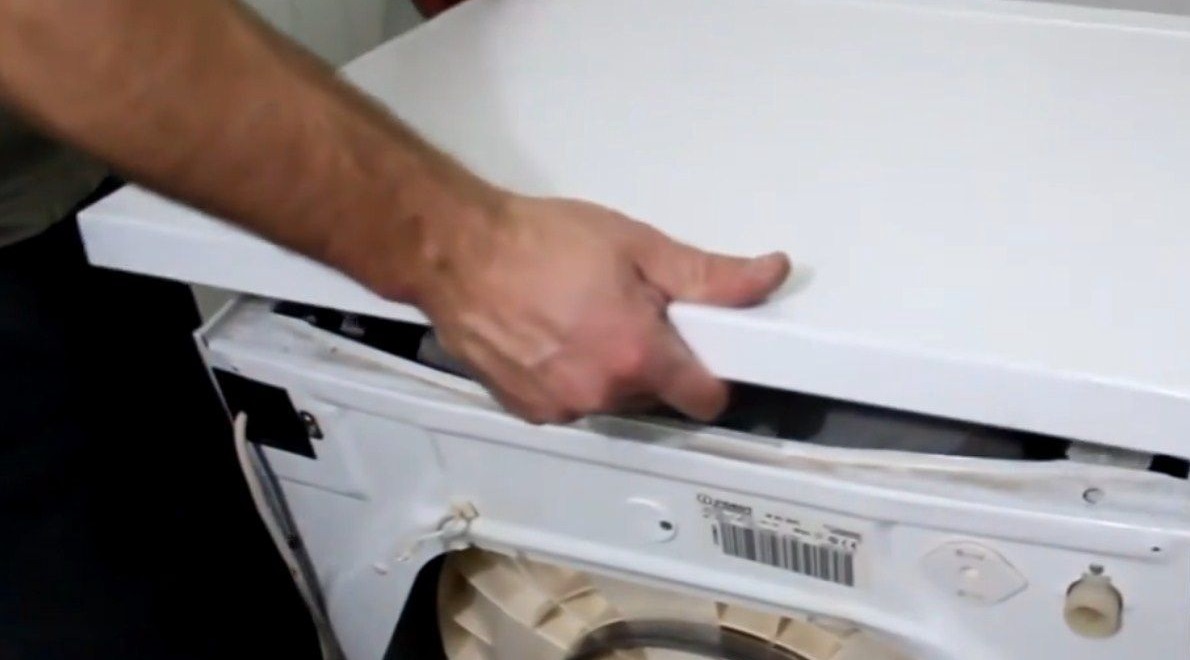
unscrew the screws holding the top cover from the back panel;
we push the cover away from ourselves and, lifting and pressing the latches, disconnect it from the body;
tilt the washing machine backwards so that the edge of the drum “comes unstuck” from the front wall;
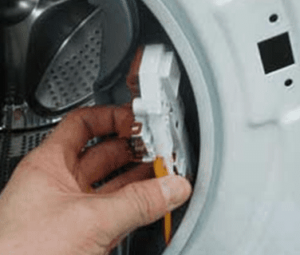
we put our hand through the resulting gap up to the blocker;
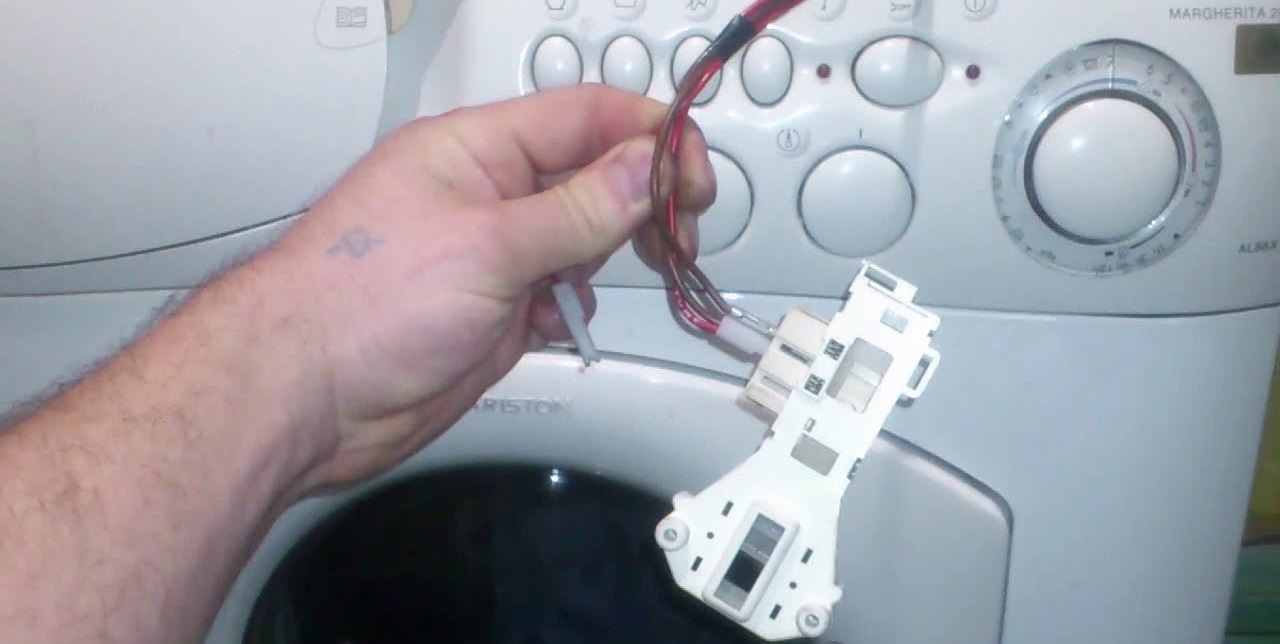
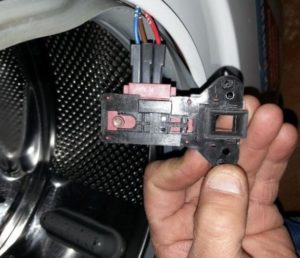
We unhook the wires from the UBL and, pulling it towards ourselves, take it out.
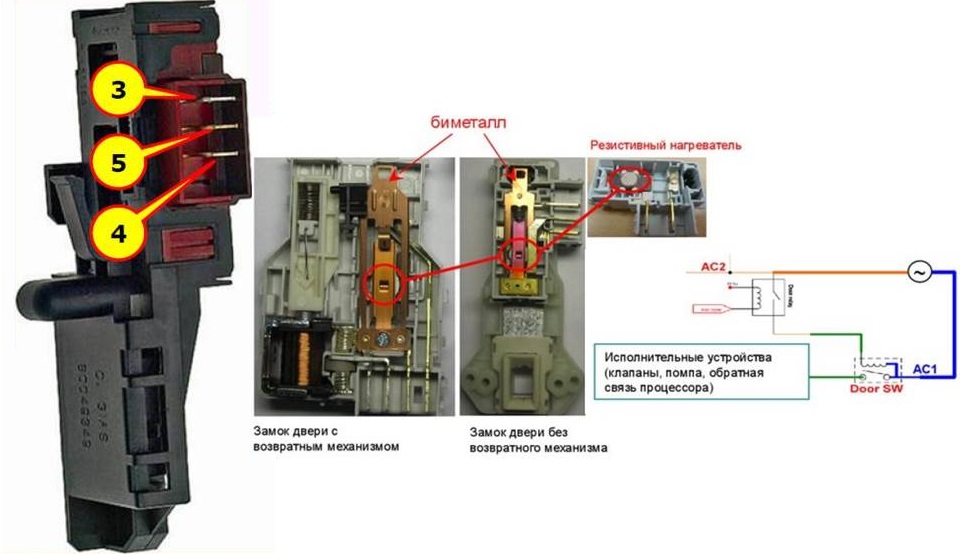
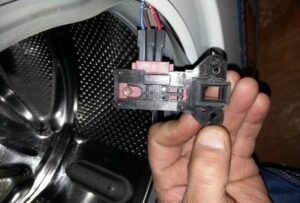
To turn off the UBL, you need to close the L and C contacts on it.
Another option for removing the door lock is through the hatch door. You need to open the drum, remove the seal and the clamps that hold it in place, and then access the unit through the gap between the housing and the tank. This is easier and faster, but riskier. The problem lies in the rubber seal: it's very difficult to tighten it back correctly. The slightest mistake will cause a leak.
We create a "chain" without UBL
Removing the door lock is the first step. Next, you need to trick the washing machine's "brains" into thinking the lock is working properly and activated. To trick the control module, you need to close certain contacts on the device's "socket"The board will then detect that the lock is enabled and allow the wash cycle to begin.
To understand where to close the door, you need to understand the UBL contacts:
When starting a cycle, the washing machine supplies voltage to contacts N and L;
under voltage, the thermal coil heats up, and along with it the bimetallic plate;
the plate bends, closing relays L and C;
The board reads the signal and starts washing.
Caution! Without a working door lock, the door can easily open during washing!
Closing relays L and C signals the control board that the electronic lock has been activated. Therefore, to disable the door lock, these contacts must first be connected. Any jumper of suitable size will do.
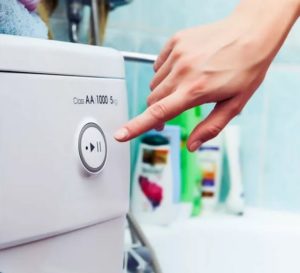
After a forced lock, a new cycle doesn't start immediately. The board "thinks" for a few minutes after pressing the start button, but eventually gives the go-ahead to start washing.
Some modern circuit breakers can't be fooled by manual short-circuiting. Their systems are programmed with a special protection algorithm that requires more than just a short-circuit. If you attempt a manual "setup," the sensor will detect a malfunction and display an error code. However, most washing machines ignore the "extra" jumper and continue to operate.

 Sometimes replacing the door lock immediately isn't possible: the store doesn't have the necessary part or it's too expensive. Online shopping isn't helpful either—orders typically take 7-14 days to arrive. You're forced to either live without your washing machine during this time or try to "bypass" the electronic lock. A temporary solution is to run the machine with the lock disabled. Let's figure out how to disable the door lock on your washing machine and "trick" the system.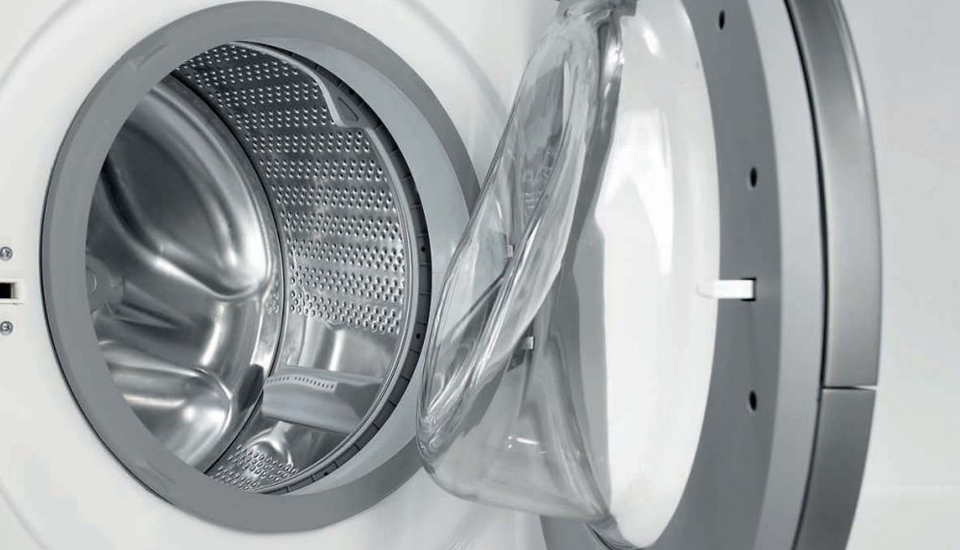














Add a comment