
How to unscrew and remove a filter in a washing machine
 Small items left in laundry pockets don't disappear without a trace; they end up in a specially designed debris filter. This collects all foreign objects that end up in the drum and must be periodically removed, and the element itself must be thoroughly rinsed.
Knowing how to unscrew a washing machine filter and clean it of accumulated dirt can prevent many problems with a clogged drain. However, simply unscrewing it isn't always the solution, as the filter often becomes firmly stuck to the drain pan and won't budge. Below, we'll discuss what to do even in the most severe cases.
How does the problem manifest itself?
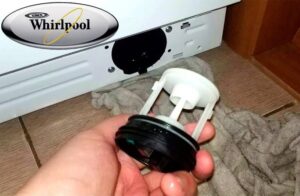
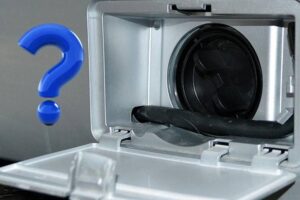
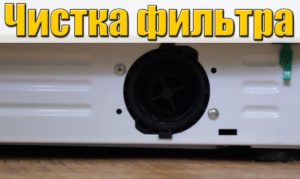
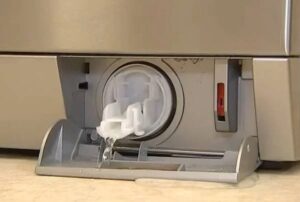
Cleaning the filter is easy at first. Simply pry open the drain plug located at the bottom of the front of the unit and unscrew the plastic part with the round top. Just be prepared for any remaining water to drain out of the newly exposed hole, and be sure to place a container or rag under the stream.
Please note! Manufacturers recommend cleaning the drain trap at least once every 2-4 months.
But not all washing machine owners follow the operating instructions.Therefore, users often encounter a "blocked" filter after opening the hatch. We are talking about the following situations: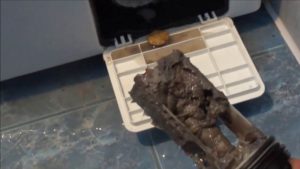
- the lid handle does not turn and it seems as if it is welded to the body;
- the handle turns, but not all the way, and stops at half or a quarter of a turn;
- The part has been unscrewed, but still cannot be removed from the hole.
The filter is most often clogged by accumulated objects: lint, wool, hair, paper, children's socks, and other small items. Long hair is especially dangerous, as it can become tangled around the filter's walls and the pump impeller. Another cause is excessive scale buildup on the filter threads, which acts as a superglue. This often occurs if more than six months have passed since the last cleaning.
What steps should be taken to remove the filter?
If you can't unscrew the filter the usual way, consider other methods. But before actually removing it, it's worth preparing. First of all, unplug the washing machine from the power supply and turn off the water, then cover the surrounding area with rags and prepare a container to collect the water.Next, we proceed sequentially according to the following instructions.
- Prepare pliers or round nose pliers.
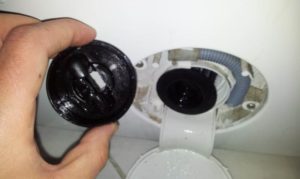
- We hook the handle of the filter plug.
- We carefully try to unscrew the filter.
Don't press with all your might - you need to act carefully and not break the part.
 If it won't come out, change tactics: tilt the machine back 45 degrees so that it rests against the wall. Make a fist and tap the filter several times. There's a good chance that any debris blocking it, such as bra wires, coins, or hairpins, will dislodge and make it easier to remove.
When the previous options fail, we turn to the most complex and effective method: cleaning the filter from the other side – through the hole under the pump. This requires access to the volute itself and removing the drain pump. This requires knowledge of the machine's operation, so if you're unsure, it's best to avoid experimenting and contact a professional service center. If you're not intimidated by the upcoming manipulations, follow the instructions below.
Methods of extracting the snail and pump
Before cleaning the filter through the snail, you need to locate the pump. Its location in modern washing machines can vary greatly depending on the load type and manufacturer. Knowing where the pump is located can save you time removing it. It is best to refer to the manufacturer's instructions and find the center of the drainage system on the page describing the internal structure.If you don't have the manual at hand, follow the steps below. Owners of front-loading machines will have three options to choose from.
- Through the bottom. Many washing machines have no bottom or can be easily removed. In these cases, the easiest way to access the volute is to tilt the machine back 45-60 degrees and locate the pump just behind the filter.
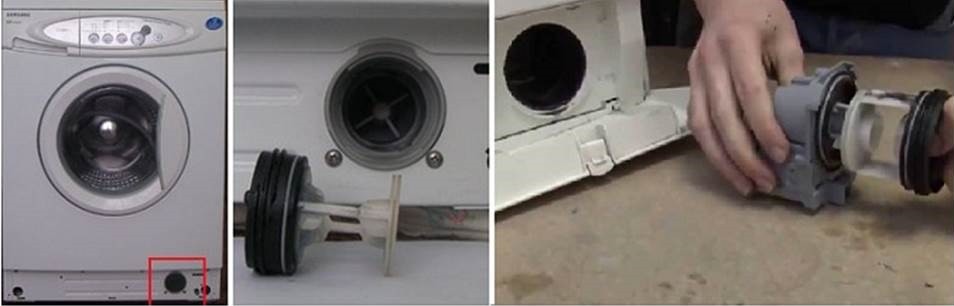
Important! This method is not suitable for Bosch models due to the metal strip on the bottom that secures the dampers, or for those machines with an Aquastop sensor at the bottom to prevent leaks.
- From the back. If the drain pump is located closer to the back wall, it's best to disassemble the washing machine from that direction. For example, this is the approach with Ardo, Indesit, BEKO, and Haier machines. To do this, simply move the machine away from the wall, unscrew four screws, and remove the panel.
- From the front. Owners of front-mounted Bosch and Siemens washing machines often have to access the pump through the front panel. This method is the most labor-intensive and time-consuming. First, remove the top of the unit by unscrewing the two rear retaining bolts. Next, loosen and remove the outer clamp on the sealing ring and tuck the rubber seal inside the drum. Also, disconnect the dispenser, control panel, and the locking system wiring. Next, close the door tightly, loosen the four screws, and remove the front panel. Finding the pump won’t be difficult – it will be right behind the filter.
For top-loading washing machines, emptying the dust bin is much simpler. The pump is located by the filter's location: whichever side—left or right—the filter is closest to—that panel needs to be opened. Unscrew a couple of screws and slide the removed panel aside. Once the pump has been located, you can begin:
We strongly recommend that you take a photo of the pump and all connected wiring beforehand to simplify the reassembly and connection process.
- disconnect the power wires from the part;
- we move a deep container under the pump or lay rags underneath it to avoid flooding;
Caution! Do not remove the filter immediately after each cycle, as hot water can cause serious burns!
- Using pliers or flat-nose pliers, remove the clamp from the drain pipe and disconnect the tube;
- We clean the glass through the freed hole, removing objects that interfere with removing the filter, and at the same time “check” the filter itself: if it has unscrewed, we stop and reassemble the machine, otherwise, we continue disassembling;
- we detach the drain hose from the snail by loosening the corresponding clamp;
- unscrew the screws holding the pump and carefully remove it together with the snail;
- We inspect the pump and, by pressing the latches by turning the housing counterclockwise or by unscrewing three screws along the diameter, we detach the cup.
It is enough to thoroughly clean the freed glass from dirt and debris. Particular attention is paid to threads, wool and hair. The drain filter should unscrew easily and quickly. All that's left to do now is open the trap and remove any foreign objects, dirt, or scale.
Alternative solutions to the problem
It's not always possible to remove a stuck drain filter even after removing the pump. In such cases, the main cause is a thick layer of scale or sodium deposits from hard water. Removing these deposits is much more difficult than removing debris and dirt.
But this isn't a reason to buy a new washing machine. There are several alternatives that will cost significantly less.
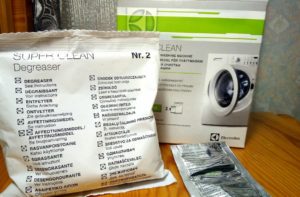
- Dissolve limescale. The best way to remove limescale is with citric acid. To do this, add 1-2 tablespoons of citric acid to the drum and run a short cycle at a water temperature of 40-60 degrees Celsius. If the pump is already disassembled, soak the filter cup in the same solution, using a ratio of 1 tablespoon per 6-liter basin. Remember, the water temperature should not exceed 60 degrees Celsius, otherwise the rubber seal will be severely damaged. It would be a good idea to weigh down the parts so that the plastic case does not float to the surface for 1-2 hours. Once the time is up, remove it, rinse it under cold water and try to free the catcher from the snail using any of the methods described above.
- Break off the filter. If the citric acid trick doesn't work, you'll have to take more aggressive action. Take pliers or wire cutters and carefully break off the fragile plastic housing of the filter. Then unscrew the remaining parts and remove the entire component. Be extremely careful not to damage the coil. Even a small crack can cause leaks.
Caution! Without understanding the internal workings of the washing machine, you can easily damage the wiring, pump, or other important parts of the washing machine, which will seriously worsen the situation.
- Remove the filter with the snail. Another quick option is to break off the cup along with the filter. Failure to follow the previous method will lead to the same outcome. This method is the most expensive, but it has an undeniable advantage: replacing both elements of the drainage system guarantees no leaks and a low risk of clogging.
If it was not possible to solve the problem “peacefully” and the part had to be broken out, then it is necessary to replace the defective elements. A new filter and pump volute can be found in specialized stores using the serial number of the existing washing machine.However, the more parts required for replacement, the more expensive the repair will be.
Therefore, it's recommended to adequately assess your knowledge, capabilities, and experience. And if you have the slightest doubt or misunderstanding about what to do, don't rush or experiment, but seek help from a service center.
Interesting:
3 reader comments
Add a comment
Headings
Washing machine repair




For buyers




For users


Dishwasher




Thank you for the useful information.
Thank you!
Useful information!
How do you get the filter out of a vertical Candy? I unscrewed the plug, and there it was.