
What is the difference between an automatic and a semi-automatic washing machine?
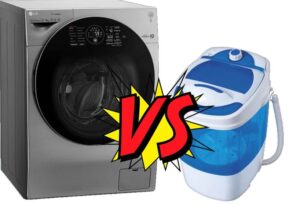 It would seem that nothing could confuse a modern person when studying descriptions of various washing machines, for example, in store catalogs or on specialized websites. In fact, some washing machine models are classified as automatic, while others are semi-automatic, which immediately raises the question of how an automatic washing machine differs from a semi-automatic one, and whether these differences are so significant.
Let's compare two types of machines
The main difference between a semi-automatic and an automatic washing machine is that, in the former case, human presence is still required throughout the entire washing process. While with an automatic washing machine, the user only needs to turn on the machine, add detergent, set the desired parameters, and start the wash, with a semi-automatic washing machine, the process is more complex and certainly not as short, and, it should be noted, quite labor-intensive. However, this explanation is too general; for clarity, it's better to compare the two point by point.
For example, an automatic washing machine automatically switches to the spin cycle after washing, whereas with a semi-automatic machine, you not only need to change the mode but also, as a rule, transfer the laundry from one drum to another. Filling and draining water in a semi-automatic washing machine is also handled by a person. With an automatic machine, the user only needs to select a program, load the laundry, and start the cycle.
Important! Based on the above, it can be logically concluded that semi-automatic machines do not require a connection to a water supply or sewer system, while automatic machines cannot operate without one.
Another significant difference is size. Semi-automatics are significantly lighter and more compact than their more advanced counterparts. For example, a semi-automatic machine weighs no more than 20 kg, and in some cases even less, 7-10 kg, while automatic machines can weigh up to 80 kg.
Automatic washing machines are more prone to breakdowns because they are much more complex. Semi-automatic machines have significantly fewer parts, and therefore break down less frequently. The favorite difference among semi-automatic machine enthusiasts is the price difference. By today's standards, they cost practically nothing.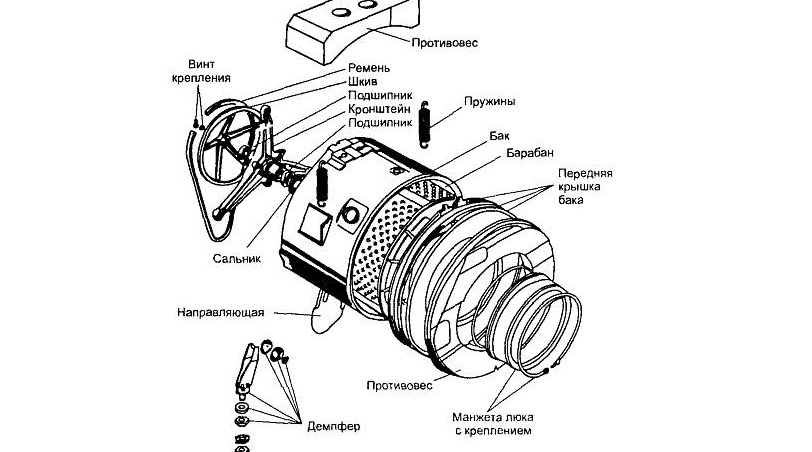
Automatic washing machines are great because they come with a variety of useful features. This allows you to select a setting for any type of laundry, and sometimes even dry it. Semi-automatic washing machines can't boast this. Semi-automatic washing machines can be used practically in the field. They only require a power source, making them ideal for use at the dacha or on long hikes when power is supplied through a portable power station.
The advantage of an automatic over a semi-automatic is also in its appearance. Modern automatic washing machines look very stylish and easily fit into a bathroom or kitchen. A semi-automatic, however, lacks the same stylish design, so many prefer to hide it away.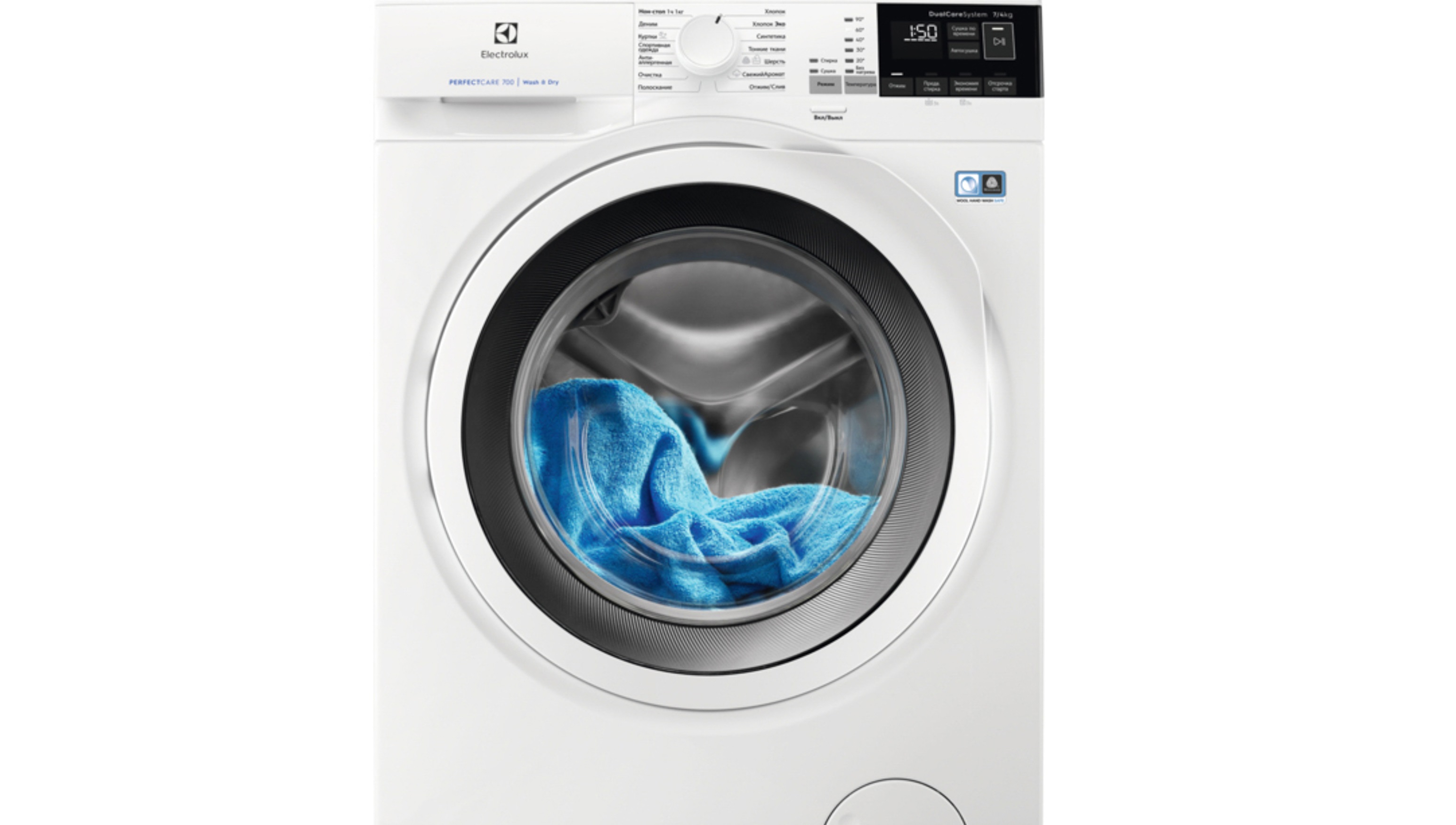
Finally, the laundry in the tank of a semi-automatic machine rotates using a special activator, while in an automatic machine the drum in which the laundry is located rotates.
As can be seen from the above, the difference between semi-automatic and automatic machines is quite significant. Fundamentally, they are two completely different types of equipment, each with its own pros and cons. They are similar in that both are designed for washing clothes, and most semi-automatic machines can also spin and rinse. Another similarity is that both machines use detergents, albeit with different characteristics and compositions.
Types of semi-automatic machines
Semi-automatic guns also differ from each other in some ways. You can choose the right option based on cost, size, and feature set. Based on additional functionality, there are two types of semi-automatic guns:
- Centrifugal.
- Without centrifuge.
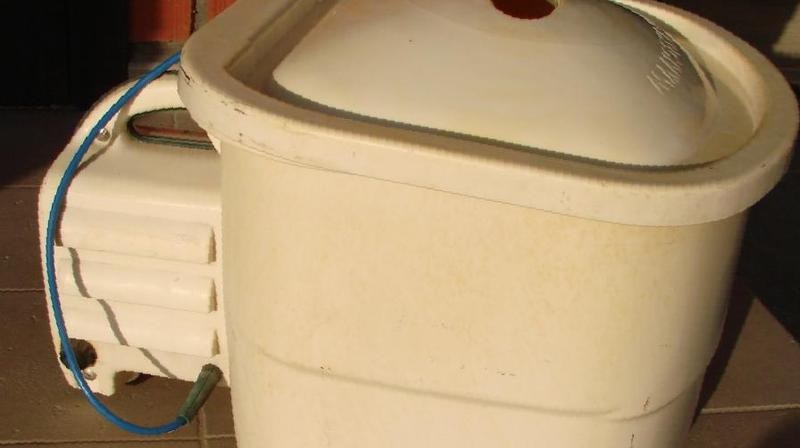
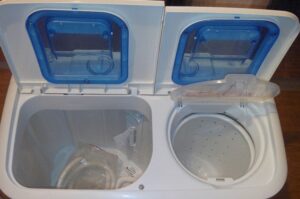
If the washing machine has only one compartment, it is the most compact, but at the same time primitive. This type of machine is not designed for spinning; it can only be used for washing clothes. If your washing machine has a second compartment, it's usually a centrifugal model with spin and rinse capabilities. The only catch is that you have to manually transfer the laundry into this second compartment.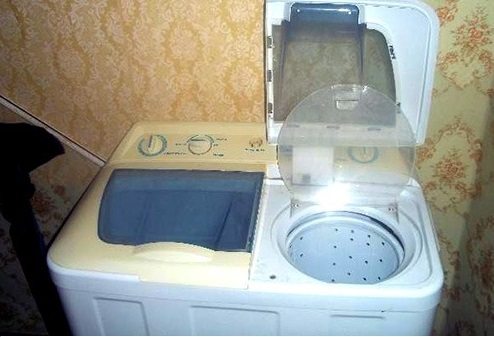
Machines without a centrifuge are often used in areas with poor power grids, such as in rural areas or while traveling. Spinning puts a significant strain on the power grid, and a washing machine won't be able to operate properly in such conditions. Models with a centrifuge are ideal for older people, as they essentially perform the same functions, but are much easier to learn. Depending on the type of rotating element, they are classified as:
- Activator.
- Drums.
Most semi-automatic machines are still activator-based, meaning an activator rotates the laundry in the drum. There are also models with a drum, but this immediately makes the washing machine closer to an automatic model, as it adds size, weight, and cost.
Interesting:


Readers' comments
Headings
Washing machine repair




For buyers




For users


Dishwasher




Add a comment