
What is the difference between dishwasher salt and regular salt?
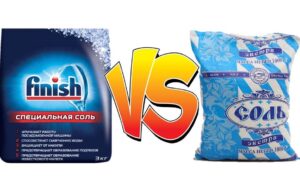 Many users are wondering why they can't replace dishwasher salt with regular table salt. The packaging for these special products claims they contain 99.9% purified salt crystals. So is it worth paying extra?
Is any kind of table salt suitable?
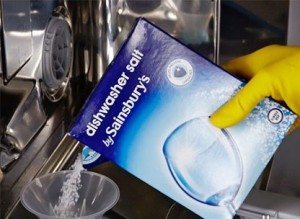
Dishwasher salt is essential for the proper functioning of the appliance. It replenishes the sodium in the ion exchanger. Salt granules regenerate the resins in the dishwasher's softener.
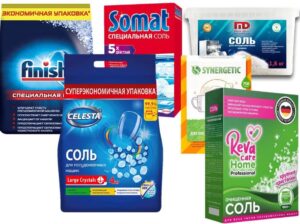
There is a special regenerating salt sold for dishwashers, which costs $2.50–$3 per 1.5 kg package.
However, many housewives are tempted to add regular salt to their dishwasher, mistakenly thinking it will save them a lot of money. In reality, this alternative isn't good for either the machine or your wallet. Let's find out why.
Iodized salt should never be added to a dishwasher. The resin in the softener is an excellent sorbent for iodine. It will primarily absorb iodine, rather than calcium and magnesium ions from hard water. As a result, the ion exchanger will cease to perform its intended function and will be impossible to restore.
Common salt comes in different grades:
- first;
- second;
- higher;
- extra.
Many users believe that coarse table salt can be placed in the dishwasher. This is a misconception. No coarse salt grade is suitable for ensuring the regeneration of the resin in the ion exchanger. There are two reasons for this: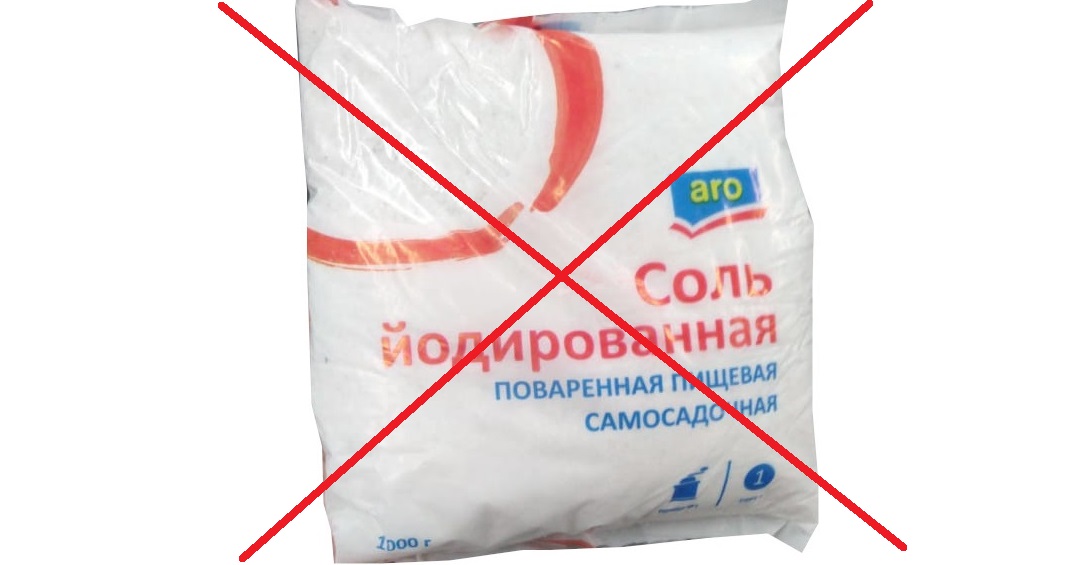
- unsuitable size of salt crystals;
- too much hardness salts.
Dishwasher salt is made in the form of large crystals. This size is optimal for gradual granule dissolution—they won't stick together during the process. Due to their moderate melting, they ensure proper regeneration of the resin in the ion exchanger.
Regular salt is very fine. These granules won't dissolve gradually; they'll immediately settle to form a sediment at the bottom of the container, which will eventually clump together. The resulting "stone" will remain in the tray for a very long time, preventing the resin from regenerating in the softener.
The second reason is the excessive amount of hardness salts in conventional granules. The resin in the ion exchanger will not be able to fully regenerate. With each cycle, it will lose its properties. As a result, the dishwasher's softener will simply become ineffective.
Dishwasher salt really does consist of 99.9% pure salt crystals, with almost no impurities. At the same time, ordinary salt is not so pure; it contains carbonates and iron. These components are beneficial for humans, but harmful for PMM.
Therefore, dishwasher salt must be specially formulated. This product is inexpensive. With a consumption of 500-700 grams every six months, a 1.5 kg package will last a long time. A pack of this size costs about $3.
Suitable replacement for special salt
A more or less suitable replacement would be a reactive salt. These are crystals used as a chemical element. Sodium can be of the following types:
- Chemically pure;
- "Clean for experiments";
- "Special purity."
Reactive salt of all three purity levels can be used for dishwashers.
From a technical standpoint, this option is acceptable. However, from an economic standpoint, it would be impractical. Reactive salt is more expensive than specialized granules for dishwashers.
Sodium chloride is also quite fine. It needs to be granulated before loading into the dishwasher. Therefore, switching to reactive salt is pointless—it will not only require additional steps but also cost extra.
Another possible option is salt from hardware stores. It comes in large tablet form and is used in filter elements. It's significantly less expensive than special dishwasher salt, so you can save money.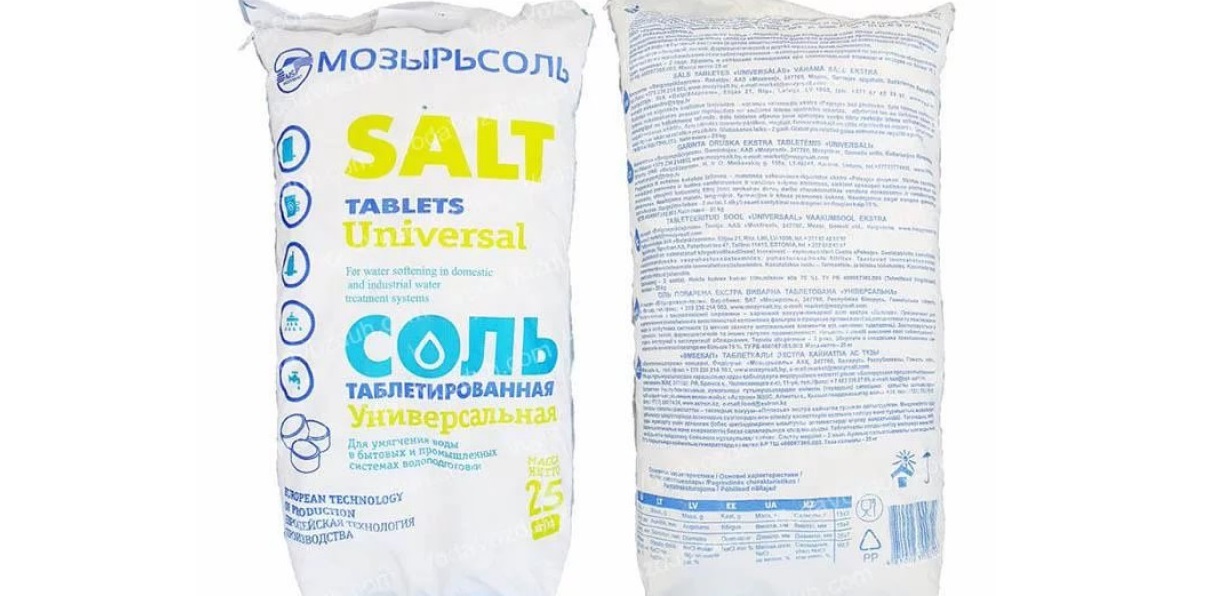
This type of salt has its drawbacks. First, large tablets need to be broken up to fit into the dishwasher's tank. Second, it's only sold in 25 and 50 kg bags. It's a one-time expense, but one bag will last for 10-15 years.
It's still best not to skimp on dishwasher maintenance. Special regenerating salt isn't that expensive, and it's much healthier for your dishwasher. It doesn't contain harmful impurities and dissolves gradually, ensuring the ion exchanger functions properly. Regular salt doesn't offer these benefits.
Interesting:


1 reader comment
Add a comment
Headings
Washing machine repair




For buyers




For users


Dishwasher




It's all bullshit, they just need to sell dishwasher salt, the composition is the same - sodium chloride, we take the cheap non-iodized coarse salt and voila - not 300 rubles per kilo, but 15 rubles.