
Differences between a built-in washing machine and a conventional one
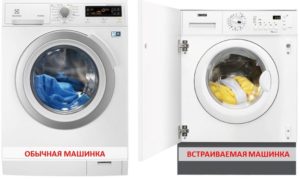 The price tag isn't the only thing that distinguishes a built-in washing machine from a freestanding one. There are several obvious external features that help you immediately identify the type of washing machine. This will save you time and allow you to carefully consider the choice of your new "home helper."
Understanding the design features of built-in appliances, their advantages, and disadvantages, will help you navigate the wide variety of models. We offer a detailed look at all the nuances and learn about the best "furniture" machines.
External features of a built-in washing machine
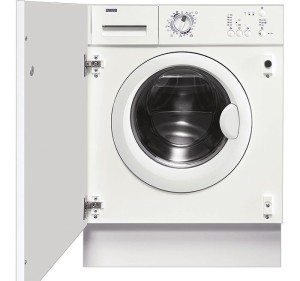
Finding a built-in model for a built-in unit or cabinet is easy: just look at its appearance. Firstly, you won't find this type of vertical washer in Russian stores, so go straight to the front-loading models. Secondly, look for the mounting points on the front panel of the case, located on the right and left, designed for installing a decorative door. They look like small rivets with slots for screws. Thirdly, let's not forget about other differences.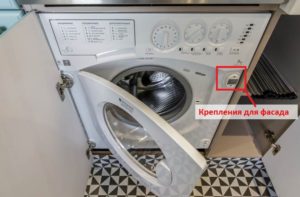
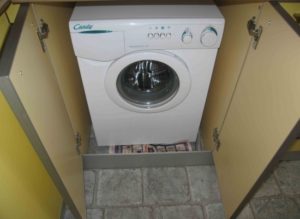
- The flattened or concave hatch door, as well as the rest of the front housing, are aligned. This ensures that the machine is completely hidden behind the door.
- A protruding lower decorative strip that fits beautifully with the front of the set.
- The drain hatch, which conceals the waste filter, is located higher up. Otherwise, access to it would be blocked.
- The dashboard is free of protruding elements. The program selector is replaced with touch control via a digital display or is minimally thick.
Fourth, there are some less obvious features to note. For example, the rear panel of the housing features special slots for installation in furniture. Therefore, just one glance at the machine is enough to tell whether it's a built-in unit or a freestanding one with a removable lid.
The pros and cons of this technique
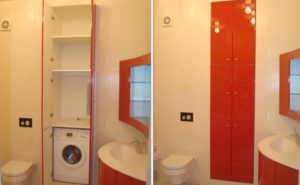
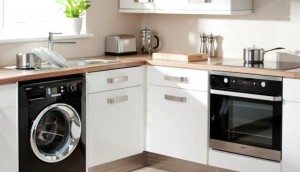
Built-in appliances are primarily attractive because they allow a bulky unit to be aesthetically integrated into a cohesive interior. These machines can easily be fitted with a decorative door and hidden within a kitchen cabinet or cupboard. The key is to accurately measure the available space and install the machine correctly. Other advantages of built-in appliances are also worth noting.
- Safety. These machines are primarily placed in kitchens, where air circulation is better and humidity is low, making the washing machine safer and longer lasting.
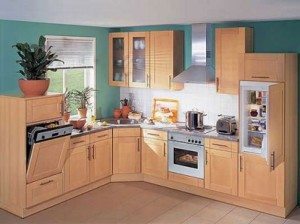
- Convenience. This includes the ability to freely arrange your kitchen workspace to suit your interests and needs. For example, you can place all your appliances in the kitchen, making the space multifunctional and easing household chores. There's no need to monitor the machine in another room and be distracted from cooking or washing dishes.
- Durability. Experience shows that built-in washing machines are characterized by a long service life, high wear resistance, and robustness. The reason is simple: such appliances are highly customized and are purchased once and for a long time, so manufacturers prioritize quality and reliability.
There are some drawbacks, but they are significantly fewer. The most striking is the high cost of these machines, which is due to their high-quality construction and long service life. Another unfortunate aspect is the limited selection. There are far fewer built-in models in stock than regular front-facing cameras, so choosing the right one is more difficult.
The only saving grace is that the design of the machine is irrelevant, as the unit is hidden behind the furniture front.
The best built-in washing machines
Built-in washing machines have their own leaders. We've selected three machines that offer the best value for money, boasting optimal technical specifications, and enjoy high consumer ratings. The top three include the Weissgauff WMI 6148D, Bosch WIW 28540, and Siemens WI 14W540. They share both common features and distinct advantages. For example, their basic capacities and capabilities are virtually identical:
- Capacity up to 8 kg.
- Energy consumption class: A+++.
- Level A washing efficiency.
- Digital display.
- Spin speed of 1400 rpm with the possibility of varying it and even canceling it.
- Complete protection against leaks.
- Availability of child protection function.
- Control of imbalance and foaming.
- Delay start timer.
- Plastic tank.
- Selecting the washing temperature mode.
- Sound accompaniment.
Now let's discuss the advantages of each model. The first, the Weissgauff WMI 6148D, is compact and has a depth of 54 cm (3 cm narrower than its competitors). The low price of around $300 is also pleasing, as is the availability of the largest number of modes with 16 options, including the self-configuring “My Program” function. The main advantage is the Water Cube Drum, designed to protect laundry from mechanical damage and improve washing quality. The wide, 30 cm door diameter is impressive, making loading and unloading laundry easier.
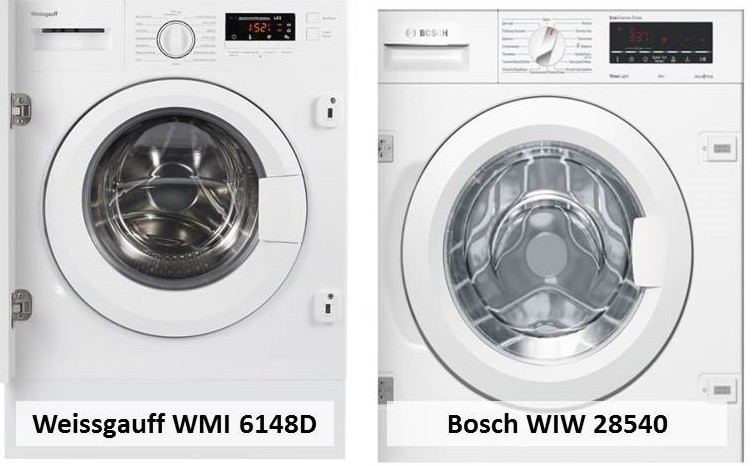
The Bosch WIW 28540 starts at $700, reflecting the brand's reliability, touchscreen controls, and numerous additional features. These include self-cleaning, TimeLight optical indicators, and a brushless, state-of-the-art EcoSilence Drive motor. The latter guarantees this new household helper high energy efficiency, low power consumption, durability, and a noise level of 41-67 dB. The unique drum structure, manufactured using VarioDrum technology, and the more stable housing with AntiVibration are also attractive features.
Another feature of this model is the presence of internal drum lighting.
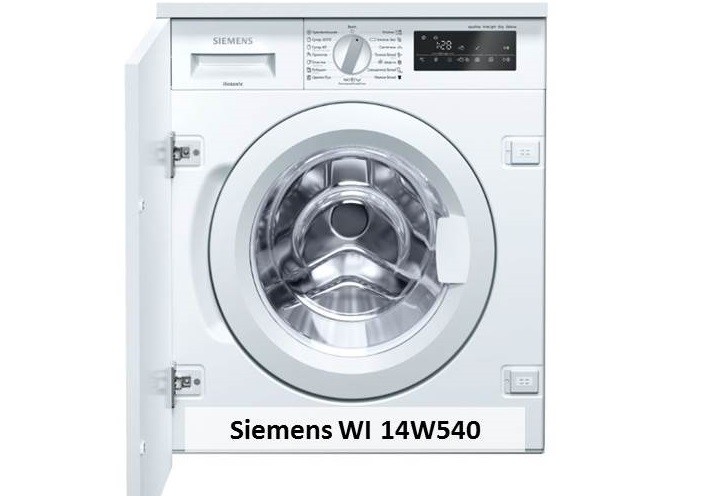
The German Siemens WI 14W540 also boasts an optical indicator, a self-cleaning system, and touch controls. However, the average price of this model is much lower, around 60,000 rubles. Its advantages include perfectly matched washing modes for dark items, outerwear, and mixed fabrics, as well as wrinkle prevention. Consumers praise the machine's "smart operation" with a fast yet high-quality spin cycle and a thorough rinse. It is also convenient to be able to easily stop the wash at any stage of the cycle and add forgotten items.
For those who value convenience, aesthetics, and functionality, built-in washing machines are the best option. Besides their key feature—the ability to be built in—built-in washing machines have other differences from standard machines that simplify washing, installation, and operation. The key is to understand all the nuances of the chosen model and utilize all its features.
Interesting:
Readers' comments
Headings
Washing machine repair




For buyers




For users


Dishwasher




Add a comment