
How do you spell "spin" on a washing machine in English?
 Most household appliances sold in Russian stores have labels and instructions in Russian. But there are exceptions—often the most functional and cost-effective automatic washing machine is one with an unfamiliar language. In such cases, the dashboard is littered with terms in English, Turkish, or French. Don't be put off buying it—just ask how the programs, options, and spin cycles are labeled in English or another foreign language. Our cheat sheet will help.
The word "squeeze" in different languages
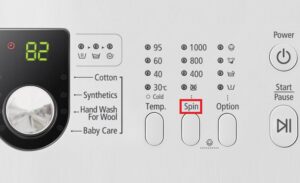
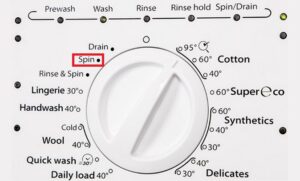
An unfamiliar language on the dashboard isn't a reason to panic. Washing machines in non-Russian languages is also easy. Firstly, modern automatic and semi-automatic machines have similar features and controls, and secondly, in addition to the words, the casing is often marked with easily understandable images. For example, the spin option is almost always indicated by a spiral icon.
If the dashboard has few icons and a lot of letters, you'll have to resort to the old-fashioned method—translation. For example, the word "otzhim" (spin) is written in different languages as follows:
- English – "spin";
- French – "rotation";
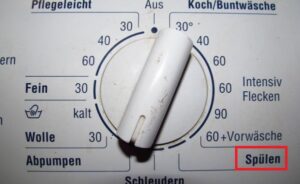
- German – “spule” or “schleudern”;
- Finnish – “kierto” or “pyöriminen”;
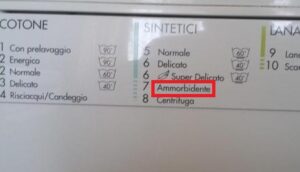
- Italian – “centrifuga” or “rotazione”;
- Turkish – “dönme”;
- Polish – more often “wirowanie”.
Spinning on washing machines with foreign designations is written as “spin”, “rotation”, “centrifuga” or “wirowanie”.
If the washing machine came from a country with a more exotic dialect, look for a similar related word or use a translator. In the latter case, any search engine will help. In some search engines, you don't even need to enter letters—it's enough to take a photo of the term or the entire panel.
"Turn on" and "Start"
When using a foreign washing machine, you'll also need to translate the start buttons. This refers to the power button, which in Russian is labeled "On/Off." On a non-Russian-language panel, other options are possible:
- English version – “Start/Stop” or the more common “On/Off”;
- German version – “Ein/Aus”;
- in Italian – “Marchia/Arresto”.
It's easy to spot the spin speed gradation on the dashboard. In Russian, it's designated as "rpm," in English as "RPM," in German as "U/min," and in Italian as "Giri." You can also guess the RPM by the numbers, arranged in descending order from 1000-1800 to 0-400.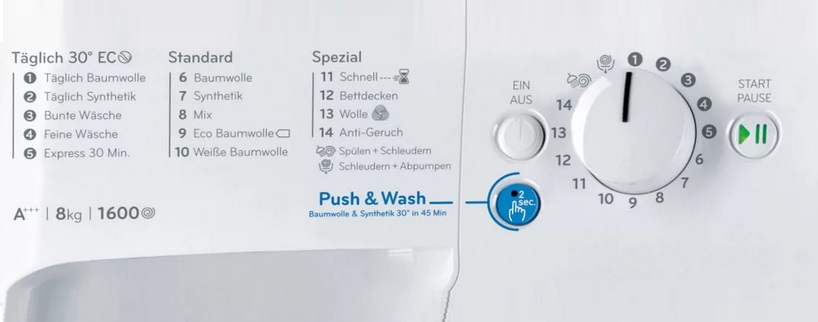
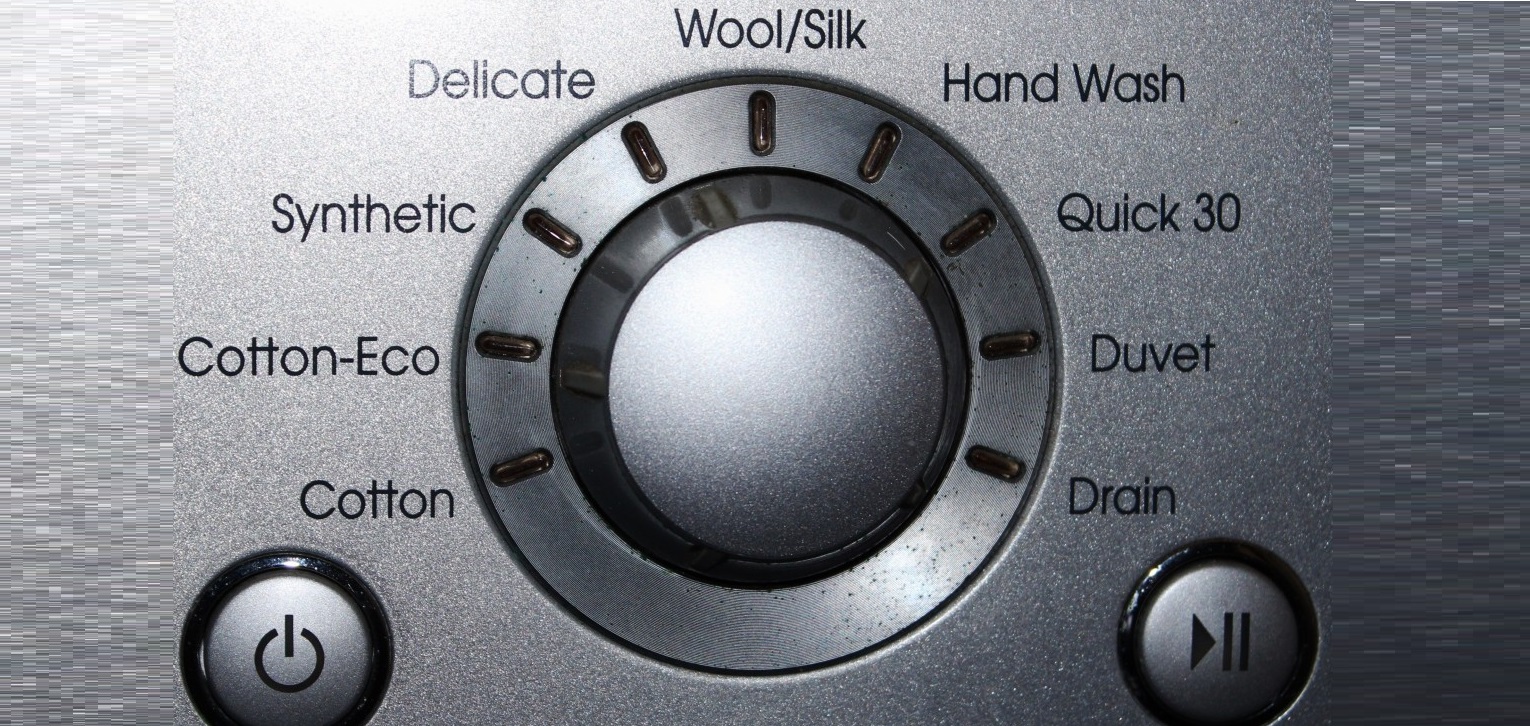
Sometimes the dashboard is divided into two groups: primary programs and special ones. On English-language models, the manufacturer distinguishes between the modes using the words "main" and "special." On German-language automatic transmissions, the first option is written "primar," while on Italian-language ones, it's "base." Also note the phrase "main menu." This menu accesses the automatic transmission's settings. If the model has a remote control, a similar inscription will appear on it.
Foreign terms on car dashboards
Knowing the foreign spelling of network buttons, the main menu, and the spin button is not enough to fully operate the machine. It's better to expand your vocabulary by memorizing the basic programs and functions. So, to use a washing machine in English, it's advisable to know about 30 words, the first of which is "wash." A clarification is added to it:
- quick or rapid – accelerated;
- Intensive – intensive;
- daily – daily;
- delicate – delicate;
- easycare – for lightly soiled laundry;
- prewash – preliminary;
- hand – manual;
- gentle – soft;
- cotton – cotton;
- sport – sport;
- supereco – super-eco;
- shoes – for footwear.
Rinse is indicated by "rinse," if "short" is next to it, it's an accelerated cycle, and if "extra" is next to it, it's an extra cycle. Soaking is indicated by "soak." Spinning is often called "spin," but combinations are common:
- no spin – spin is disabled;
- rinse +spin – rinsing and spinning;
- gentle spin – gentle spinning of the drum.

It is also recommended to remember the delayed rinse (holdrinse), the function of delaying the start of the program (startdelay) and its end (holdstop). The word “drain” means drainage, “easyironing” means removing creases, “drying” means activating drying, and “ecodrumclean” means eco-friendly cleaning of the drum.
In German, washing is "waschen." Accordingly, the prefix "vor" means "pre-wash," "intensive," and "schuh" means "shoe wash." Other possible abbreviations include "pflegeleicht" (delicate), "zeitsparen" (economical), "hand," "fein" (delicate), and "misch" (mixed). Rinsing is written as "spulen," draining is "abpumpen," and soaking is "weichspulen." It's also worth remembering a few other abbreviations:
- Knitterschutz – wrinkle-free;
- Kalt – low temperature;
- Bugelleicht – smoothing out folds;
- Trocken – drying;
- Startzeit – start delay.
When using a machine with Italian "accompaniment", the translation of the following words will be useful:
- lavaggio – main wash;
- pre-lavaggio – preliminary program;
- forte lavaggio – intensive washing;
- lavaggiorapido – express program;
- ammorbidente — gentle program;
- facile stiratura – elimination of folds;
- asciugatura – drying cycle;
- a mano – hand wash or delicate wash;
- risciacqui or trattamenti — rinsing;
- ammollo – soaking;
- esclusione – without squeezing;
- ritardatore di partenza – delayed start.
Getting used to a machine with a dashboard in German or Turkish is easy – just find a translation and memorize a few terms. Don't forget the symbols that are common to most washing machines, either.
Interesting:
Readers' comments
Headings
Washing machine repair




For buyers




For users


Dishwasher




Add a comment