
How to wash a polyester coat in a washing machine?
 Polyester outerwear is appealing for its warmth, elegance, and affordability, but its practicality isn't so rosy. Coats and cardigans get dirty quickly, especially around cuffs, pockets, underarms, and collars. Spot washing is only a temporary solution, as sooner or later the entire garment will have to be washed. Hand-washing is extremely difficult; it's best to use a washing machine. But first, let's look at how to properly wash a polyester coat in a washing machine and what you need.
Don't rush to put the item in the machine.
The good news is that a polyester coat can be washed in a washing machine. But only if you follow certain rules. Don't just throw an item you've never washed in the machine before into the drum—you need to do some careful preparation.
First, check whether the material is resistant to the chosen detergent. Many people don't know that the piece of fabric included with the coat isn't for patching, but for a test wash in the machine.Apply the product to a cloth and evaluate the results: if there is no deformation or discoloration, the powder is suitable. Ideally, we throw a piece of fabric into the machine and test the fabric first.
The piece of fabric included with the item is needed for a test wash and testing of the detergent.
Once you've made sure that machine washing and the detergent you've chosen won't harm your coat, you can begin the actual preparations:
- unhook all detachable elements (belt, trim, decoration, cuffs, collar, metal inserts);
- check that the pockets are empty (take out all the money, hairpins, keys);
- fasten all buttons, snaps and zippers;
- turn the coat inside out;
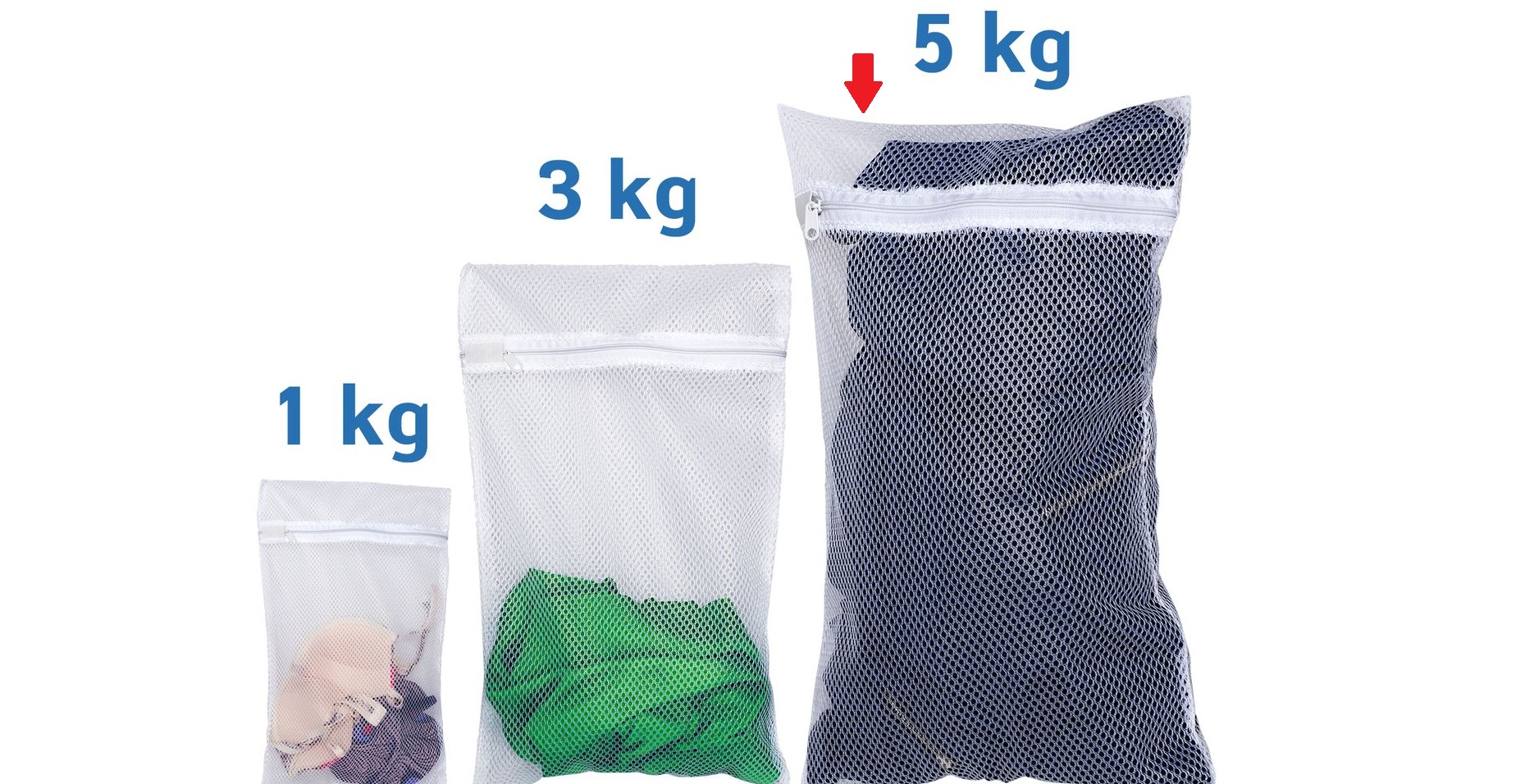
- Place the item in a special mesh bag (as a last resort, use a regular pillowcase or duvet cover).
The next step is to carefully examine the manufacturer's label. It contains symbols that encode washing instructions for a specific item: recommended temperature, acceptable spin speed, and ironability. If the label has an image of a crossed-out basin, you can forget about washing it in a washing machine. No such symbol? Then there are no restrictions. Typically, a polyester coat is washed at 40 degrees Celsius, but sometimes the manufacturer sets specific requirements: 30 or 60 degrees Celsius.
Much depends on the fabric's composition. If the coat is 100% polyester, there's no need to worry too much. If the material contains other natural ingredients, such as cashmere or wool, you'll need to adjust your care strategy, adopting more delicate care.
What are we going to wash it with?
Particular attention should be paid to the choice of detergent. Whether to buy powder or gel depends on the color of the coat. For example, when cleaning dark items, such as black and blue, gels are recommended. Liquid concentrates dissolve faster and don't leave white spots or streaks on the surface of the fabric.
When cleaning a polyester coat, do not use bleach!
If you're washing a light-colored or colored coat, both liquid and dry detergents are suitable, but gel-based concentrates are preferable. The only absolute "no" applies to bleaches, which are strictly prohibited for use on polyester. Remember that most bleaching agents are incompatible with polyester fibers: they will damage, deform, and fade the fabric.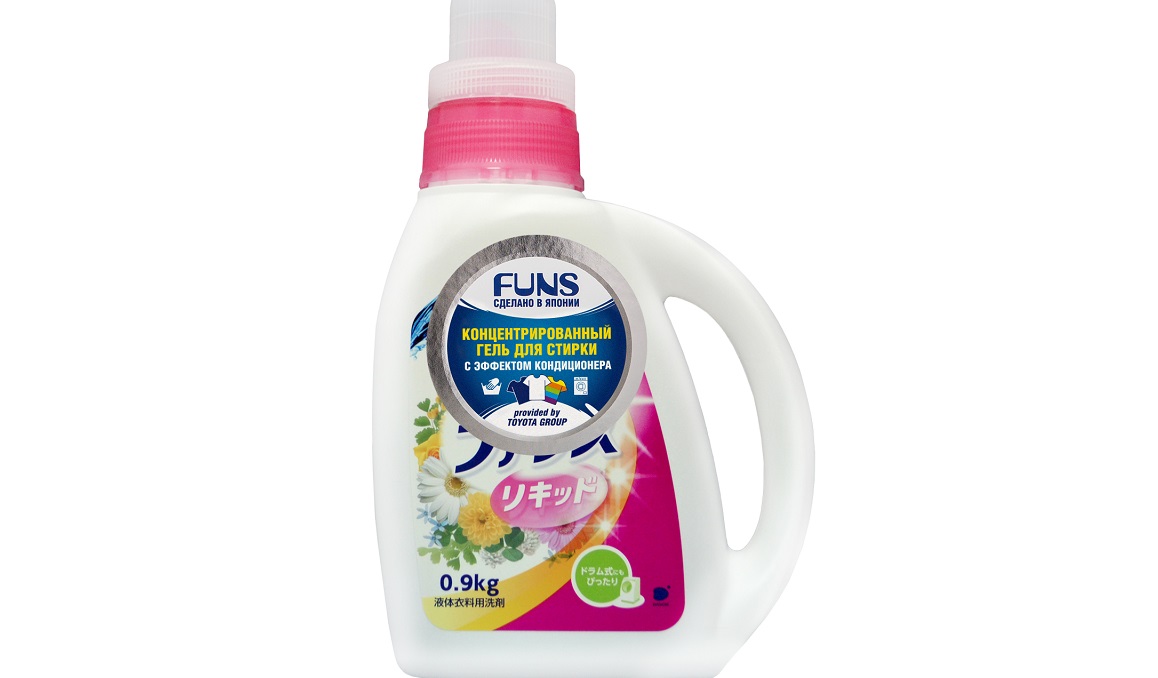
Getting rid of stubborn stains
But coats don't always come out the first time, even in the washing machine. Typically, stubborn stains like wine, coffee, oil, or grass stains aren't removed by regular detergent. To remove dirt, you will have to carry out a more targeted and effective procedure.
It's best to tackle stains as soon as they appear, rather than delay cleaning. Both grease and chocolate are easier to remove when they're fresh. Otherwise, the stain becomes ingrained into the fabric, making removal more difficult.
However, most stains can be removed quickly and easily. You just need to follow a few rules:
- Before washing, treat the stain with a special high-quality stain remover (it is better to find a product for polyester);
- when applying the product, work from the edges to the middle (to avoid spreading the dirt further);
- Leave the stain remover on the fabric for 5-40 minutes (the exact time is indicated on the product packaging).
Stains from polyester must be removed as soon as possible!
If stain removers don't work, consider folk remedies. You can remove dirt at home using readily available materials and ingredients. The key is the nature of the stain.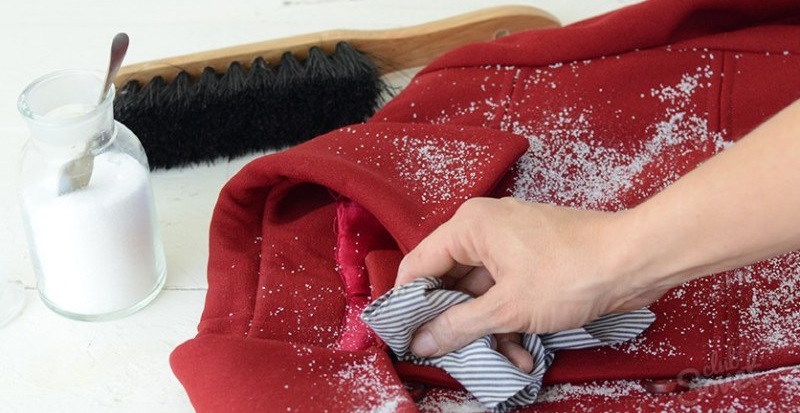
- Wine. Apply a paste of salt and water to the stain and leave for 15-20 minutes.
- Grease. Simply treat the contaminated area with talc and a brush, avoiding contact with water.
- Coffee, tea, and chocolate. A practically universal remedy is glycerin mixed with ammonia in a 1:2 ratio.
Before applying stain remover to the stain, it's recommended to test the product on an inconspicuous area of the fabric. If there are no adverse reactions, proceed with full cleaning.
Automatic cleaning procedure
Before placing your coat in the drum, it's recommended to perform one more test. Specifically, check the strength of the material and its pigment. To do this, moisten a cotton pad or piece of gauze and apply it to the garment for a minute. If a piece of cloth or cotton wool is stained, it's best to avoid using the machine—the paint is easily washed out and won't survive a full cycle.
After testing the coat, you can begin loading it into the washing machine. Check that there are no foreign objects in the drum and place the coat, folded in a protective bag, inside. Then, proceed as follows:
- select the “Delicate” or “Synthetics” mode;
- using the label as a guide, set the water heating temperature (usually no more than 30 degrees);
- turn off the spin cycle or set the minimum number of revolutions (twisting will lead to deformation of the fabric);
- add detergent to the tray (you can use gel capsules or special wipes placed directly into the drum);
- If possible, set the rinse cycle to double (to completely wash out the detergent from the fibers).
When washing synthetic outerwear, it is recommended to add a special conditioner that will remove static electricity.
If your coat has down or synthetic padding, it's recommended to add special silicone balls to the drum. These will tap the garment as the drum rotates, preventing the padding from bunching up. These are available at hardware stores.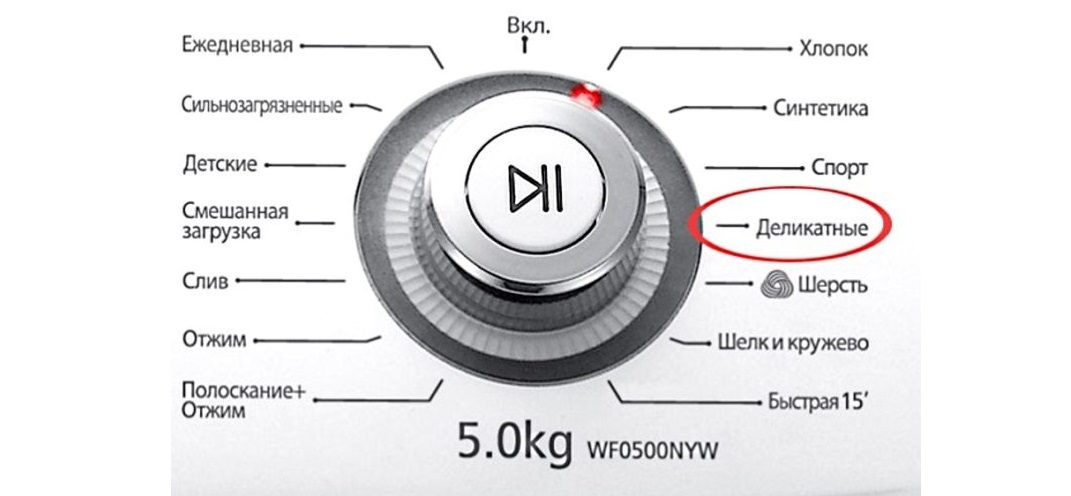
Most modern washing machines typically offer preset programs for cleaning polyester items, such as "Synthetics," "Outerwear," "Hand Wash," or "Delicates." If this option isn't available, you'll have to set the temperature and spin cycle manually.
Once the cycle is complete, carefully remove the coat from the net, shake it out, and hang it on a hanger. Do not wring out the polyester; simply gently brush away any moisture from the surface. Drying the garment flat is also not recommended, as it will quickly lose its original shape.
There's no need to iron synthetics, as minimal spinning reduces wrinkles. If necessary, you can use a handheld steamer. Ironing is also permitted, but only through a damp cloth.
Wash a polyester coat using the “Synthetics”, “Outerwear”, “Hand Wash” or “Delicates” cycle.
If your coat is only lightly soiled and in one spot, it's best to hand-wash it instead of machine-washing it. It's simple: choose a gentle stain remover, apply it to the stain, and gently rub it in. Afterward, it's important to thoroughly rinse the area to remove not only any remaining dirt but also the cleaning agent itself.
Or maybe dry cleaning would be better?
It is worth understanding that washing polyester items in a washing machine is not an easy task. Choosing the wrong temperature or using excessive spin can irreparably ruin an expensive coat. Therefore, in some cases, it's better to play it safe and seek dry cleaning instead. These situations include:
- There is a crossed-out basin icon on the label (meaning that the manufacturer does not recommend machine washing);
- white coat;
- there are stubborn stains on the fabric that are difficult to remove – oil or fuel oil;
- It is impossible to remove the stain on your own;
- there are doubts about one's own abilities.
The presence of a crossed-out basin symbol on the label indicates that the product must not be washed – dry clean only!
Your coat will last longer if you properly care for it and promptly remove any stains. The key is to take your time and follow the manufacturer's recommendations.
Interesting:





Readers' comments
Headings
Washing machine repair




For buyers




For users


Dishwasher




Add a comment