
Can you carry washing powder on a plane?
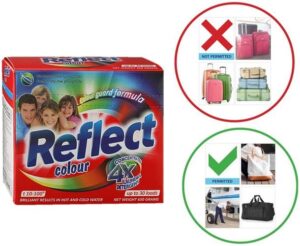 Compared to trains, you can take much less on a plane due to strict restrictions. It's usually better to pack something in a suitcase that will go in the hold than to take it into the cabin, where baggage requirements are more stringent. That's why it's important to plan your flight in advance to avoid losing essential items due to ignorance. Let's find out whether it's permissible to carry laundry detergent on a plane or if it's better to just buy a pack upon arrival.
Is there a ban on washing powder?
A careful review of air travel regulations reveals that there are no restrictions on laundry detergent. However, it's important to keep other baggage handling considerations in mind, such as whether it's a domestic flight. If the transfer takes place within the Russian Federation, there will be no claims against the washing powder.
The only thing you might be asked about is the weight of the detergent. If the package is too large, you might be asked to leave it in your luggage. Therefore, it's best to pack packages under 1.5 kilograms to avoid potential problems.
Experts do not recommend transporting powder in large, soft containers, as it has a very strong odor and can contaminate other passengers' belongings.
However, flights to other countries may not be suitable for transporting household chemicals, whether in checked or carry-on baggage. In this case, you should carefully review the regulations of the country you're traveling to in advance. For example, the import of laundry detergents into the United States, Australia, New Zealand, and many other countries is prohibited.
Medicines and liquids
Now that we've figured out whether it's safe to carry laundry detergent on a plane, let's explore other controversial issues in air travel. Let's start with medications and liquids: what are the restrictions on transporting them?
- All liquids, gels, and aerosols are permitted in containers no larger than 100 milliliters. They must be sealed in a tightly sealed plastic bag with a capacity of 1 liter or less.
It is prohibited to transport hazardous, flammable liquids.
- It is permissible to take expressed breast milk into the cabin in the amount that the baby needs during the flight.
- You may carry essential medications in your carry-on baggage, as well as liquids to take with them, but you must prove this need with a prescription, certificate, or other document.
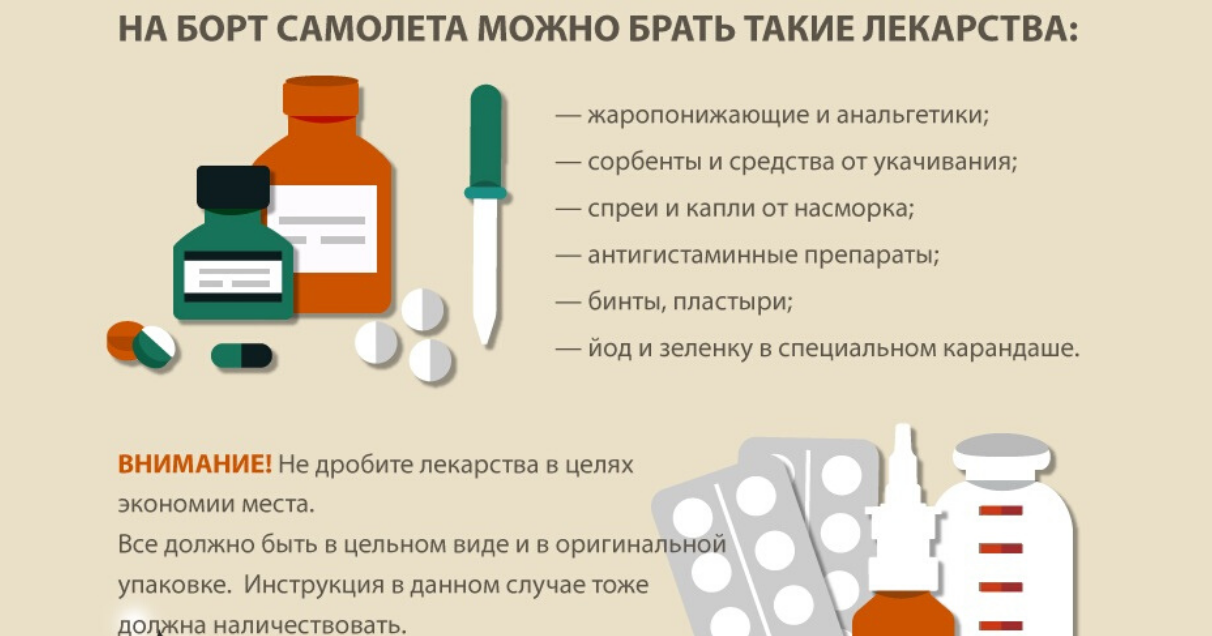
- You are allowed to take special dietary food, as well as baby food if you are flying with a small child.
- Perfumes and eau de toilette are subject to the same restrictions as other liquids—no more than 100 milliliters. An exception applies to perfumes purchased in Duty Free.
- Finally, alcohol can also be taken in 100 milliliter packages, but if it was purchased in Duty Free, then a larger volume is allowed.
If perfume or alcoholic beverages were purchased in the duty-free area at the airport, they must be in a sealed or resealed plastic bag. The items must be accompanied by receipts confirming they were purchased in the duty-free area on the day of the flight, in case an employee inspects the contents of the bag during the flight.
Electronic devices, sharp and cutting objects, food
Electronic devices are permitted to be taken in carry-on baggage. Most often, this is done for the security of expensive equipment such as a laptop, tablet, camera, smartphone, and so on. Such equipment may be asked to be inspected, meaning removed from a bag or suitcase, or they may even require the battery to be removed instead of simply putting the device into airplane mode.
Any sharp metal objects are generally prohibited from being carried in the cabin, but there are exceptions depending on the material the item is made of. For example, some airlines prohibit metal knitting needles in carry-on baggage, but allow wooden or silicone knitting needles. Knives and scissors are usually permitted to be carried based on their size.
It's better not to take risks and check with the airline in advance which sharp objects you can take into the cabin and which ones you can't.
Any souvenir weapons, such as swords and knives, must be checked in the baggage compartment. Small household appliances are permitted in the cabin, as long as they won't disturb other passengers and don't contain sharp steel parts, such as a blender, which must be left in baggage.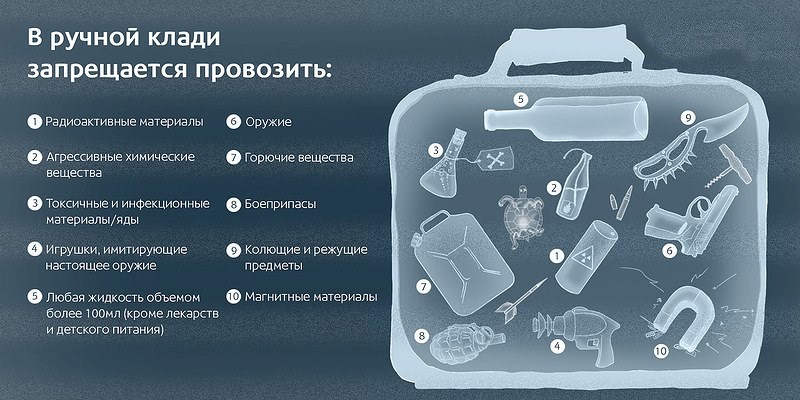
Flammable items such as matches and lighters require special attention. Most often, matchboxes are required to be stored in the luggage compartment, while lighters may be allowed in the cabin, but only one per passenger.
As for food, you can bring any solid food with you. Just make sure your carry-on baggage doesn't exceed the permitted weight and volume. Liquids and gel-like products are subject to the same restrictions as alcohol and perfume—their containers must not exceed 100 milliliters. This can even apply to brie cheese, so it's best to check these details before your flight.
Prepare for your flight thoroughly, familiarizing yourself with the airline's rules to avoid any accidental violations. After packing, be sure to check that your suitcases and bags meet the size and weight requirements. Just in case, it's best to pack away any items that might raise questions at the airport, and securely pack all cosmetics, liquids, and food.
Because different airlines have different requirements for passengers, you can never be 100% sure that your baggage complies with all regulations. That's why it's important to check the airline's website, read reviews, and thoroughly prepare for your flight to ensure your vacation or business trip isn't ruined.
Interesting:


Readers' comments
Headings
Washing machine repair




For buyers




For users


Dishwasher




Add a comment