
Transporting a dishwasher
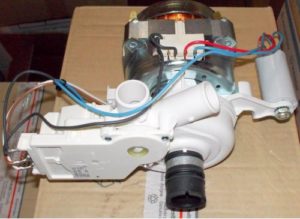
 If you don't think through how to transport a dishwasher and just do it instinctively, you're putting your "home helper" at great risk. It's not uncommon for machines to break down after being transported, and it later turns out their control module and circulation pump are broken. Could improper transport really be the culprit? Partly, it's true, it's improper transport, and partly, it's improper start-up after transport. But let's not rush things; let's discuss everything in order, in this article.
Preparing equipment
Why are there regulations for transporting dishwashers? What's so special about this appliance, and why does it suffer so much during transit? Modern dishwashers contain many electrical and electronic components that, understandably, don't tolerate contact with water. That's why electrical, and especially electronic, components are isolated from the modules and parts through which water is pumped. While the machine is in operation, everything is fine, but during transport, this regulation will inevitably be disrupted.
The dishwasher is designed so that water remains in it even after it's unplugged. If the dishwasher is turned upside down or shaken on an uneven surface, water can spill onto the electronics, and plugging it back in will finish the job. To avoid such problems, follow these steps:
- properly turn off and remove the machine;
- drain any water that remains in the dishwasher;
- Insulate the body so that it does not get damaged during transportation.
If you still have the packaging with the shipping inserts, it is best to use it to pack the machine.
How do I turn off the appliance? First, turn off the water supply to the dishwasher and disconnect the power. Next, disconnect and reattach the inlet hose to the appliance. Do the same with the drain hose and power cord. If you are talking about a built-in dishwasher, you should pull out the fasteners and then remove the machine from the niche. Try to keep the body vertical; there is no need to tilt it yet, let alone turn it over.

- Open the wash chamber and remove the dish baskets and cutlery tray.
- Remove the sprinklers and place them with the baskets. It's best to transport these items separately.
- At the bottom of the wash chamber, there's a waste filter and a salt container. Our goal is to drain water from the waste filter basin and the salt container. Open the salt container.Samsung dishwasher or any other, take a large syringe or rubber bulb and start pumping out the water.
- After removing the water from the salt tank, we do the same with the waste filter basin.
- We close the salt container and return the waste filter to its place.
- We insert rubber plugs into the drain and inlet hoses.
- Close the dishwasher door, place a large plastic bag over the machine, and wrap it in foam. If you still have the original packaging, you can do without the foam.
That's it, the car is ready for transport. Now we need to make sure it's safely transported to the vehicle and transported safely.
Features of loading and transportation
Before attempting to transport a dishwasher, make sure you have a helper and suitable transport. Don't try to lug it around alone. While it weighs less than a washing machine, it's still quite heavy. Most importantly, it's bulky and difficult to move alone.
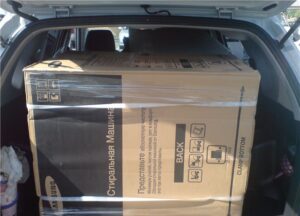
The vehicle must be within walking distance of the home. The dishwasher's frame must fit easily. Transporting large appliances in a small car is not ideal. Be sure to check in advance that the appliance will fit, prepare the area, cover any corners where the dishwasher could potentially get caught with rags, and then begin loading.
Proceed carefully and always with two people: one holds it while the other pushes it in. Ensure each other is on guard to avoid accidentally dropping expensive equipment. Avoid placing a dishwasher on a metal roof rack. Even if securely tied down, it could slide off on bumps in the road, which would be a worst-case scenario. If you're using a truck or van, ensure the dishwasher is securely fastened to prevent it from being thrown around the vehicle or interior during travel.
When transporting your "home helper," try to drive as carefully as possible. Don't exceed the speed limit or drive too fast on bumpy roads. Be prudent.
Some users ask: is it possible to transport a dishwasher lying on its side? Experts see no problem with this, as long as the water is drained beforehand. If you notice a leak, do not plug it in until it has dried thoroughly.
Transporting a new dishwasher
If you just bought a dishwasher and are planning to deliver it home yourself, don't bother. Most stores offer free delivery. It's better to wait a little while and have it delivered by professionals. In general, you should only attempt to transport a new dishwasher yourself in the most extreme cases, when there is no other option. Let us explain why.
All new dishwashers undergo testing at the factory where they're assembled. After these tests, the water isn't completely drained, as required. For some reason, manufacturers don't consider the dangers of transporting dishwashers with water in them (though not all of them). Imagine loading a new dishwasher into your car and barely getting it home, only to have it short-circuit when you get there. In this situation, your warranty will be completely void, and you'll have no way of proving that the breakdown wasn't your fault.
So, you see where we're going with this. It's an unpleasant situation, but some careless shoppers find themselves in just that situation. If you ask the salespeople to help you drain the water from your newly purchased washing machine, they'll just give you the cold shoulder. No one will help you, and they won't let you do it yourself in the store either. In short, order delivery, and then, if something happens, you can blame the carrier.
So, transporting a dishwasher, as well as preparing it for transport, must be carried out according to certain rules. Otherwise, you could lose the appliance entirely, or face costly repairs, which is also unpleasant. Good luck!
Interesting:




1 reader comment
Add a comment
Headings
Washing machine repair




For buyers




For users


Dishwasher




Can plastic parts in a dishwasher break when transported horizontally?