
The first washing machine in the world
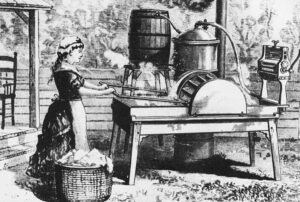 Today, automatic washing machines are commonplace, their usefulness and convenience beyond doubt. But the world's first washing machine was met with considerable skepticism in the 19th century, as some doubted its necessity. True, these so-called "washing aids" looked different and had very limited functionality. Interesting? Then let's trace the "evolution" of technology to the present day.
The "parents" of washing machines
It is now impossible to determine exactly who first invented the washing machine. The patent office received numerous applications for official registration of devices that make washing easier. The appearance and functionality of the "ancestors" of washing machines differ greatly from modern automatic machines. However, the purpose and operating principle remain unchanged.
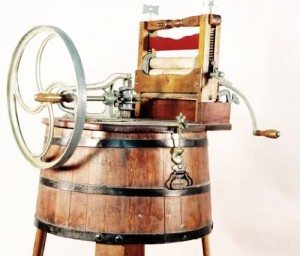
A key date was 1851, when American J. King registered the first washing machine with a rotating drum. Unlike its predecessors, it was manually operated, activated by an external handle. The mechanism's rotation principle was similar to that of a meat grinder. This invention is recognized as the prototype of the modern washing machine.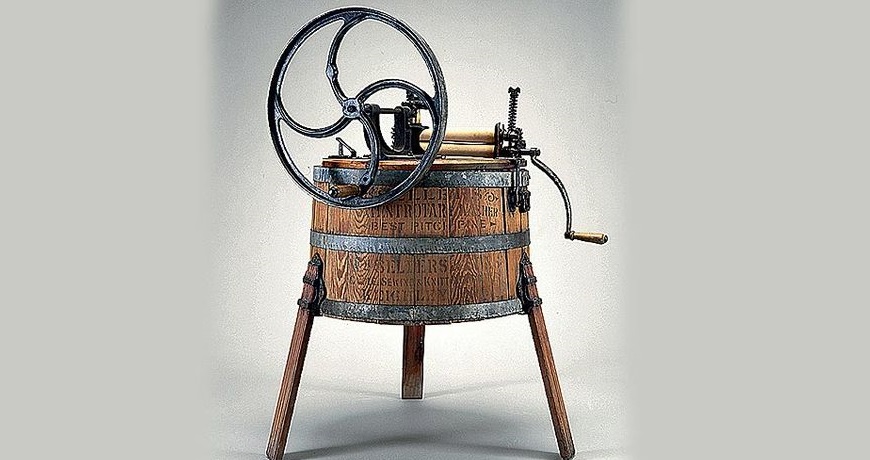
Over the next 30 years, inventors from all over the world continually patented new washing machines. Archives contain approximately 2,000 different designs of devices designed to make washing easier. But most of them were short-lived: many quickly broke down, others were rejected, or were eventually improved.
A fascinating example is the Californian gold prospector who not only invented a "washing machine" but also made it profitable. This "machine" could wash 10-15 shirts at a time, and there was no need to manually rotate the drum. Instead, ten harnessed mules pulled the mechanism. Eventually, the inventor stopped "washing" gold and instead set up a public laundry: he washed clothes for his former colleagues for a fee.
Primitive washing machines appeared in the United States in the second half of the 19th century.
By 1861, the first tumble dryer appeared. It consisted of a device with dense rollers between which wet items were rotated. The water was forced out of the fibers, and the clothes were wrung out. Similar technology was used many years later, for example, in Soviet semi-automatic dryers.
Until the early 20th century, the primary power source for washing machines was human power—people or livestock. A similar device was developed by the American William Blackstone, who built one and gave it to his wife for her birthday. He soon established mass production of his creation, selling it for $2.50. This washing machine became the first mass-produced for a large audience. The idea proved profitable: William's company grew in success over time and continues to manufacture household laundry machines to this day.
Who equipped the car with a motor?
The next milestone in the evolution of the washing machine was the advent of motorized models. Manual washing machines became a thing of the past, and more convenient household appliances gained popularity. Initially, washing machines were equipped with gasoline engines, but soon electric motors took over.
One of the first electric-powered sewing machines was the "Thor" model, invented by A. Fisher of Chicago in 1908. Two years later, the device was registered by the Hurley Machine Company, which established mass production. The product was in demand.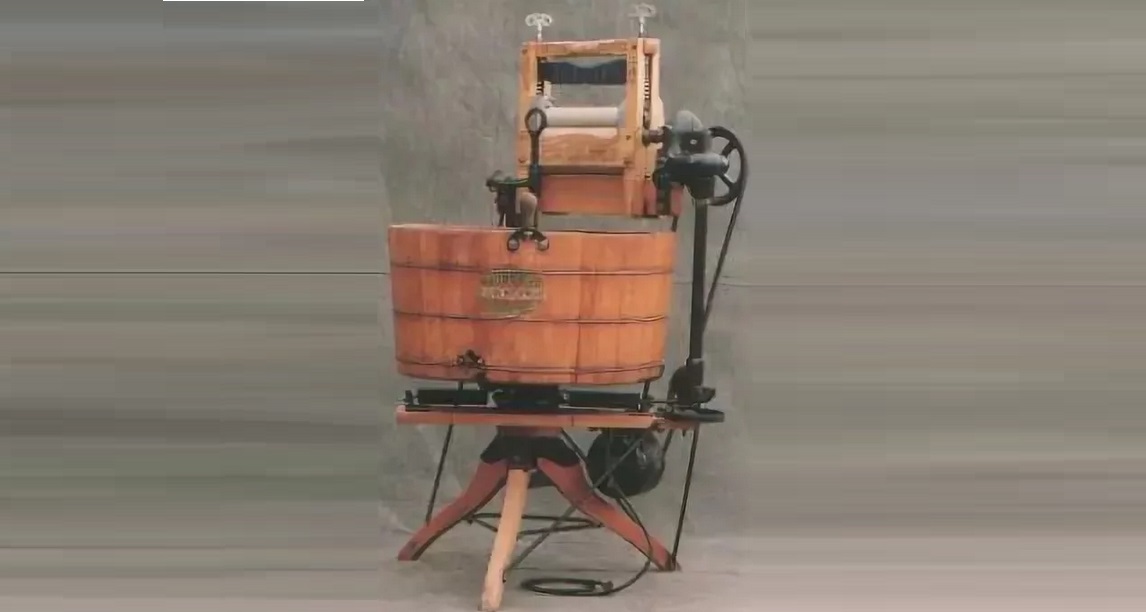
By 1920, more than 1,300 companies in the United States alone were assembling and selling washing machines, with factories in other countries as well. However, many brands succumbed to progress and competition, and only a handful survived into the 21st century. Among the "old-timers" we can note the Whirlpool Corporation, founded in 1911. But their first machines underwent colossal changes: the design was constantly improved, dangerous mechanisms were hidden behind panels, and the design and functionality were worked out.
Whirlpool brand washing machines have been produced since 1911.
By 1955, washing machines were rapidly "conquering" the world. Around 1.5 million units had been sold, the appliances were becoming more accessible, and the price dropped to $60. The mass production of washing machines also had an impact on society itself. Over time, household appliances replaced domestic servants, and the popularity of public laundries declined. People became freer, with more time for other pursuits and hobbies.
How has laundry technology evolved?
Since the beginning of the 20th century, washing machine manufacturers have been constantly modernizing their designs, seeking more convenient and ergonomic solutions. Over the past 170 years, wooden hand-operated washing machines have evolved into modern automatic machines packed with technology and features. The development was gradual:
- 20s – wooden tanks were replaced with metal ones;
- 30s – they began to use electric pumps and added a timer to the machines;
- 40s – the programmer was invented, the first automatic washing machine was released;
- 50s – machines were equipped with automatic wringing capabilities;
- 70s – a model with electronic control entered the market;
- 2000s – integration of machines into the Smart Home system.
Modern washing machines with two drums, a refill system, and a multitude of modes are no match for the machines of the 1850s. But without the prototypes, none of this would exist.
Interesting:


Readers' comments
Headings
Washing machine repair




For buyers




For users


Dishwasher




Add a comment