
First time use of the Samsung dishwasher
 After purchasing a new dishwasher, users are eager to try out their new "home helper." However, there's no need to rush. The first run of a Samsung dishwasher follows certain rules. For example, the test cycle should be empty, meaning without any dishes in the baskets. Let's look at how to put the dishwasher into operation.
Activating the PMM and changing the program
Before you start your new dishwasher for the first time, please refer to the user manual. The Samsung dishwasher manual describes all the details, from how to connect the appliance to the power grid to how to load dishes into the dishwasher baskets. Each brand of equipment has its own characteristics, so it is important to study all the manufacturer's recommendations.
It's best to entrust the dishwasher's connection to the water supply and sewer system to a professional. They will connect the drain and inlet hoses, level the appliance, and, if necessary, install the dishwasher into the cabinet.
The first start of the dishwasher is carried out empty, without dishes in the working chamber, but with detergent.
During assembly, factory dirt remains on the dishwasher's internal components. This is why the first run is performed without dishes. If cutlery ends up in the bin, it will be washed with water containing dust, grease, and other industrial fluids. In this case, high-quality cleaning is out of the question.
A test cycle is also necessary to observe the dishwasher's operation. The user should ensure that:
- water is poured into the bunker without interruption;
- the machine does not stop working;
- The dishwasher does not leak;
- The heating element brings the water to the required temperature;
- the liquid circulates freely in the system;
- The water is completely drained from the chamber at the end of the cycle.
To run a test cycle, you need to:
- load the machine with regenerating salt and detergent;
- open the shut-off valve that supplies water to the dishwasher;
- plug the device into the power supply;
- press the power button;
- select a suitable washing program (for a test run, it is recommended to use the intensive mode);
- check that the dishwasher door is tightly closed (a click should be heard);
- start the cycle by pressing the Start/Pause button.
If all goes well, you can run the machine again with the cutlery. The wash program is selected based on the type of dishes and their degree of soiling. It's best to wash practically clean items on the rapid cycle, while burnt pans and baking sheets should be washed on the intensive cycle.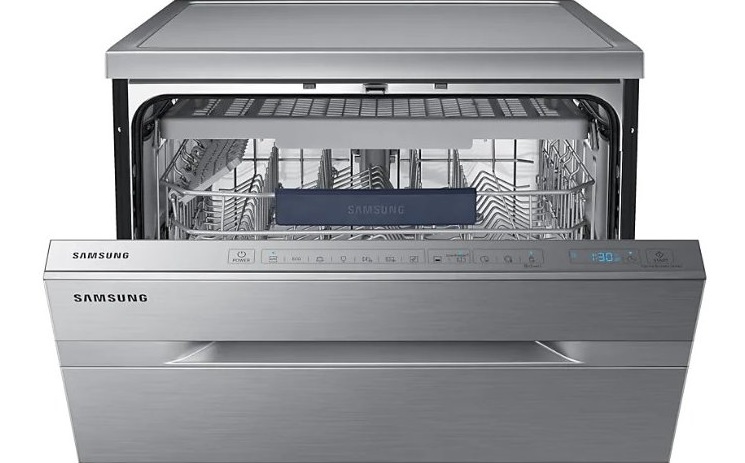
You can change the preset cycle on your Samsung washing machine, but only if it's been recently run. Once the detergent dispenser is empty, this option will become unavailable. To adjust the program:
- open the dishwasher door;
- press and hold the current program button for 3-5 seconds (to cancel it);
- select the desired mode;
- Close the machine door.
If you open the dishwasher door while the cycle is running, the machine will pause and resume washing 10 seconds after the door is closed.
You can also add forgotten dishes to the machine after the cycle has started, but before the detergent dispenser is open. Here's how:
- open the dishwasher door slightly and wait until the machine stops;
- open the door fully;
- add forgotten dishes;
- Close the door.
Your Samsung dishwasher will sound a beep when the cycle is complete. You'll need to turn the dishwasher off, open the door slightly, and wait for the dishes to cool. Then you can unload the dishwasher.
Set of tools
To operate the dishwasher, you will need special household chemicals. The user needs to purchase regenerating salt, detergent and rinse aid for dishes. You will also need dishwasher cleaner periodically (approximately once every 2-3 months).
Regenerating salt is necessary for softening tap water. Before using the dishwasher for the first time, be sure to adjust the dishwasher's ion exchanger and fill the reservoir with salt crystals. The instructions for adjusting the softener are provided in the dishwasher's manual.
You can obtain information about the water hardness in your region from your local water utility. You can also measure it yourself using indicator strips. Based on this data, the salt consumption of your Samsung dishwasher is adjusted. The softener is configured as follows:
- unscrew the cap of the salt reservoir;
- find the ring with an arrow on the container;
- Set the switch to the desired position based on your water hardness level. The diagram is included in your dishwasher's instructions.
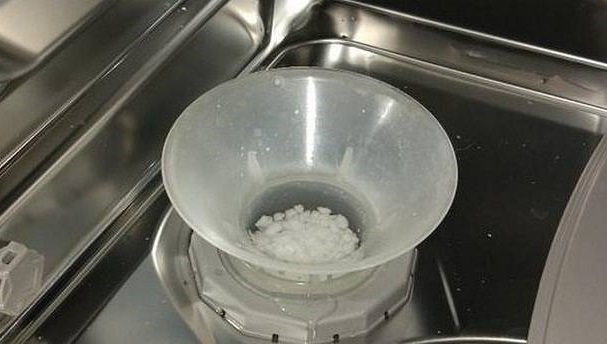
Next, fill the reservoir with regenerating salt. The procedure will be as follows:
- fill the container 2/3 full with water;
- using the special funnel included in the kit, pour 1-1.2 kg of salt into the container;
- Close the lid carefully.
You only need to fill the water tank once. Then, simply add salt. A special indicator on the control panel will alert you to the presence of granules in the container.
Rinse aid protects dishes from streaks and deposits. It also speeds up the drying process. It is added to the water automatically during the final stage of the cycle.
The rinse aid dispenser is located on the dishwasher door. It holds 140 ml. Before using the dishwasher for the first time, fill the reservoir to the fill line, then add more as needed.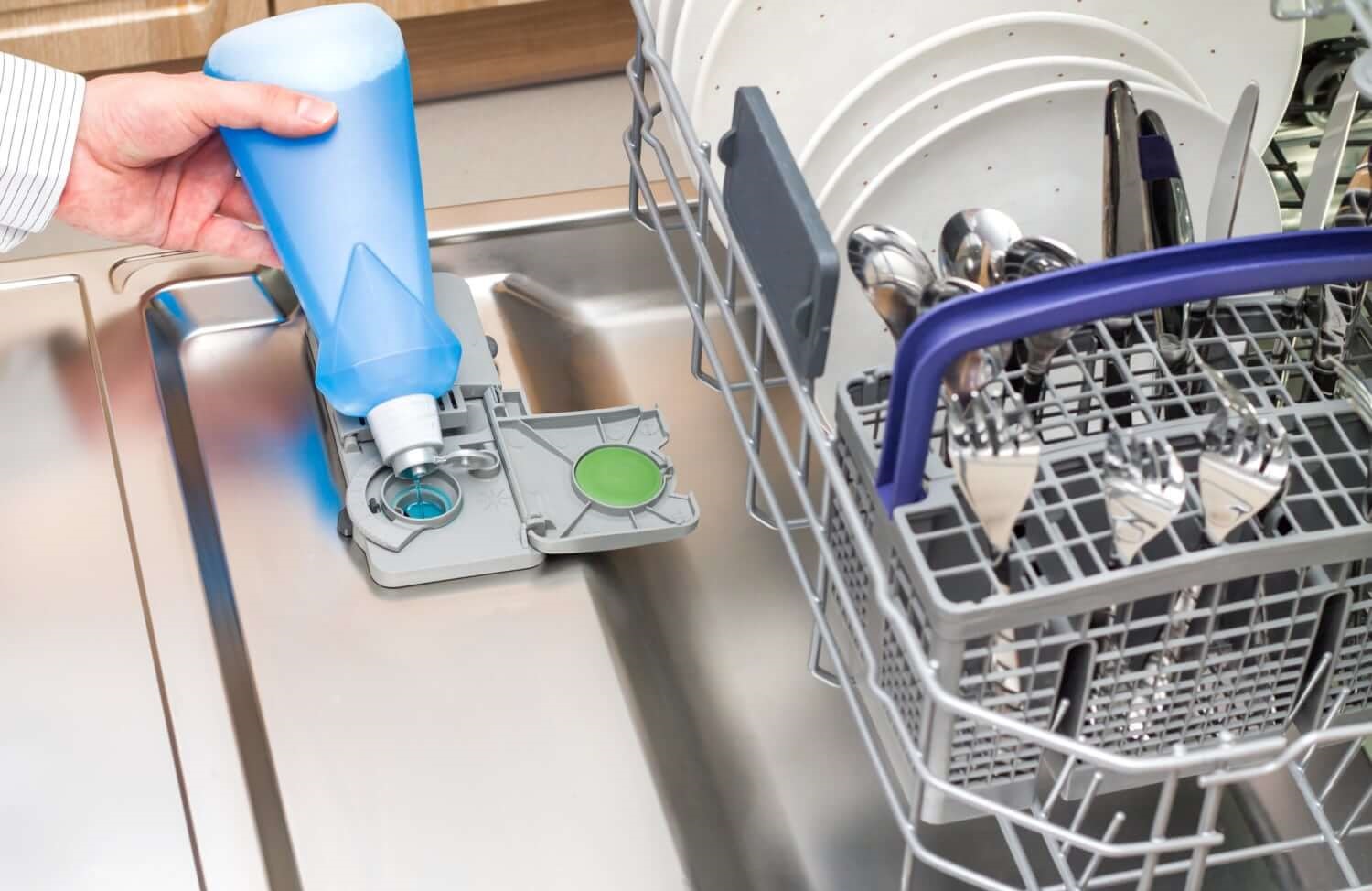
Rinse aid flow is also manually adjusted. By default, the lever is set to position 4. If streaks remain on dishes, move the lever to position 5 or 6.
Detergent is essential for removing stains from dishes. Chemical components combat grease and carbon deposits. Household chemicals should be specifically formulated for dishwashers; regular gels won't do.
Users choose the form of the detergent at their own discretion, it can be:
- pills;
- powders;
- gels.
The detergent dispenser is filled before starting each wash cycle.
The dispenser compartment has a marking indicating the optimal dosage level. This is approximately 20 grams of powder. With tablets, it's even simpler—just load one capsule per cycle.
Placing items in baskets
After a successful test cycle, you can run a full wash. To do this, you need to load the dishes into the baskets. There are some nuances here, too.
Be sure to remove any food residue from dishes. Remove tea leaves and tea bags from mugs. It's best to pre-soak burnt pots and pans to make it easier for the machine to remove the stains.
General recommendations for laying out dishes, given in the Samsung dishwasher instructions:
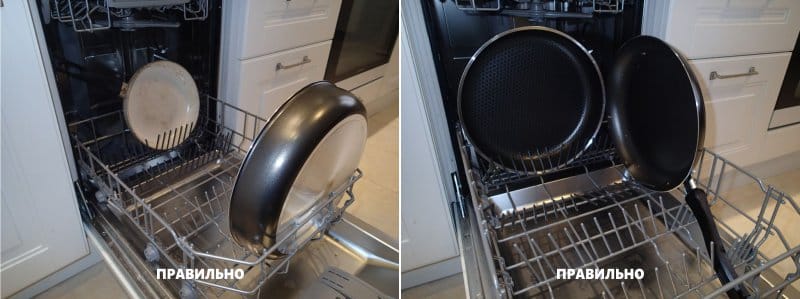
- deep objects (glasses, mugs, cups, pots, saucepans, teapots) should be turned upside down so that water does not collect inside;
- curved products should be placed at an angle so that water flows out of the recesses;
- the dishes should not interfere with the rotation of the dishwasher spray arms;
- devices cannot be placed inside each other;
- a small gap should be left between the items so that water washes the items from all sides;
- It is necessary to stack the dishes securely so that they cannot tip over during the cycle.
The Samsung dishwasher's upper basket is designed for fragile and small dishes:
- glasses;
- wine glasses;
- saucers;
- coffee cups;
- small plates and salad bowls.
Larger and dirtier dishes are loaded into the lower basket: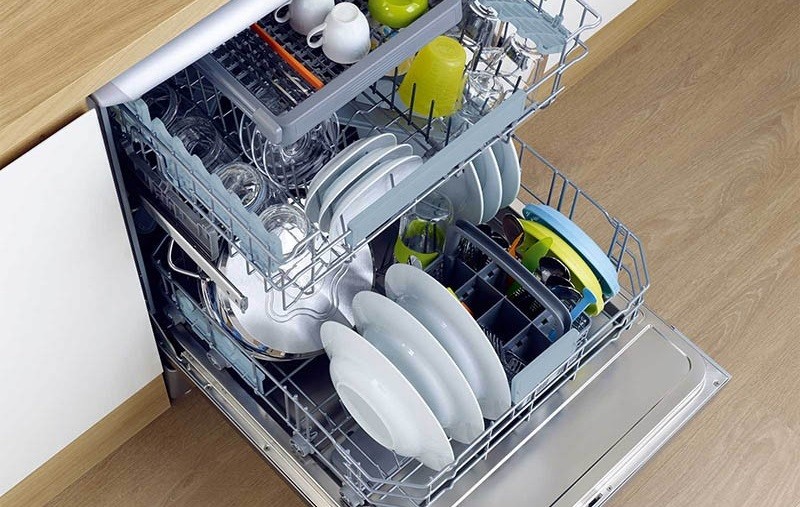
- serving plates;
- lids;
- frying pans;
- saucepans;
- pots;
- soup bowls, etc.
The upper basket is adjustable. If you need to load a bulky item at the bottom, the basket can be raised higher. The lower rack's pegs can be easily folded down for easy loading of items like pots or baking sheets.
Samsung dishwashers have a separate basket for spoons, forks, ladles, and knives. Cutlery should be stored vertically, mixed, and not stacked. Overloading the dishwasher is not recommended, as this can damage the appliance and increase energy consumption.
Cleaning and caring for PMM Samsung
The dishwasher needs timely maintenance. After each use, wipe the walls of the working chamber and the door dry, leave the dishwasher slightly open for ventilation, and clean the filter unit from debris.
Another important task for users is cleaning the nozzle brackets. If this is not done, the nozzles and bearings will become clogged. The procedure is as follows: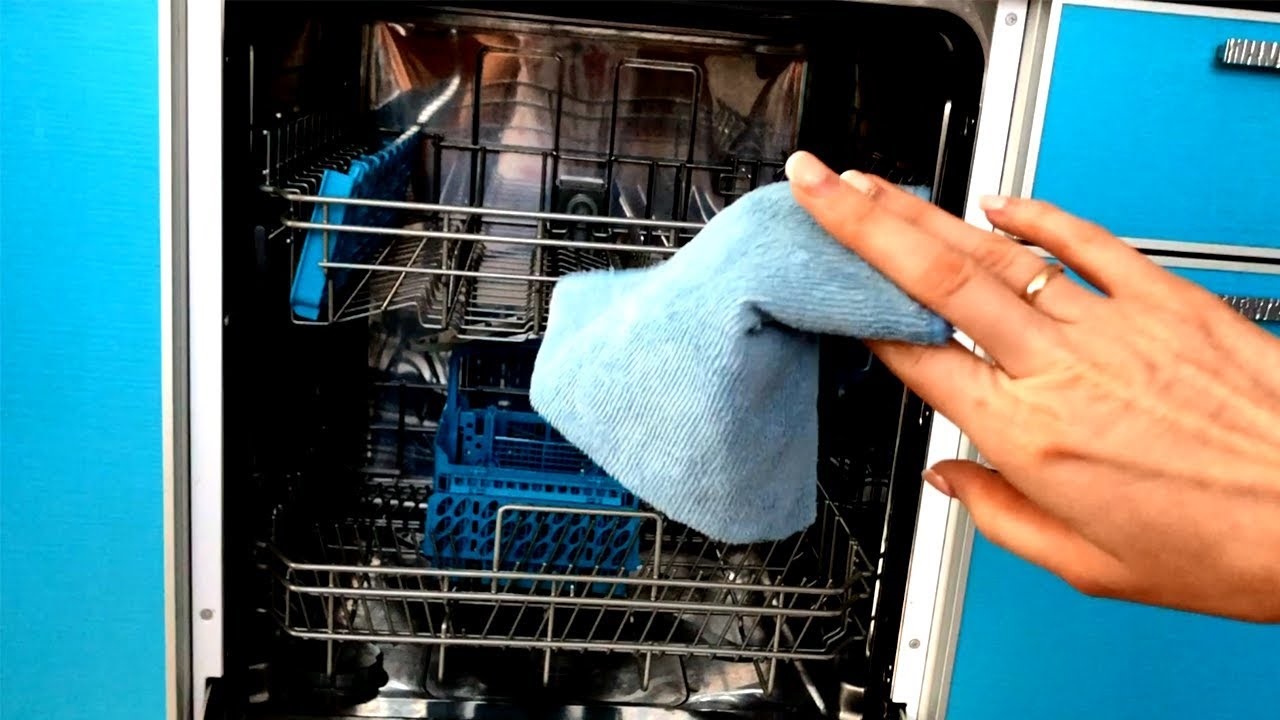
- unscrew the nut clockwise;
- remove the washer sitting on top of the bracket;
- remove the part;
- Wash the brackets in warm soapy water using a brush;
- put the elements back in place.
It's also recommended to thoroughly clean the inside of the dishwasher every 2-3 months. For this, use a special dishwasher cleaner. This product removes limescale, scale, and grease deposits.
Interesting:






Readers' comments
Headings
Washing machine repair




For buyers




For users


Dishwasher




Add a comment