
First launch of the Weissgauff dishwasher
 After purchasing a brand new appliance, people are often eager to use their Weissgauff dishwasher for the first time, forgetting the instructions and any safety precautions. This is definitely not a good idea, as not following certain rules can even damage your newly purchased appliance. Let's take a detailed look at how to properly start using a Weissgauff dishwasher.
Commissioning of the dishwasher according to the instructions
It's best to start the machine for the first time strictly according to the manufacturer's official instructions to avoid missing all the most important details, from connecting the appliance to all utilities to loading dirty dishes into the wash baskets. This is also important because not only do different brands have different operating instructions, but even individual models have different operating instructions.
The initial connection to the water supply should be left to a service center specialist unless you have the necessary experience in connecting the machine to all utilities.
The first time you turn on the dishwasher, it must be empty, that is, without dirty dishes or other unnecessary items. This operation is necessary because during the assembly of the equipment at the factory, factory dirt, oil, and dust may remain in the device if the unit has been stored in a warehouse for a long time. To remove all these impurities, a dry run is necessary. During this run, there should be no dishes inside to avoid contaminating them and interfering with the cleaning process. Furthermore, a dry run is a good opportunity to check the functionality of your "home assistant":
- Is tap water flowing normally into the washing chamber?
- does the machine stop working during washing?
- is there any water leakage anywhere during the working cycle;
- does the heating element heat the water in the machine to the selected temperature;
- The liquid inside the device circulates continuously and then completely goes into the drain.
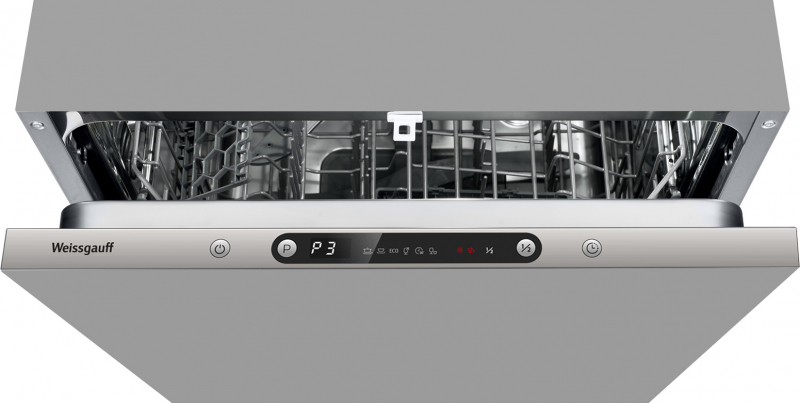
These five points are crucial for the proper operation of the dishwasher, so it's crucial to start the machine correctly for the first time and monitor the listed parameters. To test it, you'll need to perform a few simple steps.
- Add salt, ion exchange resin and detergent to the appliance.
Salt and household chemicals should be intended exclusively for dishwashers to avoid damaging the internal components of the appliance during operation.
- Unlock the shut-off valve that supplies water to the machine.
- Connect the device to the power supply.
- Turn it on using the Power button.
- Select the longest wash cycle, which is usually the intensive wash program.
- Make sure that the appliance door closes with a distinctive click.
- Activate the wash by pressing the “Start” button.
Only after ensuring the initial run has been successful can you load the baskets with dirty dishes and run a full cycle. Select a program based on the degree of soiling of the dishes, as well as the type of cutlery. For example, lightly soiled cutlery is best washed in the quick wash mode, while heavily soiled dishes, such as pans with ingrained grease and burnt-on food, should be washed in the intensive wash mode.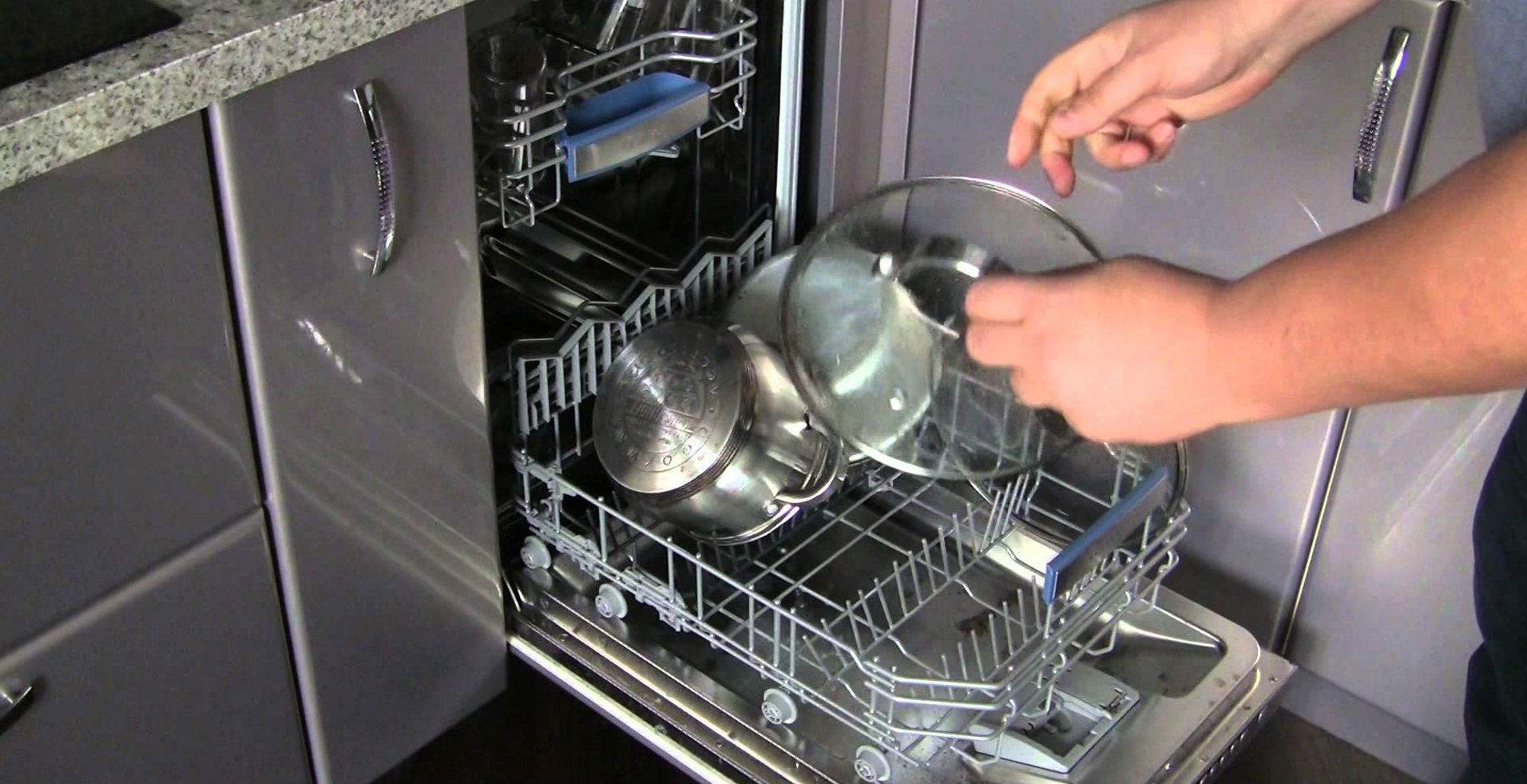
A very convenient feature on modern Weissgauff machines is the ability to change the preset cycle if it was selected incorrectly. This can only be done before the machine starts using detergent; otherwise, the cycle cannot be changed. To make the adjustment, follow these steps:
- open the door of the washing chamber;
- Press and hold the button of the selected washing mode for a few seconds to cancel it;
- activate the correct program;
- Close the dishwasher door.
If you simply open the door during the wash cycle, the machine will pause the wash for a while, but will resume operation 10 seconds after the door is closed. This can be used to add more dirty dishes. As with changing the operating mode, this can only be done while the detergent dispenser is closed. To do this, follow similar instructions.
- Open the dishwasher door and wait until the operation stops.
- Carefully load an additional load of dirty dishes.
- Close the door and wait for work to begin.
Once the wash cycle is complete, the machine will alert the user with a special sound signal. After this, simply turn off the machine, open the wash chamber door, and wait a few minutes for the dishes to cool.
Substances for the first activation of PMM
To ensure the dishwasher works properly, you need special household chemicals, such as dishwasher salt, detergent, and rinse aid. Additionally, you should purchase a special cleaner once a quarter.
Salt must be present in the device for the ion exchanger to soften hard, poor-quality tap water. Before the first use, you must not only load the device with salt granules but also adjust the water hardness level that the softening element will be working to combat. To do this, you need to: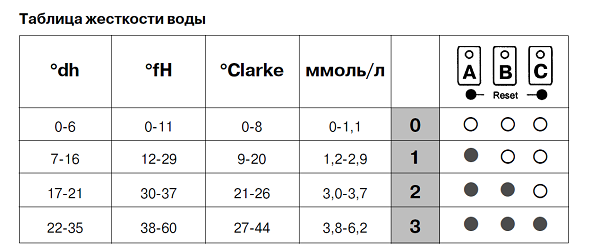
- find the salt bin at the bottom of the washing chamber;
- unscrew the cap of the salt compartment;
- find a ring with an arrow on the tank;
- set the required values of ion exchanger hardness;
You can determine your water hardness level using special test strips or by visiting the official website of your city water utility, which is required to regularly provide accurate information on water quality.
- fill the bunker with water to approximately two-thirds of its total volume;
- load approximately 1 kilogram of special salt into the compartment, using the funnel from the dishwasher starter kit for convenience;
- Close the tank lid tightly.
Water is added to the salt tank only once, and salt needs to be added based on consumption—in some areas, this may be done once a month, while in others, it may be done once a year. The machine will automatically notify you of this via a separate indicator on the control panel. However, all of the above does not apply to a water supply with high-quality soft water, since in this case, regenerating salt is not needed at all.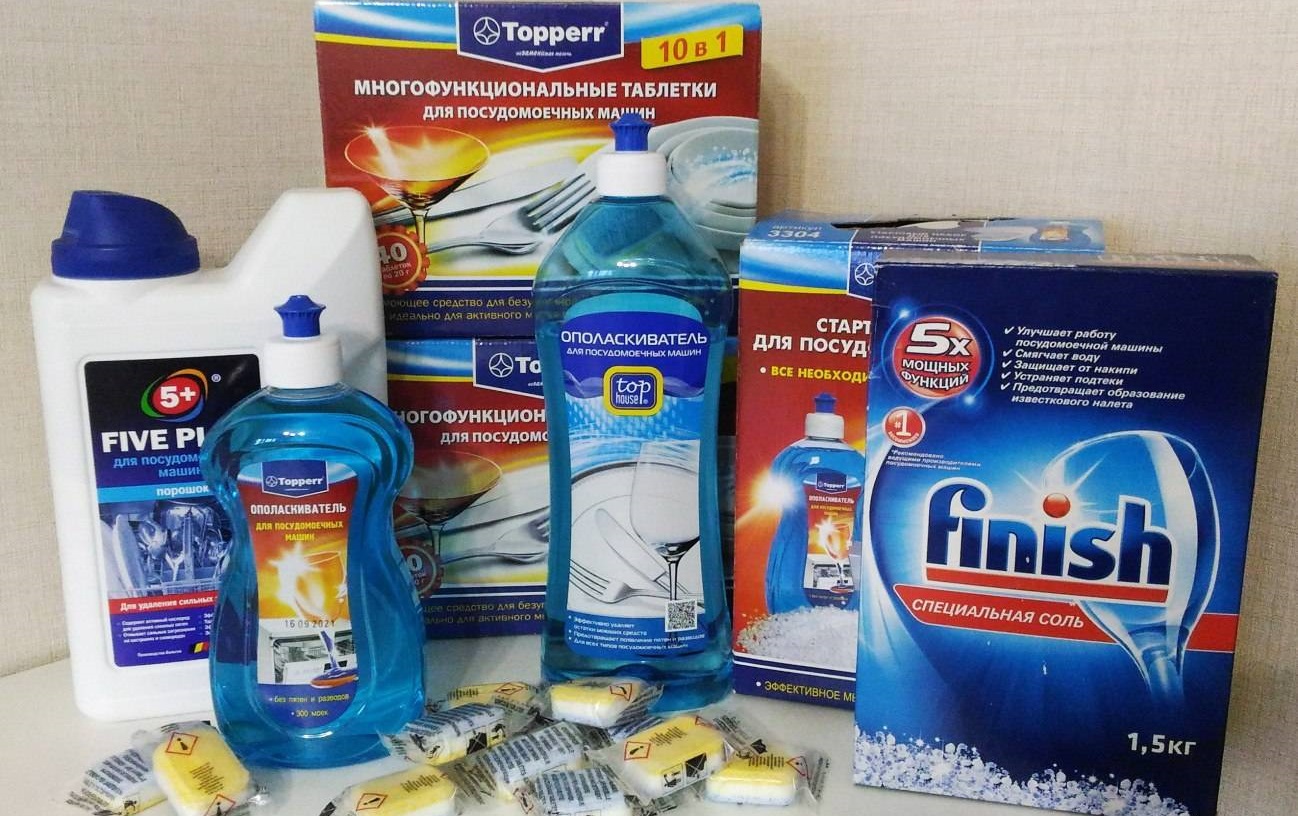
The rinse aid in this "home helper" helps remove streaks and unpleasant deposits from dishes and helps them dry faster. Users don't need to worry about its consumption, as it's added automatically at the very end of the wash cycle. Simply select the desired rinse aid amount by adjusting the lever and adding the rinse aid to the special reservoir located on the wash chamber door. It holds up to 140 milliliters of liquid, so it's best to fill it completely before using it for the first time and then refill it periodically thereafter.
Finally, housewives have a wide choice when it comes to detergents, as they come in several forms—from tablets and capsules to powder and liquid gel. This type of household detergent is used to effectively remove all types of stains from dishes and, like rinse aid, should be dispensed into a special dispenser located on the dishwasher door. If you use powder, pay attention to the special marking indicating the minimum dosage, which is usually 20 grams. When using tablets and capsules, everything is much easier - you only need to load one piece per working program.
Don't neglect the maintenance of your equipment
Properly operating your appliance is just the first step to ensuring its longevity. It also requires timely and proper maintenance. This includes not only using a cleaner every few months, but also regularly cleaning the interior and exterior surfaces, removing food residue and other debris from behind the rubber seals of the wash chamber, cleaning the filters, and much more.
Be sure to leave the dishwasher door open for a few hours after the cycle has finished to allow the machine to air out and prevent the formation of mold and unpleasant odors.
It's also worth noting the cleaning of the spray arms, which spray water inside the appliance, cleaning dirty dishes with powerful jets of water. If the spray arms aren't maintained, their nozzles and bearings can become clogged. How can this be avoided?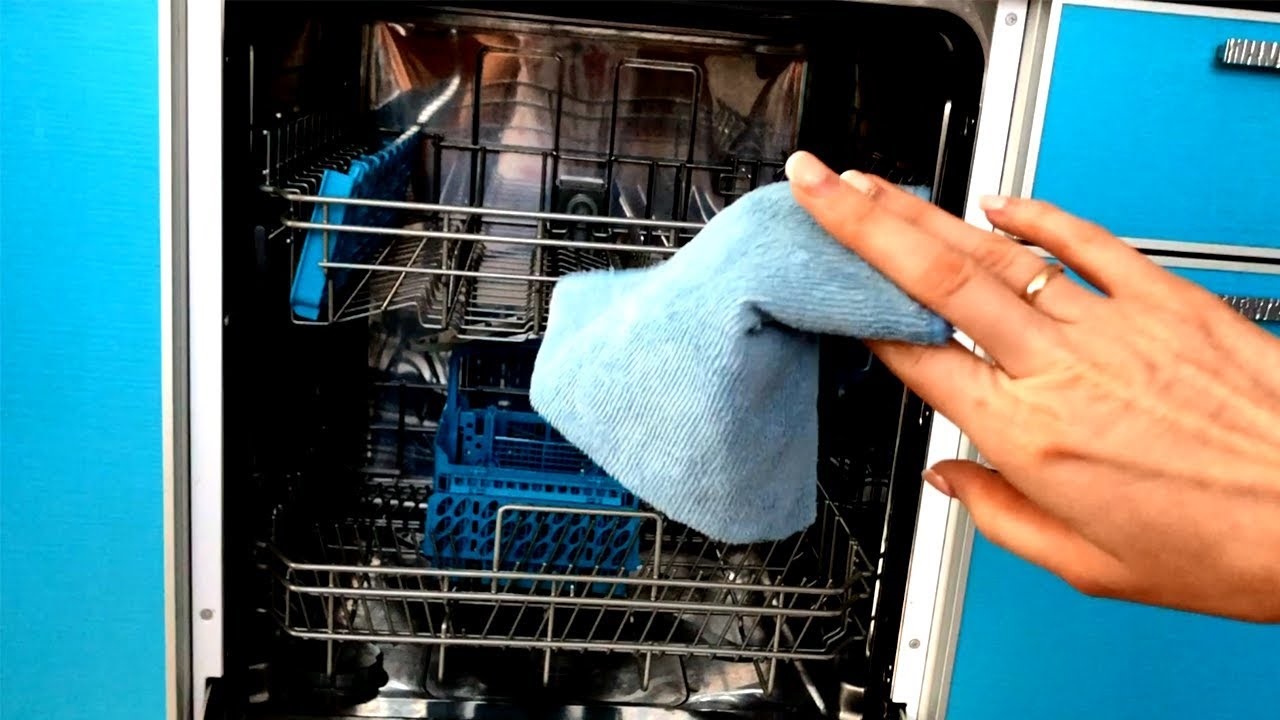
- Unscrew the nut.
- Remove the washer that is installed on top of the bracket.
- Remove the sprinkler itself.
- Clean the bracket using a brush and hot soapy water.
- Install the parts back.
Finally, we'd like to emphasize the importance of using a dishwasher cleaner—a special type of cleaning chemical that helps clean the inside of the dishwasher. It should be purchased approximately once a quarter to remove stubborn dirt from the most difficult-to-reach areas of the appliance.
Interesting:





Readers' comments
Headings
Washing machine repair




For buyers




For users


Dishwasher




Add a comment