
How to run a dishwasher for the first time
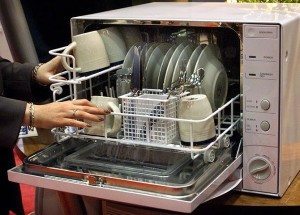 After installing a dishwasher, many owners are eager to turn it on and see how well it performs, especially if it's their first dishwasher. But don't rush; at a minimum, read the instructions first, which will likely include information about testing the machine before washing dishes for the first time. If the instructions don't include this information, we'll show you how to properly start it.
Test run of the dishwasher
Before testing your dishwasher with a load of dishes, manufacturers, including Bosch and Siemens, recommend running a test wash (empty run). Some users say they don't see the point in doing this, but we'll give you reasons why it's worth doing:
- The first rinse of the dishwasher with water will remove any debris that accidentally got into it during installation, as well as grease from the elements.
- During the first turn-on process, it is necessary to find out How quickly the water is collected, whether it heats up, whether it is drained at the end of the cycle, how the drying process works, thus you can understand whether the unit is working properly.
- A dry run also serves as a check to ensure the dishwasher is installed correctly. There have been cases where installers have carelessly pinched the dishwasher's electrical cord with furniture, preventing even the first start.
Please note! Emptying your dishwasher doesn't mean you don't need to add detergent if there are no dishes in it. On the contrary, adding dishwasher detergent and salt is a must!
You'll see the salt compartment when you pull out the lower basket; it's located on the bottom of the machine. Unscrew the cap and fill the compartment, then add about 2/3 of a 1.5-kilogram packet of salt, being careful not to overfill. As you add salt, excess water will drain into the tank; this is normal. Read the article about the importance of using salt. Why do you need dishwasher salt?.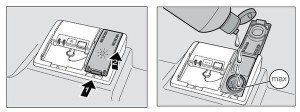
Next, decide which detergent you'll use for washing dishes: powder, gel, rinse aid, or 3-in-1 tablets. Find the compartments for these detergents on the inside of the door. Now turn on the machine and select the detergent you'll use on the control panel, depending on your model.
In addition, before pressing the "Start" button, you need to set the water hardness, as this will determine the salt consumption. Hardness is determined using a test strip (this is the easiest way), but you can find out about water hardness from your city's water utility. Select any wash mode, then press the "Start" button.
Important! Be sure to open the water supply before turning on the dishwasher. Otherwise, the washing process will not start.
Launch of the first wash
After a dry run, don't immediately run the dishwasher with dishes loaded; you'll need to wait a bit for it to cool down. Frequent loads can overload the heating element and pump.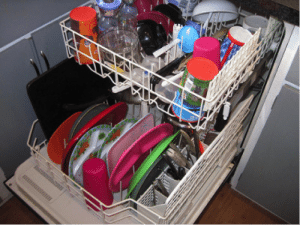
Once the machine has cooled down, load it with dishes, removing any food residue first. Add detergent if needed. The salt and rinse aid are already in the compartments; they should last for about two months. To achieve the best possible wash results, you need to arrange the dishes correctly Place the utensils and cutlery in the baskets so that nothing interferes with the movement of the wash arms and the flow of water to all areas of the chamber. Once you've ensured everything is in place and nothing has been forgotten, select a program and press the "Start" button.
The first time you use the dishwasher, it may take you a little longer to load the dishes, but don't worry—the whole process will soon become automatic, and you'll notice how much more free time you'll have with this new "helper."
Please note! If you do forget to add an item to the machine, some Bosch, Siemens, Electrolux, and other models have a dedicated stop button. The washing process will resume after you add more items.
Operating tips
When using your dishwasher, you should follow a number of rules and precautions, as specified in the instructions for almost all Bosch, Electrolux, and Ariston models. This will help extend the life of your dishwasher:
- Do not touch the running machine with wet hands.
- When connecting the machine to the network, if possible, do not use an adapter or an extension cord.
- Do not allow children to press control buttons.
- Make sure that no foreign objects fall into the dishwasher.
- Regularly clean the filters to remove food debris.
- Rinse the chamber and make sure that no food or grease remains under the door where it meets the chamber.
To summarize, we emphasize once again that the first use of the dishwasher should only be done after consulting the instructions for your specific Bosch dishwasher model or any other. Each model has its own nuances, including water hardness adjustments and washing program settings.
Interesting:





2 reader comments
Add a comment
Headings
Washing machine repair




For buyers




For users


Dishwasher




I loaded the dishes. After turning them off, they were left unwashed, only the rinse cycle was running. What's wrong?
Please write more about how to properly stack dishes...
Not a word about the heat exchanger and salt tank taking a long time to fill with water for the first time, etc.