
How to remove mold from a dishwasher?
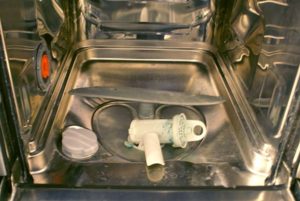 If you have even the slightest suspicion that harmful mold has taken up residence in your dishwasher, you need to sound the alarm and get rid of it as quickly as possible. A damp, warm, dark environment with plenty of food debris is ideal for the rapid growth of mold spores, so it's crucial to clean your dishwasher regularly. Otherwise, not only the appliance itself but also the health of your household will suffer. So, read on to learn how to remove harmful mold and what products to use.
Pay special attention to the filter
Mold has several favorite spots in the dishwasher, and the dust filter is at the top of the list. This is where moisture lingers and food particles accumulate, allowing hundreds of different types of fungi to thrive. To get rid of them, you'll need to thoroughly clean the dust filter. Here's how.
- Make sure there are no dishes in the dishwasher.
- We completely remove the lower grill by pulling it towards ourselves.
- We inspect the bottom of the machine near the drainpipe and look for a round plastic part - a filter.
If a grinder or waste disposer is installed in place of the filter, then there is no need to continue cleaning - such devices break up food and are rinsed thoroughly with water.
- We take hold of the filter “cover”, turn it counterclockwise by about ¼ of a turn and, pulling it towards ourselves, take it out.
- Rinse the filter. The duration and degree of cleaning depend on the condition of the nozzle. For light contamination and preventative cleaning, holding the part under warm running water for a few minutes is sufficient. If this is not enough, add dishwashing liquid and a sponge. Heavy dirt can be removed with an old toothbrush. You can also soak the trash can in a solution of water and citric acid. Just be careful not to damage the plastic.
- We immediately assess the condition of the filter hole. It's quite possible that mold has found its way here as well. So, arm yourself with dishwashing gel and a toothbrush and thoroughly clean the surface.
- Replace the filter. Rinse it again, insert it into the hole, press it down, and turn it clockwise until it stops. There's no need to dry it.
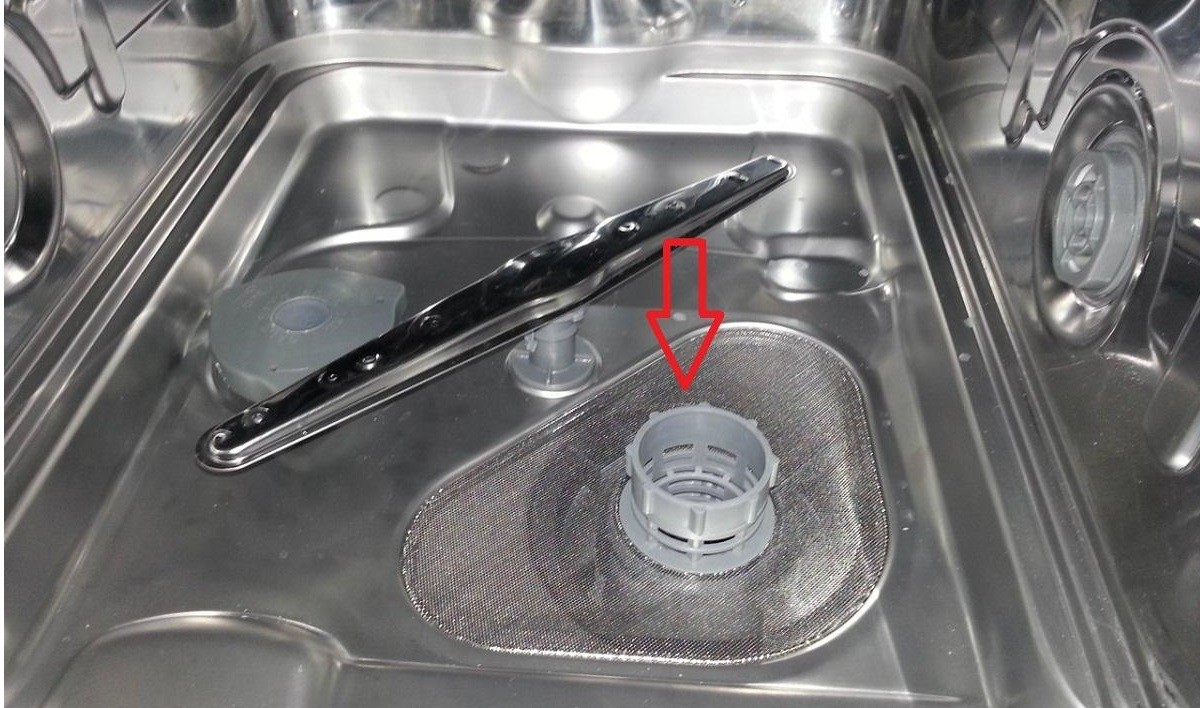
After all these steps, replace the rack. However, don't stop the entire washing process—it's likely that mold particles remain elsewhere. So, don't neglect a thorough cleaning of the dishwasher.
Internal cleaning with home remedies
To get rid of fungus, you don’t need to buy expensive products.Well-known products like vinegar and baking soda will also help fight mold. The main thing is to know how to use them correctly to achieve the perfect result. Vinegar cleaning works like this:
- we find a plastic container;
- pour a glass of vinegar (about 240 ml) into the container;
- we put it on the top rack without covering it with a lid;
- close the dishwasher;
- We turn on any mode with heating water to 60-70 degrees.
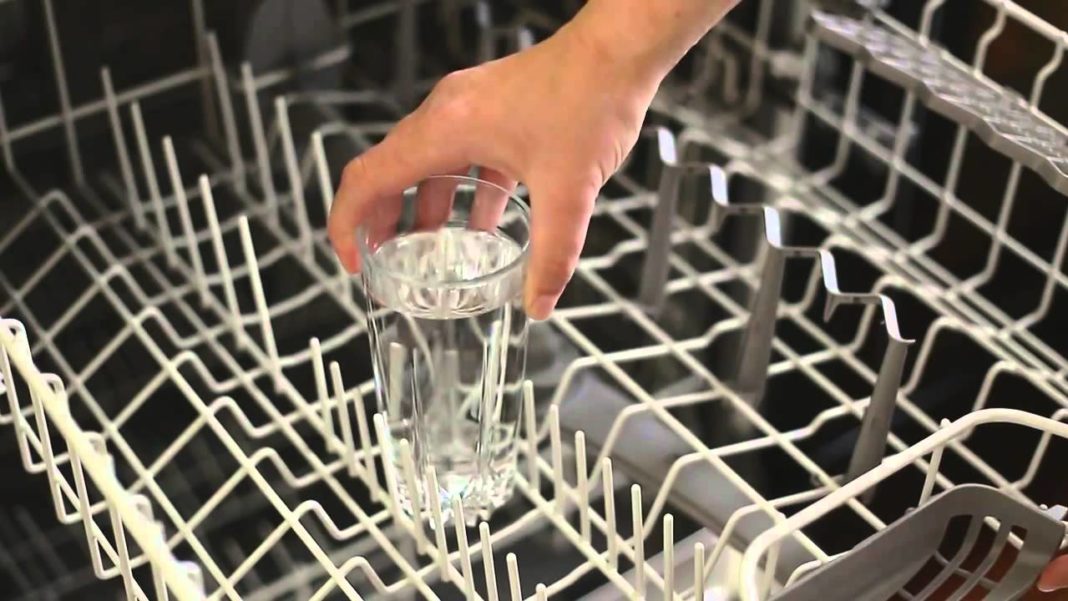
It's important to leave the vinegar container empty. This will allow the acetic acid-enriched water to destroy any mold and dirt that has accumulated inside. After the cycle is complete, simply remove the empty container and run the wash "empty" to eliminate the odor.
Cleaning with baking soda is a different process. First, make sure the dishwasher is empty. Next, sprinkle at least 240 g of baking soda on the bottom of the machine, close the door, and leave it for 6-8 hours. Then, run a quick wash with hot water. All that's left to do is remove any remaining mold with a brush or sponge.
It's important to understand that baking soda and vinegar will easily combat mold on the dishwasher walls, but they won't completely clean some nooks, crannies, and hard-to-reach areas. The door seal, hinged mechanisms, drain, and spray arm should be cleaned manually. Simply dip a brush in the soapy water and go over any suspect corners of the dishwasher.
We use complex cleaners
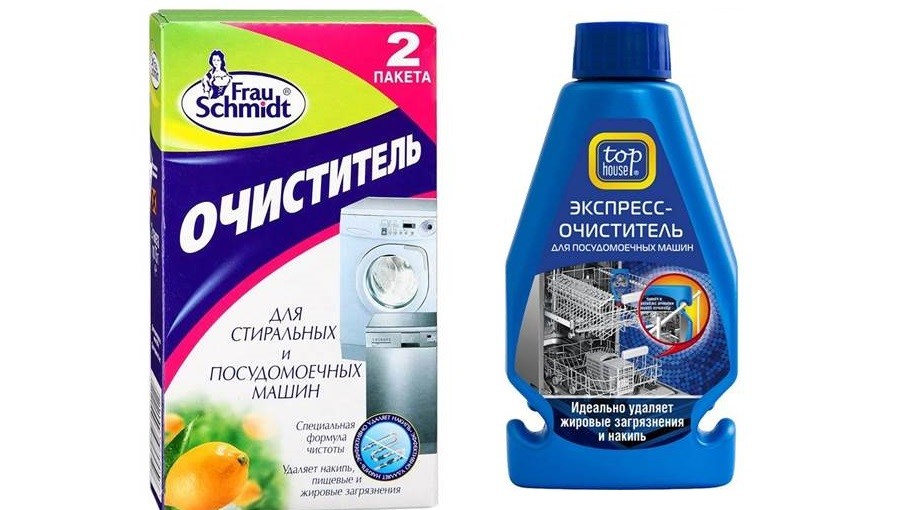
There's a worthy alternative to home remedies: commercially available all-in-one cleaners. Their main advantage is their versatility, allowing you to remove all accumulated mold, grease, dirt, and limescale in a single wash. Experts recommend choosing from the following brands:
- "Frau Schmidt." Unique tablets capable of removing all unpleasant buildup from your dishwasher, from mold to limescale. In addition to effective cleaning, the product combats unpleasant odors, extends the life of your appliance, saves energy, and leaves a pleasant lemon scent. However, it's ineffective against thick layers of detergent due to its insufficiently powerful formula. Manufactured in France, it's sold in packs of two tablets, costing around $2.
- "Top House." This cleaner's unique feature is its gel consistency, which allows you to quickly and effectively remove all foreign deposits and buildup from dishwasher surfaces. Thanks to its soft structure, the product penetrates drain hoses and sprinkler nozzles faster, ensuring perfect results. It is made in Germany and sold in 250 ml bottles, which cost around $2.
- "Clean Home." A domestic product popular with housewives for its low price of $2 and comprehensive cleaning. It can eliminate all types of mold, including light scale, as well as combat unpleasant odors and leave metal sparkling.
It is important that the cleaning product chosen has a composition that is safe for humans.
- Electrolux. This brand's comprehensive cleaner is designed exclusively for dishwashers of the corresponding brand. It's prized for its powerful cleaning action, easily removing even 3-4 mm of scale. However, its effectiveness comes at a price: 200 ml costs $8, with the understanding that a bottle will last for a maximum of two uses.
Whether to purchase special chemical products or use natural cleaners is up to the housewife, the main thing is not to leave mold in the dishwasher. The modern market offers hundreds of safe and affordable methods for comprehensive washing machine cleaning, among which it is easy to find the perfect option. Remember that the substances released by mold irritate the human respiratory tract and mucous membranes, and also have a detrimental effect on the condition of the equipment itself.
To prevent fungus from appearing again
Removing mold is only half the battle, as it will reappear with continued use and pose a health threat to residents. It's crucial to address the underlying mold problem, which is most often caused by improper use. To permanently banish germs from your dishwasher, follow these guidelines.
- Perform preventive cleaning at least once a month.
- After the cycle is complete, leave the door open. Otherwise, the machine will retain moisture and heat for a long time, which, along with any unwashed food residue in the dust filter, will promote mold growth. Good ventilation will eliminate this problem and help eliminate mold.
- After emptying the dishwasher, run an "empty" cycle with detergent or turn on the special sanitization option.
- Choose high-quality cleaning products, ideally chlorine-based.
- Clean the drain regularly.
- Do not leave dirty dishes in the machine for a long time.
Mold in your dishwasher is unpleasant and dangerous, but fortunately, it's easily remedied. Simply thoroughly clean the chamber and use the machine more carefully in the future. You've already learned how to do this.
Interesting:

Readers' comments
Headings
Washing machine repair




For buyers




For users


Dishwasher




Add a comment