
Advantages and disadvantages of an inverter motor in a washing machine
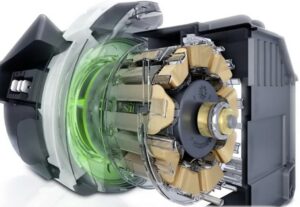 Any household appliance, even one invented and introduced many years ago, will never stop improving as long as it's in use. This applies to washing machines more than anything else. This constant improvement led to the invention of the inverter motor. In this article, we'll find out whether this innovation has been beneficial by identifying the main pros and cons of inverter motors in washing machines.
Feature of inverter motor
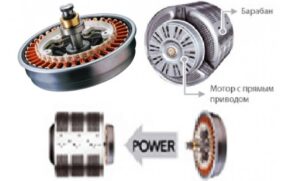
When inverter motors were first invented, they were used in microwave ovens, as well as HVAC systems. Machines with inverter motors are also called direct-drive units; their functionality is much broader than that of their predecessors—machines with brushed motors. The key capability of this type of motor is the transformation of alternating current into direct current.
Important! The inverter motor operates on the principle of electromagnetic induction.
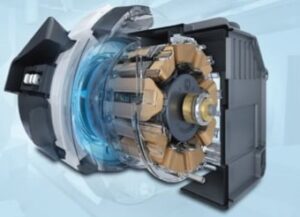
In commutator motors, current is directed by friction between graphite brushes, which significantly increases energy costs. In new motors, however, there is no friction between the components; the current is directed directly by the inverter.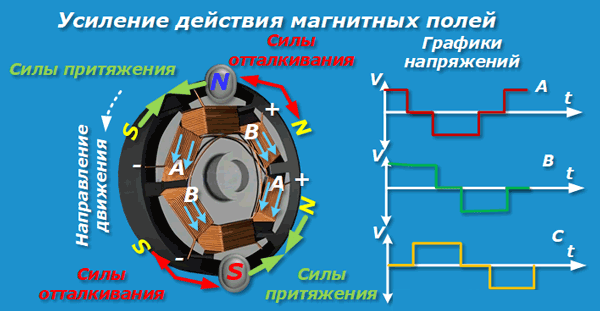
Direct drive means that there is no drive belt in the motor design. The motor disk is attached to the drum via a shaft without a belt drive.
The pros and cons of such engines
Everything described in the previous point sounds great, but it's essentially physics-based and offers little useful information for the average user, whose comfort should be paramount. Do washing machines with inverter motors have any advantages applicable to everyday life? Definitely, and quite a few.
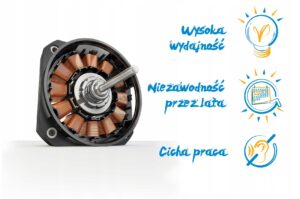
- The absence of graphite brushes and a drive belt is a definite advantage, as these parts wear out very quickly and require regular replacement. The inverter motor is not equipped with these components and therefore requires no additional maintenance.
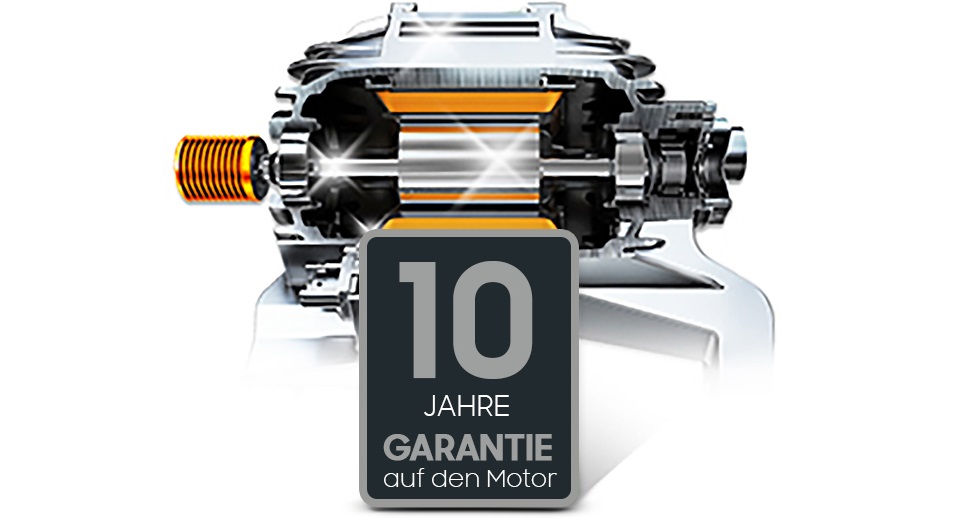
- Machines with inverter motors have warranties for up to 10 years, which is much longer than washing machines with collector motors.
- Energy-efficient. This is especially true for electricity. There are two reasons for this: firstly, as mentioned earlier, the absence of friction between the elements significantly reduces energy consumption; secondly, inverter motors can independently adjust their power depending on many parameters, which again eliminates unnecessary energy consumption.
- No noise. The inverter's operation is such that the machine operates very quietly compared to its predecessors.
- No problems with drum speed. Commutator motors operate intermittently, causing the drum to frequently drop speed. This doesn't happen with inverter motors; the rotor operates very smoothly.
- More gentle washing. Inverters regulate not only the rotation speed but also the overall smoothness of the drum's movements, direction, and reverse frequency, allowing for a more gentle wash.
Unfortunately, no design is without its drawbacks, so washing machines with an inverter motor also have them.
- Overpriced. While these motors are worth the money, when budget is a concern, brushed motors offer a price advantage.
- Spinning too fast. When the speed is too high, there is a risk of damaging the laundry in the drum.
Of course, before purchasing a washing machine with an inverter motor, you need to carefully consider all the pros and cons, but everything written above suggests that the advantages still outweigh the disadvantages.
Compare with other motors
There are three types of motors used in washing machine assembly. We'll examine them all and compare them.
- Commutator motors. These motors consist of a metal core, a commutator, brushes, and a drive belt. The brushes direct current to the motor's moving parts. Disadvantages include noise and the periodic need for replacement parts. Advantages include ease of use and fast drum acceleration.
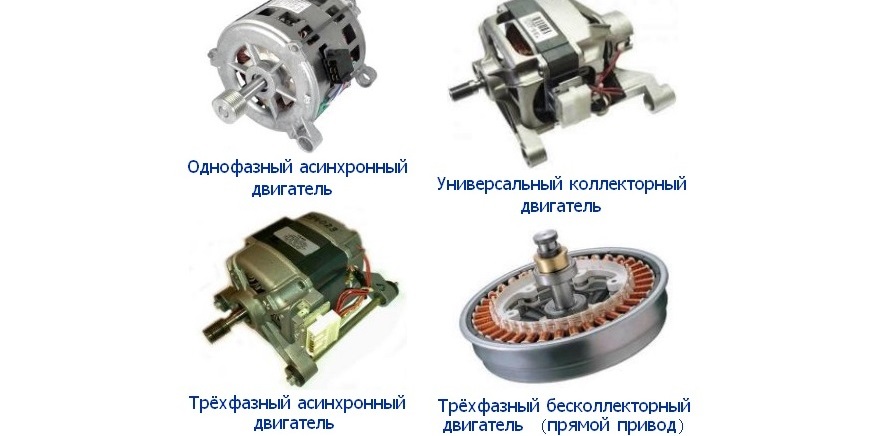
- Asynchronous motors. These motors are positioned as an alternative to brushed motors due to their lower noise level, but their use requires numerous additional components.
- Inverter motors. High-tech motors that combine high-quality washing, energy efficiency, ease of operation, and reliability. They are also virtually silent and require no additional maintenance or accessories.
Asynchronous motors are almost never found these days, but machines with brushed and inverter motors are sold in almost equal numbers. If the motor type is important to you when purchasing, be sure to check this information.
How common are inverter motors in washing machines?
LG was the first to release a washing machine with an inverter motor. They called their innovative technology "Direct Drive." The company promised that the improved motor would offer users new drum operation and wash control options. Cleaning quality improves along with the level of gentleness.
Let's take one of the washing machine models from LG. As already mentioned, inverter motors automatically regulate the drum rotation based on the weight of the laundry, the type of fabric, the set mode, etc. Based on this, the selected and many other washing machines with an LG inverter motor have 6 drum operating modes.
- Base.
- Gentle rocking. Typically used when turning on the pre-wash mode.
- Reversal. Rotating the drum in opposite directions allows the detergent to dissolve faster.
- Scrolling.
- Smoothing. As the name suggests, it's used on delicate cycles.
- Saturation. The drum moves so that the detergent is evenly distributed throughout the contents of the drum.
Please note! Modern Samsung Crystal Standard washing machines, in addition to an inverter motor, feature bubble wash technology, which provides superior washing results even in cold water.
Overall, if you're a fan of European appliances or Asian giants like Samsung and LG, you'll definitely find a washing machine equipped with an inverter motor. So, this isn't the only thing you should consider when buying. Be sure to consider the following five factors.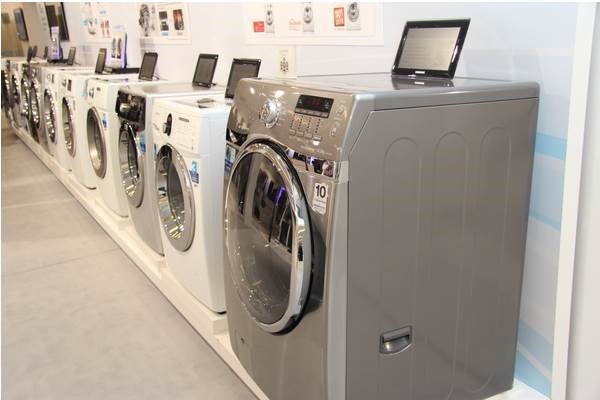
- Energy efficiency class. It is designated by a letter from A to G, where A is the highest class, meaning the machine is the most energy-efficient. A+ and A++ are the highest energy efficiency classes currently available.
- Maximum load capacity. You won't save money if you have to wash small loads (for example, if you bought a 3 kg load for a large family).
- Functionality. Washing machines these days come with all sorts of features and options. Ideally, your machine should monitor the drum balance and suds levels, have a delayed start function, and a night mode. The more features, the happier the user.
- Dimensions. Typically, a space is prepared in advance for a washing machine. When purchasing a unit, make sure its dimensions are suitable for your needs.
- Noise level. It's uncomfortable to constantly hear the noise of a washing machine in the background. Ideal noise levels are around 75 decibels during the spin cycle.
When answering the question of whether to buy a washing machine with an inverter motor, the main thing is to understand whether high-tech features are important to you. If so, go for it. If you're looking to save money, you can choose from proven washing machines with a brushed motor.
Interesting:
Readers' comments
Headings
Washing machine repair




For buyers




For users


Dishwasher




Add a comment