
Why doesn't my dishwasher dry the dishes?
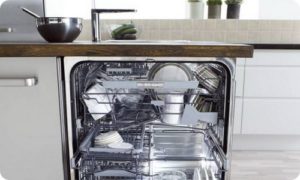 The final stage of the dishwasher cycle is drying. Drying is crucial for the final appearance of your dishes. Insufficiently dried dishes leave streaks and drips, making it difficult to place them on the holiday table. If your dishwasher isn't drying, it indicates a problem that needs to be addressed and not left unchecked. Let's explore why your dishwasher might not be drying your dishes and how to fix it.
Causes of malfunction
If you open the dishwasher door and see clean but damp dishes, don't rush to assume the machine is broken. The most likely cause of poor drying is the type of drying system. Most dishwashers use condensation drying, which is the cheapest and simplest option. This type of drying is also called natural drying. However, condensation drying is not ideal.
It works by evaporating moisture from hot dishes. However, metal objects cool down along with the tank walls, causing condensation that can't be dealt with.
Please note! Some dishwasher users recommend opening the dishwasher door slightly after the cycle has finished to improve drying and avoid leaving dishes in the dishwasher for long periods of time to prevent condensation from settling.
If the dishes are not only wet, but also poorly washed, then in this case it is worth considering a serious malfunction.
In machines with condensation drying this may be:
- a broken heating element, as a result of which the water does not heat up, and consequently the dishes do not wash or dry;
- the temperature sensor is faulty;
- relay failure on the control module.
In the case of dishwashers with turbo drying, another possible cause of malfunction is a failure of the fan that blows hot air into the dishwasher chamber, resulting in the machine not drying the dishes. Let's now look at how to troubleshoot these issues.
The heating element and temperature sensor are broken.
If the heating element and temperature sensor fail, the only option is to completely replace the components. Diagnosing a faulty heating element is generally straightforward; it requires some skill with a multimeter. Most dishwasher models, including Bosch, have a flow-through heating element located at the bottom. To access it, you'll need to turn the dishwasher over and remove the bottom. Next, locate the heating element, check its functionality, and replace it with a new one, preferably the original, if necessary. The entire process is described in more detail in the article. Replacing the heating element in a dishwasher.
As for the temperature sensor, when it is working, it regulates the operation of the heating element, giving the command to dry the dishes. If the sensor fails, the heating element does not receive a command, drying does not begin, and in some cases the process stops even during the dishwashing stage. The temperature sensor is located in the opening of the water collection chamber. Some dishwasher models may also have a water purity sensor in this chamber. The wires are removed from the temperature sensor, and then the sensor itself is removed. The new sensor is installed in its place, and the repair is complete. All that remains is to reassemble the machine and test it.
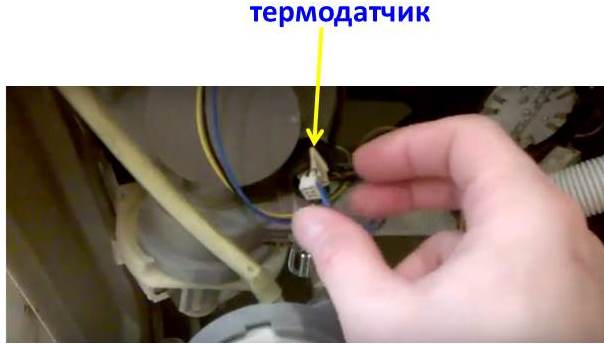
Please note: In LG dishwashers, the temperature sensor is located at the base of the heating element, just like in washing machines.
The fan and relay are out of order.
One common reason a dishwasher won't dry dishes is a faulty relay on the control board. In most cases (in fully integrated or freestanding machines), the control board is located inside the door, which can be easily removed by removing a few screws.
Once you remove the control board, you'll see a relay. Replacing it will require some soldering dexterity. If you're unsure about your ability to handle this type of work, it's best to contact a professional who can handle it for you. Replacing the relay is an inexpensive repair.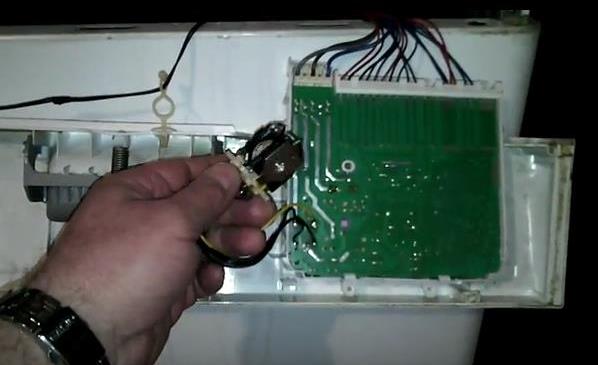
As for the fan in machines with turbo drying, it also needs to be replaced if it breaks; it cannot be repaired  It's not subject to repair. When the fan stops working, you won't hear the characteristic sound of the turbo dryer. The location of the fan that blows hot air varies across different models, typically on the side wall; in Bosch models, it's at the bottom of the dishwasher; and in AEG models, it's at the top. Therefore, to access it, you'll have to disassemble almost the entire dishwasher. To avoid this, you can hire a professional, which will cost about $20, plus the cost of the fan itself.
So, there could be several reasons why your dishwasher isn't drying dishes properly or isn't drying at all. All of them are easily remedied and don't cause any problems. Good luck with your repairs!
Interesting:



Readers' comments
Headings
Washing machine repair




For buyers




For users


Dishwasher




Add a comment