
Why is there foam left in the dishwasher?
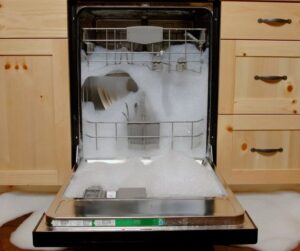
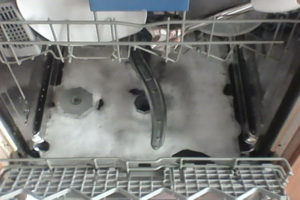 Let's imagine that every time you wash dishes, there's foam left in the dishwasher. The number of dishes doesn't matter; even with a half-load, foam will still be present at the bottom of the wash chamber. Should you sound the alarm? It depends on the amount of foam. If there's very little foam, just a few wisps, don't worry—that's normal. But if the foam obscures the spray arm underneath and keeps spilling out of the wash chamber, you need to investigate the cause. As always, we're here to help.
What did you wash the dishes with?
Is there a lot of foam at the bottom of your dishwasher? Check the quality of the detergent you use. Often, unscrupulous manufacturers of cheap products add ingredients that cause increased foaming. This can be easily verified. Buy a few sample bottles.dishwasher tablets And see how your "household helper" handles them. If foam still forms, then the problem isn't with the detergent.
Some dishwasher owners manage to add mustard, laundry detergent, citric acid, vinegar, baking soda, and other ingredients to their dishwashers instead of a good commercial detergent. Some are convinced that even the best tablet can be replaced with Fairy dishwashing gel, which they happily pour into the dishwasher. Then they're the first to complain about how bad their dishwasher is, how it spits out foam.
Friends, remember that dishwasher manufacturers don't just write detailed instructions for their appliances for nothing. These instructions must be followed, and then everything will be fine.
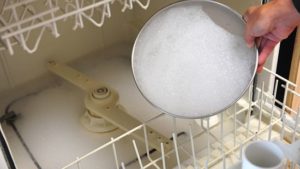
Since "bad detergent" is the main cause of the problem most often encountered by users, let's check it out properly. What should be done?
- After washing dishes, if you notice increased foaming, remove the clean dishes from the baskets and carefully remove the foam from the bottom of the washing chamber with a cloth.
- Check the detergent container to see if there's any left. If everything's working correctly, there should be very little or nothing left.
- Add a full dose of new detergent to the container and run the dishwasher again without loading any dishes.
- Wait until the program finishes, and then check the results. If foam still forms, then the problem isn't with the product, but if there's no foam, then you know what the problem is.
What was the dish contaminated with?
Some users report increased foaming from time to time. Why does this happen? Bosch dishwashers, like any other, clean any kind of dirt well; that's just the way they're designed. However, certain food residues can react with the detergent's components, producing large amounts of foam as they break down. This can happen, for example, with egg whites, leftover porridge, or leftover dough. But be careful here; food products don't usually produce huge foam caps, so if you're seeing a lot of foam, there's a different cause.
To determine whether food residue is causing excessive foaming, smell the foam residue. Foam from food has a foul odor, while foam from detergent has a faint chemical odor.
Incorrect settings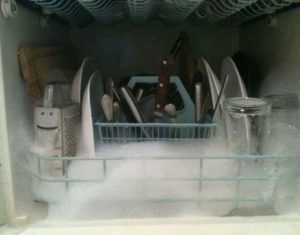
If your dishwasher is leaking suds even though you're using a good detergent and washing regular food dishes, it could be due to incorrect dishwasher settings. This usually happens when machine owners have been using powder for a long time and then switched to tablets. In this case, the tablet begins to dissolve unevenly, including when rinsing, when the product is no longer needed at all.
It turns out that the washing program is already finishing, but the tablet continues to dissolve, and the foam drips off the dishes and collects at the bottom of the washing chamber. What should you do? You need to carefully read the dishwasher manual. It probably describes how to change the settings of your machine so it works correctly even with the tablets.
Some PMMs do not support the use of pills and behave unpredictably with them.
The waste filter mesh is clogged
Another common cause of excessive foaming is a clog—not just a simple clog, but a superficial one. What does this mean? If you're washing very greasy dishes with chunks of grease literally clinging to them, there's a risk that this grease will clog the waste filter mesh located at the very bottom of the wash chamber. The film of grease will cover the mesh's micro-holes, and water mixed with detergent will have difficulty passing through the waste filter.
This can result in a foam cap near the lower spray arm. To eliminate the cause of the problem, rinse the bottom of the wash chamber. This will ensure proper drainage and prevent excessive foam formation.
So, we've covered the main causes of the problem described. If you have any questions, please ask them on our forum or leave a comment. We'll be happy to answer them. Good luck!
Interesting:




4 reader comments
Add a comment
Headings
Washing machine repair




For buyers




For users


Dishwasher




There are 3 reasons:
1. Incorrect position of the hose.
2. Clogged inlet pipe.
3. Poor pressure.
Thank you
Hello. My dishwasher has been running for a while, and now it's constantly foaming, even without any detergent. I've washed everything about 50 times, and the foam is still there, sometimes less, sometimes more.
How did you resolve the issue? I had the same problem. I tried running it without the pills several times, but it still foamed.