
Cleaning the filter in an Ariston washing machine
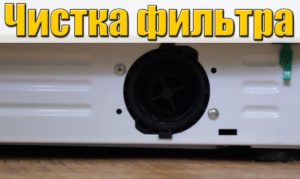 Household appliances, even the simplest ones, require maintenance. Complex technical devices, including Ariston washing machines, require regular maintenance. This includes cleaning the filter, which ensures the drain pump operates smoothly. Today's article will show you how to clean the filter in an Ariston washing machine.
Preparing for the procedure
When cleaning, follow safety precautions, beginning by disconnecting the appliance from the power supply and water supply. For ease of use, in some cases, the machine may need to be moved, which can be difficult to do alone due to its considerable weight.
The next step is to locate the filter. First, you need to open the cover that covers the filter. You'll need to remove the false panel located on the bottom of the machine. If you can't unfasten the panel with your hands, you can pry it off with a tool: a flat-head screwdriver with a wide tip or a knife with a rounded edge. There are models in which the lid can be opened by hand with minimal effort.
Please note! The Hotpoint Ariston drain system always retains liquid pumped out of the tank. Opening the filter will cause the remaining water to drain out. It will simply spill onto the floor.
Prepare a rag or flat container in advance. These should be placed under the raised machine. Some washing machine models don't require moving the entire unit. This is due to the trough-shaped design of the access door or the catch basin itself, allowing any remaining liquid to drain neatly into a container placed in advance.
Cleaning the trash filter
Technicians working at specialized service centers perform the filter-collector cleaning procedure in several stages. First, drain the remaining water using any convenient container or absorbent cloth. Remove the filter from the Ariston washing machine by carefully turning the drain trap plug counterclockwise. The rotation angle is 45-60 degrees. Next, unscrew the filter completely and remove it.

- Cleaning and rinsing begins with the removal of large debris (foreign objects, fabric substrate, etc.).
- Next up is limescale. You can remove it from the surface of the device with a sponge (dishwashing sponge) with an abrasive coating.
- The complete procedure is rinsing the device. This is done using warm running water.
It's important to emphasize that rinsing under boiling water is strictly prohibited. Careless cleaning may cause deformation of the plastic and loss of elasticity of the rubber seal.
Don't forget to check and clean the drain filter housing in the machine. While removing any remaining debris, take the time to clean other parts of any accumulated dirt, plaque, and mold. A damp sponge is suitable for this. Once the cleaning is complete, install the appliance in its designated housing. The plug should be screwed in tightly, tightly, and carefully, turning clockwise.
Hotpoint Ariston's creators recommend filter maintenance every two to four months. The frequency of washing should be the primary guideline for choosing a maintenance schedule. Regular use requires more vigilant and frequent maintenance. As an example, consider a large family with several children. In this case, a household washing machine, used daily, requires cleaning the dust filter once a month.
Experts say the type of fabric also affects the frequency of preventative cleanings. Wool and fleecy materials (flannel, baize) are washed more frequently during the cold season. Due to the abundance of lint, this type of fabric can cause serious and rapid filter clogging. Therefore, it is recommended to clean the drain trap frequently.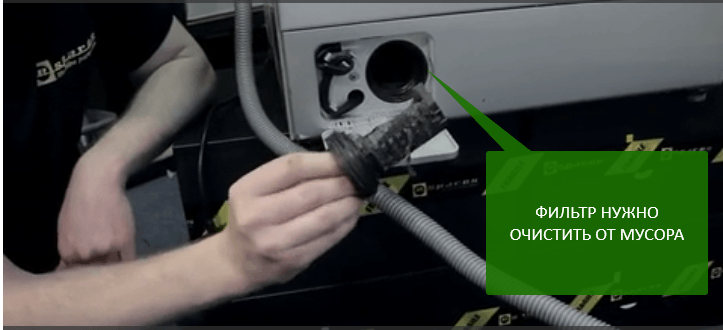
When washing pillows or down jackets made from natural down and feathers, as well as other items that generate a lot of debris that clogs the filter, it is recommended to clean them at the end of the set program.
If you don't pay attention to the filter?
A seriously dirty trap can be a source of problems. These problems won't just be caused by a breakdown of your "home helper." Dirt is primarily a source of microorganisms, which in turn can cause serious illnesses for family members.
- A foul stench emanates from household appliances and freshly washed laundry. The cause is filtered debris and accumulated dirt, which become a breeding ground for microbes. Bacterial activity causes the dirt deposits to harden, creating a foul odor that can ruin the scent of any freshly washed laundry.
- Mold and bacteria. This nasty stuff will fill the machine and start to poison the air in the room where it's installed. You can imagine the consequences.
- Drainage obstruction. A clogged drain system can impede proper operation. Left unaddressed, the filter becomes extremely clogged, preventing the machine from properly emptying the tank.
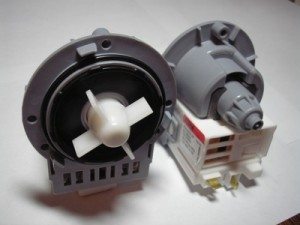
- The pump breaks down or stops working properly. Foreign objects sometimes get trapped in the drain trap and end up in the pump. This results in pump malfunction, which stops pumping fluid. If the foreign body is a metal part, it can break the impeller blades. Alternatively, the pump body may be severely damaged. Ultimately, it will require complete replacement or costly repairs.
The filter is leaking
The filter cleaning procedure always concludes with a leak test. This leak may not appear immediately, but rather after several washes. What causes this unfortunate leak?
First, the filter may be installed incorrectly (unevenly or loosely). The filter requires level installation to prevent thread shifting. The filter should be tightened firmly but carefully. The threads of the plastic part can be stripped by applying excessive pressure while screwing the cap on. The resulting leak, in this case, can easily be corrected by correcting any misalignments and tightening the fastening.
Secondly, manufacturing defects in consumables (gaskets). A rubber gasket ensures the drain trap fits snugly in its housing. Over time, it can deteriorate (crack). Damage can occur after careless filter removal or cleaning with sharp tools. The defect can be eliminated by replacing the sealing rubbers (if available) or by completely replacing the filter.
Third, the threads or drain trap are damaged. This is caused by improper, forced removal of the part or tightening of the plug. This force weakens the contact between the elements, causing a leak. The leak can be fixed by replacing the trap itself or the entire kit, which includes a snail assembly. In this case, a specialist may be needed.
The filter cannot be removed
The drain trap in washing machines can sometimes be impossible to remove. Situations can vary: the handle won't turn, or the trap is stuck in its socket and won't come out. This situation is caused by a lack of regular or at least periodic maintenance of the drain trap.
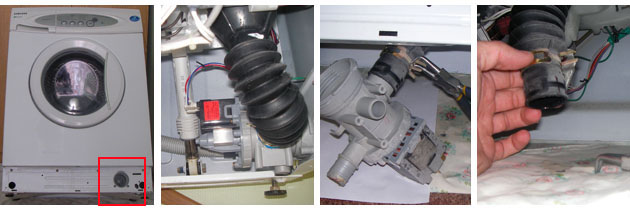
If the drain filter won't unscrew, it could be due to a foreign object or scale forming between the threads and the seal. Our technicians offer a step-by-step solution.
First, you can unscrew the stuck filter using a carpenter's tool (like pliers). This should be done carefully and slowly. If the first method doesn't produce the desired result, cleaning can be performed after removing the pump.
The procedure requires following the correct sequence of steps. Depending on the model (brand), to begin, you need to detach one of the device's housing walls (front or rear). Next, disconnect the wiring and unfasten the clamps connecting the volute to the pipe and flexible drain tube. Next, remove the hydraulic unit with the volute. Cleaning the drain trap is easier through the holes in the drain pipe or the pump (after disconnecting the pump from the volute).
Important! Cleaning a drain trap using a drain pump is quite complex and requires specialized knowledge. To ensure the quality of the work, it is recommended to entrust it to professionals.
If all the above steps fail and the filter won't come out, you may be doing something wrong or your machine may have a unique issue. Don't break anything; call a professional and they'll fix your problem.
Interesting:
Readers' comments
Headings
Washing machine repair




For buyers




For users


Dishwasher




Add a comment