
Cleaning the Dexp washing machine filter
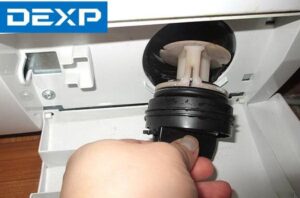 Any washing machine gets heavily soiled during use, caused by hard tap water, soap scum, fabric particles, threads, hair, fur, and other debris. All of this dirt accumulates on key components and clogs the dust filter. Failure to clean the filter in your Dexp washing machine, as well as other parts, can lead to various problems. Any cleaning should begin with cleaning the filter, which is what we'll cover today.
Lower filter element
In the "home helpers" from the Dexp company, you can find two filters at once - an inlet and a drain. The first one is needed to purify the tap water that the equipment collects for the working cycle. It prevents rust, sand, limescale and other debris from the water supply from entering the system.
Finding the inlet filter is very easy – it is located at the top of the washing machine body.
The drain filter is installed in the appliance to filter the used liquid, trapping debris. The drain element, located at the bottom of the washing machine, protects the pump and drain hose from various debris that can damage the pump and block the drain hose, making drainage impossible.
The drain filter ensures that most of the debris remains in a safe area of the washing machine—on the plastic spiral nozzle located at the drum outlet. You can clean the debris filter yourself, saving you money. All you need to do is carefully follow our step-by-step instructions.
- First, locate the drain filter – on most Dexp brand washing machines, it is located at the bottom left on the front panel of the machine.
- To remove it, you need to pry open and remove the access door, but don't rush this procedure, as you first need to disconnect the appliance from the power supply, sewer, and water supply.
- Then move the device away from the wall to gain easy access to it.
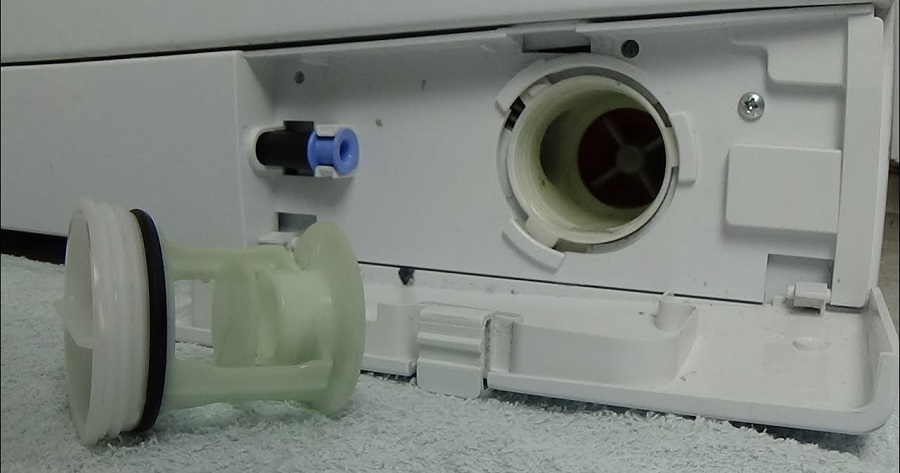
- Tilt the machine back a few centimeters and lean it against the wall for easy disassembly.
- Using a flat-head screwdriver, pry up the access panel and release the retaining clips.
- Place a large container, such as a basin or bucket, under the dust filter, and also cover the floors with rags just in case.
After a working cycle, there is always some waste liquid left in the tank, so it is important to be prepared for this to avoid accidentally flooding the floors and the neighbors below.
- If your appliance has an emergency drain hose, you need to activate it so that all the water drains into a prepared container.
- Unscrew the drain filter plug.
- Remove the attachment.
The hardest part is over; all that's left is cleaning the filter. First, you need to clear out any large debris, and then you can move on to thoroughly rinsing the element with a powerful stream of warm tap water. Do not use boiling water, as it may deform and damage the plastic parts of the filter, as well as the rubber seal.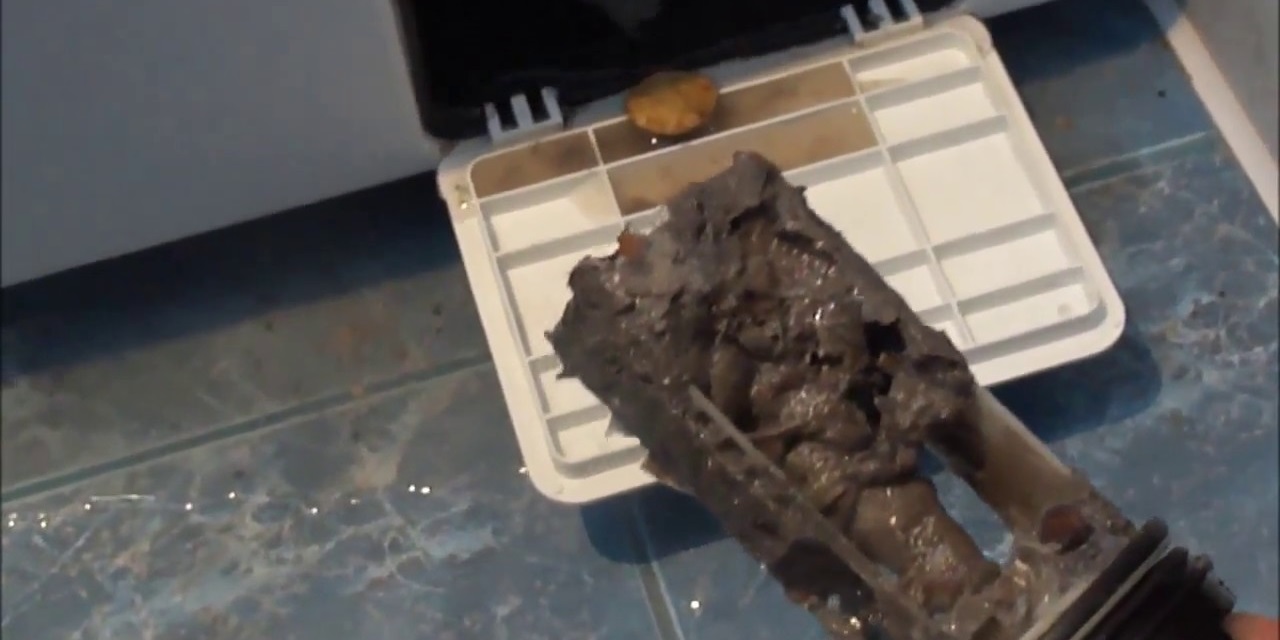
Next, carefully inspect the drain filter seat. It often gets just as clogged as the filter itself, so be sure to clean it with a soapy sponge. Next, shine a flashlight through the drain to locate and inspect the pump impeller. If it rotates freely, no further action is needed, but if it's difficult to rotate, clean the impellers of hair, fur, dirt, and other debris.
After completing all the steps described, reassemble the machine according to our instructions in reverse order and run a test cycle. Simply select a separate rinse cycle to ensure the debris filter is working properly and is not leaking. If all is well, replace the access panel and place the "home assistant" back in its original location.
The dirt from the filter cannot be washed off.
Sometimes, the user may be unable to clean the drainage element. This usually happens when it hasn't been cleaned in a long time, or has never been cleaned at all. In this case, simple tap water won't do the trick, so more advanced methods will have to be used.
- Cleaning with a toothbrush. Typically, caustic deposits on parts can be removed with an old toothbrush and laundry soap. Be vigorous when cleaning to remove all the deposits.
- Soaking. If even a brush doesn't help because dirt and grime have become embedded in the filter assembly, you'll need to soak the filter in a solution of citric acid and baking soda. Dissolve the baking soda and citric acid in warm water at a ratio of approximately 20-50 grams per liter of water, then place the drain filter in a container for at least an hour. Afterward, all you have to do is rinse off any remaining dirt.
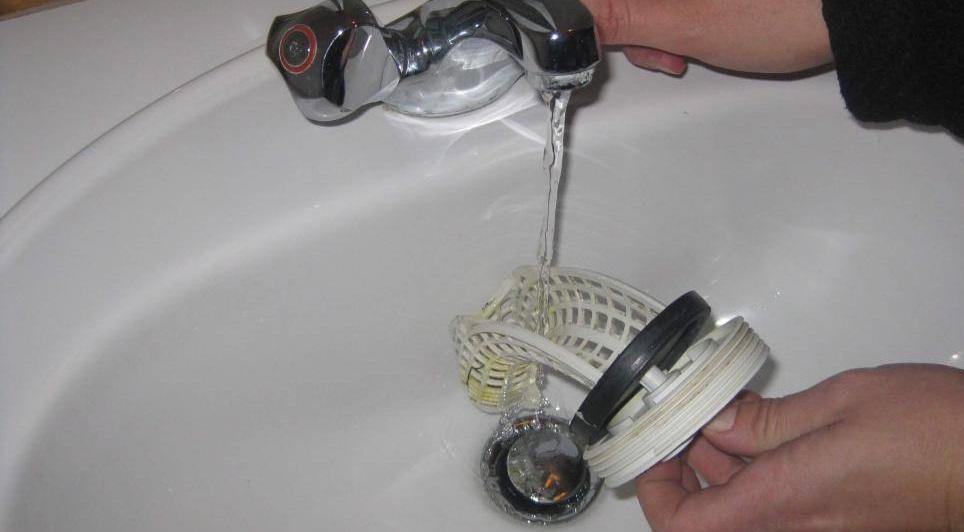
- Treatment with household chemicals. If basic household chemicals don't help, you'll need to buy a special rust and stain removal cleaner from a hardware store.
Don't be afraid to scrub the Dexp washing machine's drain filter elements vigorously, as they are resistant to abrasion and detergents. Most importantly, avoid using boiling water or strong alkalis, which can damage the unit.
The part could not be unscrewed
Finally, it's worth examining the situation when you can't start cleaning the filter because it can't be removed from its seat. The drainage element may become blocked by stuck debris such as a bra underwire, coin, button, paper clip, hair clip, clump of hair, etc. Additionally, the component may be difficult to remove because it's coated with a thick layer of scale. Any of these reasons is just another reason to remove and clean the part as quickly as possible.
Instead of manual cleaning, you can always use the "home assistant" cleaning cycle, for which you should purchase special household chemicals for cleaning the system.
You'll need strength and resourcefulness when you need to remove a blocked part. There are three methods, each designed for a different severity of the problem. Let's look at them in order, starting with the simplest and ending with the most difficult and frustrating.
- To begin, you can try removing the component with common household tools, such as pliers or flat-nose pliers. Simply grasp the protruding part firmly and attempt to pull it out with force. The key is to avoid using excessive force, as this could damage the fragile plastic component.
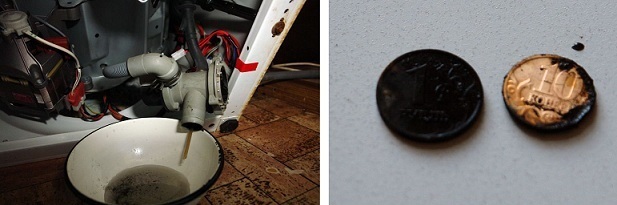
- The next method involves trying to dislodge the blockage. To do this, tilt the washing machine a few centimeters so that it rests against the wall, then tap the entire surface near the lid with your fist. This can sometimes dislodge debris blocking the drain filter with a gentle tap.
This method can be used in situations where the drainage element not only cannot be removed, but also hangs loosely in its socket.
- Finally, the most radical solution is to partially disassemble your "home helper" and try to gain free access to the filter through the drain pump. In this case, you'll need to lay the washing machine on its side, remove the bottom, locate the pump inside, and remove it. Afterwards, clean the drain and drain filter, and treat the element with WD-40 to remove stubborn limescale.
As you can see, you can fix a clogged debris filter without calling a service technician. However, it's much better to avoid this altogether and simply clean the filter at least once a quarter, along with the drain. If you have pets or frequently wash woolen clothes, it's best to clean the filter once a month.
Interesting:




Readers' comments
Headings
Washing machine repair




For buyers




For users


Dishwasher




Add a comment