
Cleaning the Indesit washing machine pump
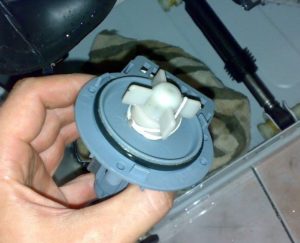 Without a properly functioning drain, your washing machine won't work. For the cycle to complete successfully, wastewater must drain into the sewer, which is quite difficult if the pump is clogged. Fortunately, cleaning your Indesit washing machine's pump is enough to restore the process. We'll explain how to properly clean the drain system and when it's necessary.
How do you know if the pump is dirty?
A drum that does not empty does not always indicate problems with the pump. The drain pipe, hose, snail or debris filter may also be the culprits of a non-working drain. But with similar "symptoms," it is not difficult to identify a pump malfunction, since there is a way to check several drainage points at once.
Let's do it this way.
- We try to drain the water automatically by selecting the "Drain" program. If this doesn't work, we move on.
- We use a screwdriver to pry up and remove the technical hatch door from its latches, which is located in the lower right corner of the Indesit body.
- We find a round plug on the right side – the cover of the trash filter.
- We place a basin under the filter and cover the surrounding area with rags.
- We take hold of the protruding “handle” on the filter and, turning it clockwise 2-3 turns, take out the “trash can”.
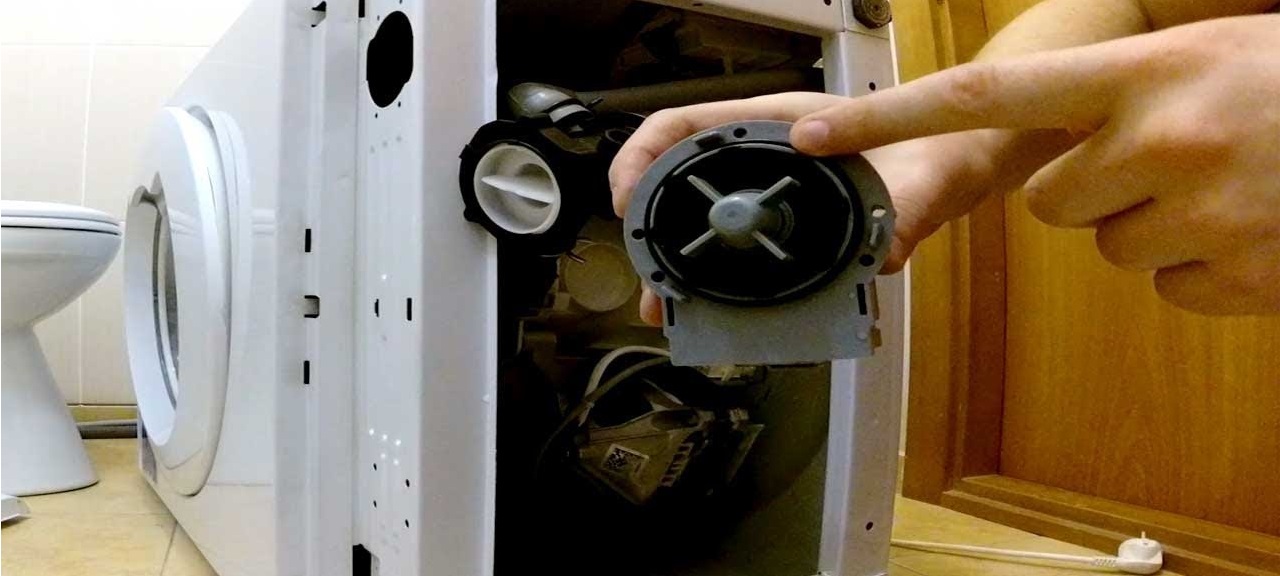
- Carefully inspect the coil and, if necessary, clean out any stuck dirt and hair.
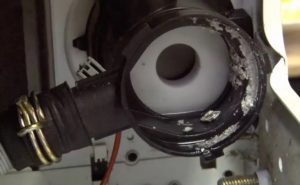
- We shine a flashlight through the vacated hole and inspect the snail for blockages.
- We check the pump impeller in a similar manner. It often becomes blocked due to hair tangled around the blades.
Do not remove the waste filter immediately after the end of the cycle, as there is a high risk of scalding with hot water.
It's best not to trust your eyes; instead, insert a screwdriver into the hole and try to spin the impeller. If it turns too slowly or too slowly, the drain pump needs cleaning. The pump needs to be removed and inspected.
We get to the pump
Almost all Indesit washing machines do not have a drip tray, so access to the pump is easy. But first, you will have to disconnect the machine from all connected utilities and move it away from the wall, ensuring free access to the unit. After that, we fix the inlet and drain hoses to the body and get to work.
We proceed as follows.
- We check that there is no water in the dispensary.
- Turn the washing machine over onto its right side.
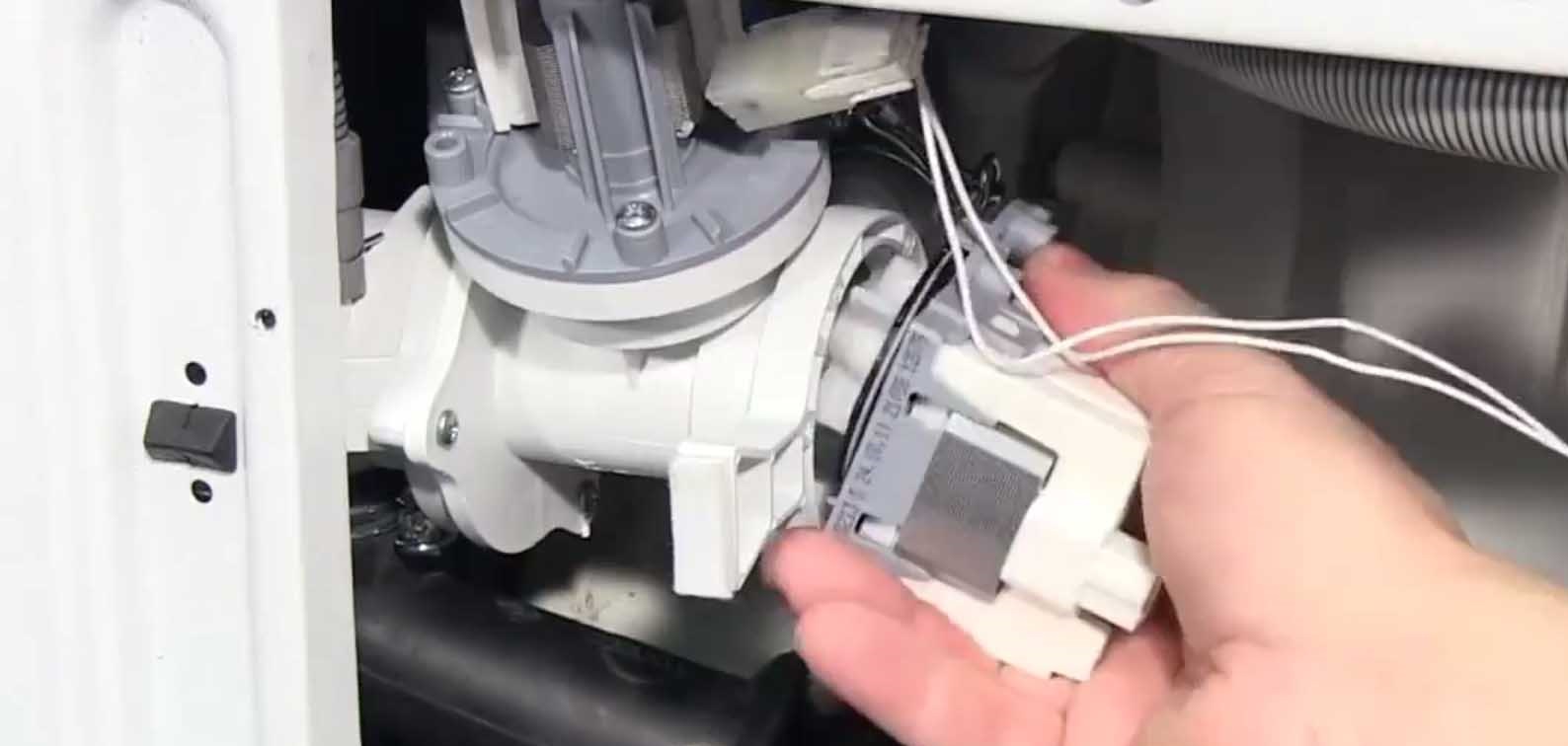
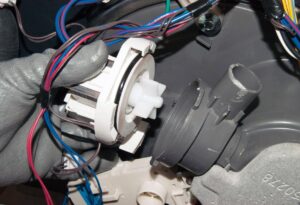
- We look under the bottom of the machine and look for the pump - a round black "washer" secured to the snail with four bolts.
- We release the wiring connected to the pump and unscrew the four bolts holding it.
Before removing the wires connected to the connectors, it is recommended to take a photo of the location of the phases and terminals to avoid errors when reconnecting.
- By rocking the pump body, we remove it from the snail.
Once you have the pump in hand, you can begin diagnosing the part. If done correctly, it will become clear what is causing the non-functioning drain and how to fix it.
Cleaning the part
A working impeller rotates with a little difficulty. If threads, lint or hair get wrapped around the blades, then its movement becomes difficult and stops.Therefore, the first step is to remove all foreign matter from the part.
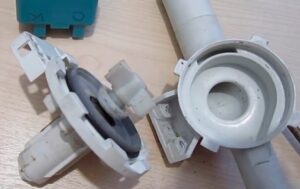
To clean the pump further, you need to disassemble it. Unscrew the housing, clean the internal parts of any dirt, then reassemble and spin the impeller. If the blades spin better than before, the pump is repaired.
There are non-disassemblable types of pumps that cannot be repaired.
Most often, the impeller on Indesit automatic machines doesn't lock, but falls off and dangles from its mounting. In this case, we don't recommend trying to fix the ring with glue or sealant. It's better to buy a new pump instead of wasting time on emergency repairs. It's simpler, safer, more reliable, and less expensive.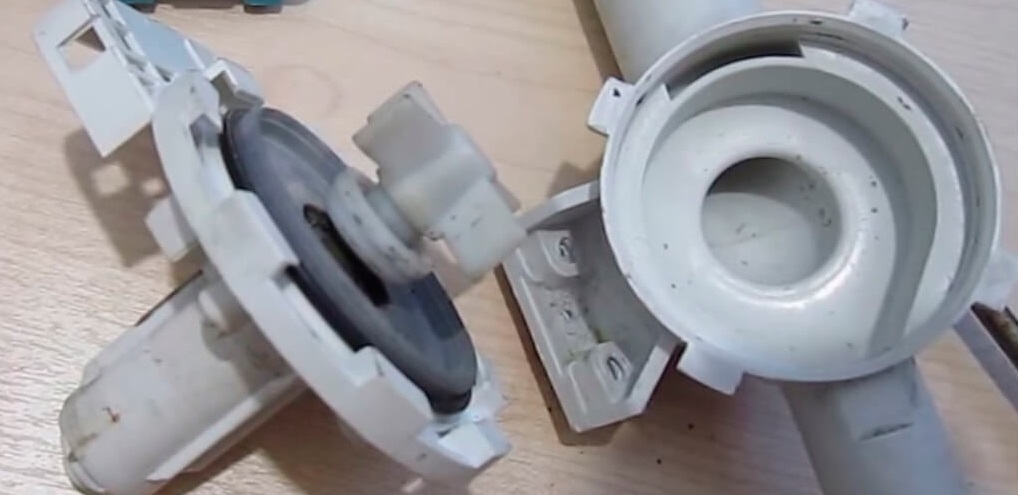
How does the drain work in a washing machine?
To better understand the nuances of the upcoming work and prevent a recurrence of clogs, it's worth taking a closer look at how the drainage system in washing machines works. The drainage system is the same in most washing machines, and the Indesit is no exception. Briefly, water is pumped through the machine as follows.
- The board signals the end of the cycle (or the activation of the “Drain” or “Spin” programs for users), after which the pump starts working.
- The impeller rotates, giving the water the correct direction.
- The waste water from the drum is directed through a pipe to the pump.
- On its way to the pump, the water enters a debris filter, which, thanks to a built-in grate, holds debris, protecting the pump and impeller.
- After passing through the pump, the water goes through the drain hose into the sewer.
If used correctly, the pump will last 5-10 years.
The pump is held in place by a volute distributor, which resembles a flattened shell. Once the tank is empty, the pressure switch sends a signal to the control module, and the pump stops.
Interesting:

Readers' comments
Headings
Washing machine repair




For buyers




For users


Dishwasher




Add a comment