
How to clean the fabric softener compartment in a washing machine?
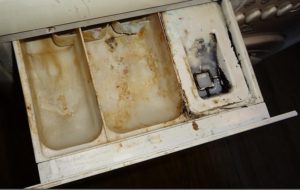
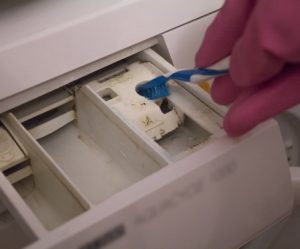 Over time, the fabric softener dispenser in your washing machine can become coated with deposits. This is caused by residual fabric softener and hard water. Owners of home appliances will need to thoroughly clean the fabric softener compartment to remove these deposits. However, you'll first need to remove the fabric softener and only then attempt to remove the residue.
Removing the tray and disassembling the rinse aid compartment
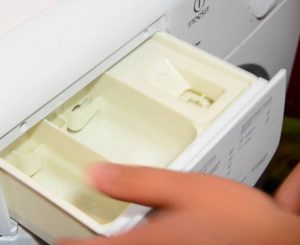
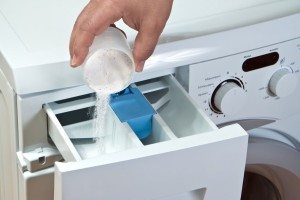
Cleaning your washing machine's fabric softener drawer, particularly the fabric softener compartment, should be done regularly. Otherwise, detergent, dirt, and bacteria can accumulate on the surface of the drawer. First, remove the drawer itself, which is easy:
- pull it towards you until it stops;
- make sure the tray does not move further;
- carefully continue to pull it towards you, while simultaneously pressing on the blue plastic tab (it is located in the center of the detergent compartment);
- Continue moving the tray until it comes out of the washing machine.
Putting the detergent compartment back in place is much easier – just place it straight and push it in.
Once you've removed the drawer from the washing machine, you need to access the fabric softener compartment. At the top of this compartment is a plastic piece that's fairly easy to remove. Simply pull it gently. Once removed, you can begin cleaning the compartment.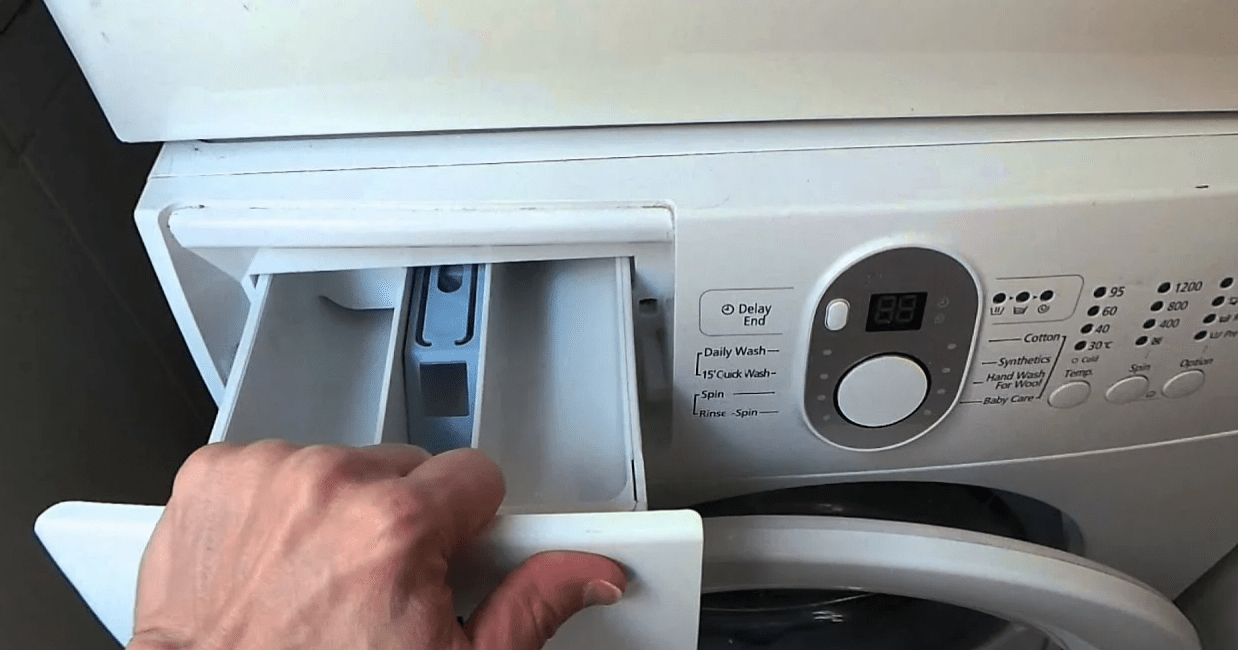
Soaking the powder receiver parts
Cleaning the washing machine's drawer immediately after removing it is difficult, so it's recommended to soak it first. This should be done following certain guidelines. Otherwise, all your efforts will be in vain, as scale and deposits adhere so tightly to the container's material that removing them is difficult. How do you soak a washing machine's drawer?
- Take a deep enough container and fill it with hot water (about 60 C).
- Pour 250 grams of citric acid into the liquid (you need a lot of it for more effective cleaning).
- Place the detergent compartment into the container so that it is completely covered in the solution made earlier.
- Leave for a long time (about 1.5-2 hours).
- Take out the container and start cleaning it.
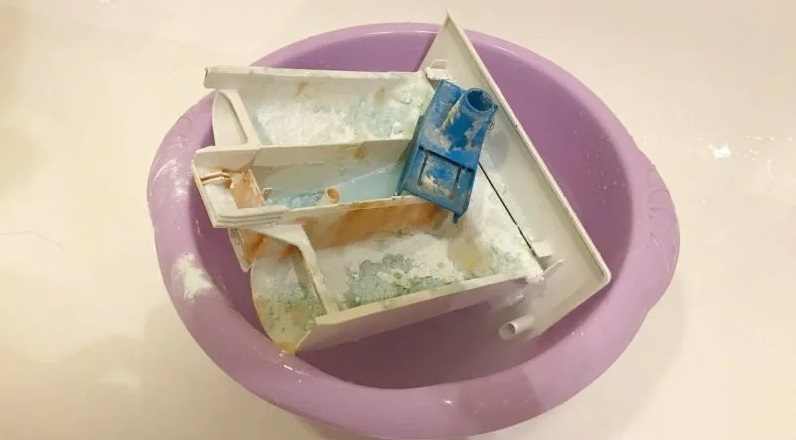
If you don't have citric acid, you can use vinegar. In this case, you'll need at least 100 ml of water per deep bowl. Despite the strong destructive action of the acid, it will take considerable effort to ensure successful cleaning.
You should also pay attention to the water temperature. Don't immerse the container in very hot liquid, as this is harmful to the plastic. It may simply become deformed if you place it in boiling water.
We are persistently cleaning
After soaking for so long in the acid solution, the scale deposits in the container will crack. This will make removing them much easier than if they were dry. Some of them will come off on their own, but completely cleaning the compartment will require some effort. Sharp wooden objects are best for removing scale deposits. These can be chopsticks or simply sturdy wood chips.
Important! Do not use knives, forks, or other sharp metal objects to remove scale, as they can seriously damage the air conditioner compartment.
Find any wooden stick and sharpen it. After that, you can begin mechanically cleaning the container. If limescale deposits are difficult to remove, soak the tray again. After completely removing dirt, rinse the compartment with water and put it back in its original place.
Don't let the tray get dirty
Cleaning a washing machine's drawer is a challenging task. Therefore, it's better to prevent such severe scale buildup than to deal with it later. To do this, follow these tips: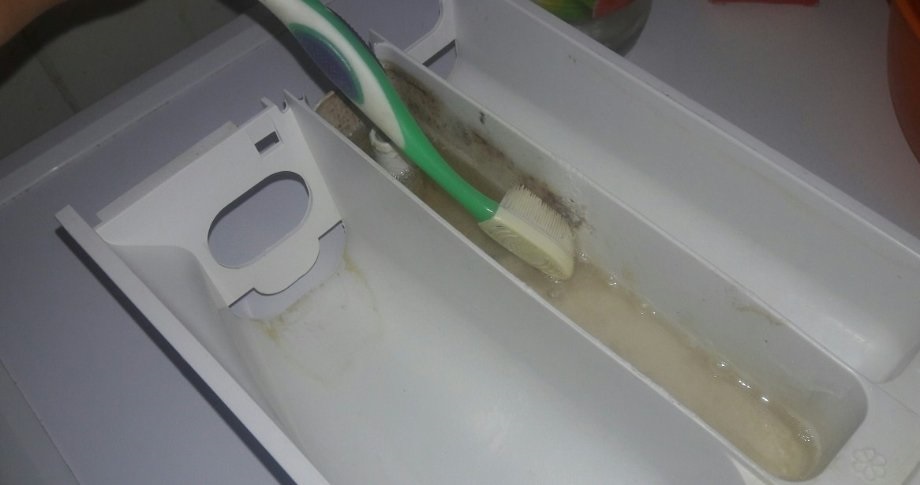
- After each wash, wipe the compartment dry;
- After washing, leave the compartment open until it is completely dry to prevent the growth of pathogenic microbes;
- After every 10 washes, carry out preventative cleaning of the cell in the manner described above.
If you follow these recommendations, your washing machine's tray will always be clean. This means you won't have to scrub it vigorously to remove stubborn stains. The key is to prevent stubborn stains from occurring.
Interesting:

Readers' comments
Headings
Washing machine repair




For buyers




For users


Dishwasher




Add a comment