
How to descale a washing machine's detergent drawer?
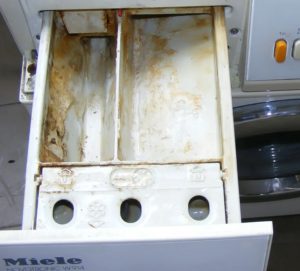 Over time, the detergent drawer inevitably becomes dirty: unwashed detergent residue accumulates with limescale and dust, hardening into unsightly deposits. Removing these deposits is difficult, and the standard procedure with a toothbrush and soap won't help. To descale the detergent drawer, remove the drawer, soak it, and wash it. We'll explain the procedure in more detail.
Remove the powder receptacle
Limescale tends to stick firmly to surfaces, and the walls of the detergent drawer are no exception. Limescale adheres to the plastic and can no longer be removed with water and powder. The main compartment of the hopper, which is used much more frequently than the other two, suffers particularly. To restore the dispensary to its original cleanliness and shine, the part will first need to be removed from the housing.
For cleaning, the powder container must be removed from the housing; otherwise, the scale cannot be completely removed.
Removing the powder compartment is easy. Here's how:
- pull the tray until it stops;
- Having weakened the pressure, but not releasing the hopper, with the other hand we press the plastic “tongue” (as a rule, it is located in the central compartment allocated for the air conditioner, and is blue);
- We remove the powder dispenser from the washing machine.
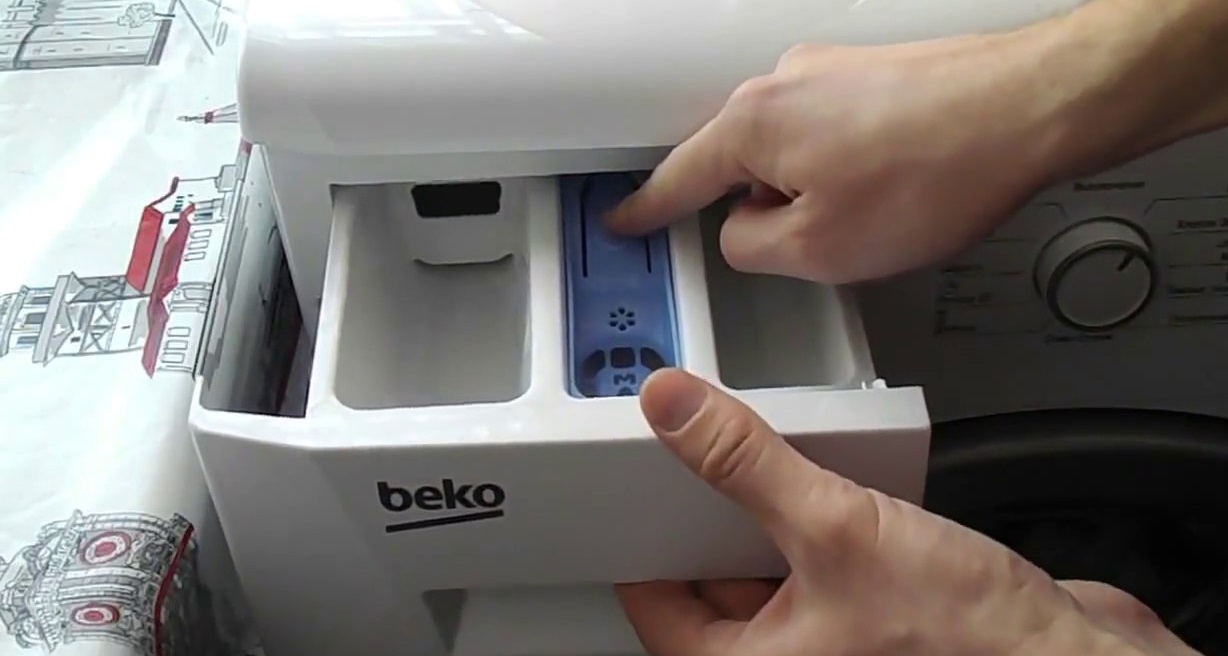
Interestingly, the container is reinstalled in a different way: there's no need to press the tab again; simply insert the part into the grooves and press down on the end. However, before reassembling, the dispenser must be cleaned of any foreign deposits and dirt.
Let's use lemon juice or vinegar
You can’t remove scale “dry” – attempts to scrape off the deposits can result in damage to the walls of the hopper. It is better not to experiment, but to soak the container in a special solution before directly removing the hardened deposits.The ideal option is to mix water with citric acid or vinegar.
Home remedies such as vinegar and citric acid are excellent for removing scale.
We proceed as follows:
- fill a deep basin with water heated to 60 degrees (boiling water deforms plastic, so you cannot increase the temperature);
- dissolve 250 g of lemon juice or 100 ml of vinegar in water;
- Place the container in the prepared solution and soak for 1.5-2 hours.

Citric acid and vinegar are effective at removing limescale, but they can't completely dissolve thick deposits. However, the deposits' defenses will be weakened, leaving only the remaining layers to be scraped off mechanically.
How to scrape off scale?
Soaking in lemon juice and vinegar won't go unnoticed: the limescale deposits will crack and partially dissolve. The deposits won't fall off completely, as the fossils are too thick. To complete the cleaning, manual work will be required.
It is strongly recommended not to scrape off scale with a knife, awl or scissors - this can irreparably damage the powder receptacle!
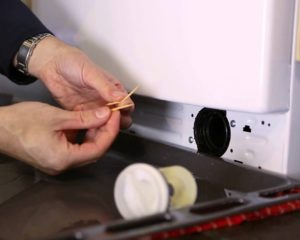
Hard deposits are scraped off with wooden sticks or splinters, sharpened with a knife. Cutters, like other sharp metal objects, are prohibited, as they can damage the powder receptacle.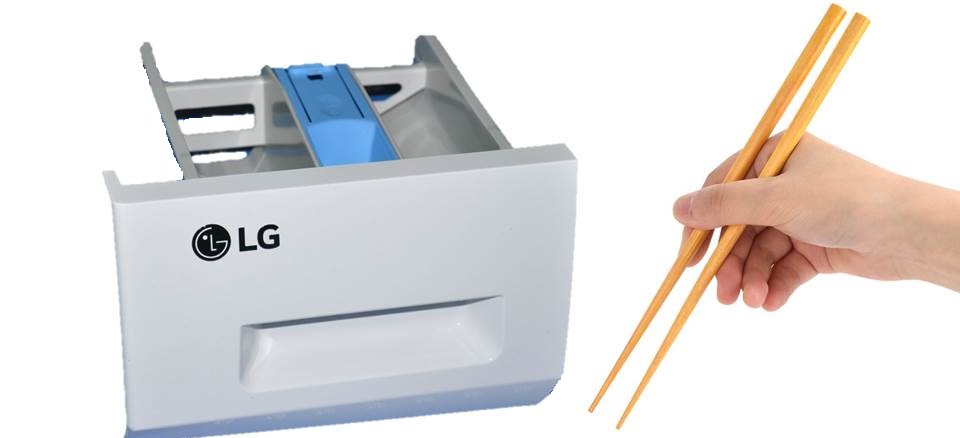
If the scale doesn't come off with the sticks, repeat the lemon soak. However, experience shows that one soak is sufficient: the deposits will give way and be removed from the walls of the dispenser without a trace.
Preventing contamination of the powder receptacle
It's much easier to prevent your washing machine's detergent drawer from becoming dirty than to deal with a thick layer of hardened detergent and limescale. The more often you clean your washing machine, the faster and easier it will be to remove scale from the walls of the dispenser. The main guarantee of cleanliness is regular maintenance of the machine.
Monitoring the condition of the powder receptacle is simple – just follow basic rules and recommendations.
- After each use of the machine, rinse the dispenser with clean water and wipe dry.
- Do not close the detergent drawer after washing to allow any remaining moisture to dry naturally and prevent mold and odors from forming.
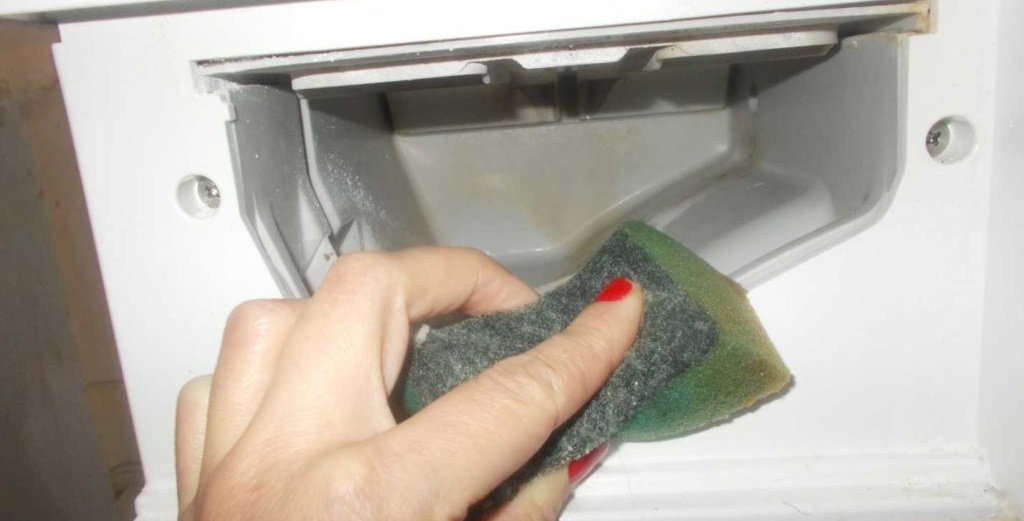
- Use high-quality detergents that will dissolve completely even in cold water.
- Monitor the dosage of powder (if the norm is exceeded, the powder does not have time to wash out of the compartment and remains hard).
- Conduct a comprehensive cleaning of the machine every 10 washes using cleaners and brushes.
Knowing how and what to clean the detergent drawer makes it easier to keep it clean and prevent serious buildup of detergent and limescale. The key is to clean the drawer regularly and carefully.
Interesting:

1 reader comment
Add a comment
Headings
Washing machine repair




For buyers




For users


Dishwasher




Thank you