
How to clean the inside of a dishwasher yourself
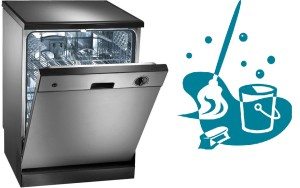 After using a dishwasher for six months or a year, people start wondering how to clean it. Over time, a dishwasher accumulates a significant amount of dirt (mostly food debris), which begins to decompose and emit an unpleasant odor. Add to this colonies of pathogenic microbes and mold, and you have a major breeding ground for infection, threatening you and your household. So how do you clean your dishwasher and keep it clean? We'll explain in this article.
Cleaning the dishwasher from food residue
According to the instructions, dirty dishes should be cleaned of food debris before loading them into the dishwasher, but users often either neglect this requirement or do so insufficiently. The consequences are easy to guess. Over time, food debris clogs the waste filter, drain grate, drain hose, door, and other internal components. If you're too lazy to thoroughly clean your dishes before each wash, you can skip this step, but keep in mind that doing so will require more frequent cleanings.
There is nothing complicated here. If you use your dishwasher every day, then a “general” cleaning should be done once a week. If you use the dishwasher less frequently, expect to need to clean it after 7-10 loads of dishes. So, how do you clean your dishwasher of food debris and other dirt that has accumulated inside?
- Turn off the water and unplug the power cord from the socket; the dishwasher must be completely de-energized.
- Open the door completely and remove the dish baskets and cutlery containers from the tank.
- Fill a deep basin or even a bathtub with water, dissolve dishwashing liquid, and soak the dishwasher baskets in the water. Soak for 30-40 minutes to thoroughly remove grease and dirt.
- Now let's move on to the dishwasher's tank. Inspect the filler holes. If there's any dirt stuck to them, carefully clean it out; you can use a thin wire for this.
- Take a rough cloth, an old toothbrush, and a little concentrated dishwashing liquid. Start cleaning the edges of the door and the inside walls of the tank, remembering to periodically apply a little more of the liquid to the cloth. Normal dirt (except mold stains) and grease deposits are perfectly removed this way.
Important! The interior walls of the dishwasher tank are made of stainless steel. However, do not use abrasive cleaners for regular cleaning. Use such chemicals only as a last resort.
- We remove the spray bar and wipe it clean with the same cloth and detergent.
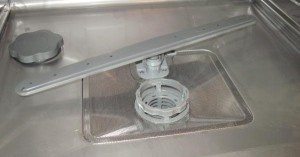 Next, unscrew the debris filter and remove the mesh; they also need to be washed thoroughly.
 - Now pour clean warm water into a bucket or basin, take a sponge and wash the walls of the tank to remove any remaining product, then put the mesh back in place and screw the debris filter back in.
- We take out our soaked dish racks, wash them thoroughly with a sponge, then rinse them in clean water and put them back. The "general" dishwasher wash is complete.
What to do if mold appears?
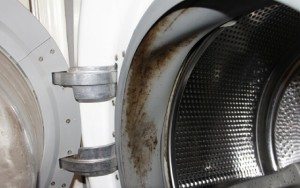
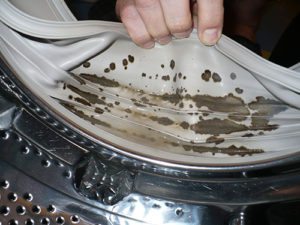
If you discover black mold stains while inspecting your dishwasher, you'll need the heavy-duty cleaning; simple cleaning with dishwashing liquid won't do. First, assess the extent of the mold infestation; the more extensive the mold, the more concentrated the cleaner you'll need. How can you clean mold from your dishwasher at home?
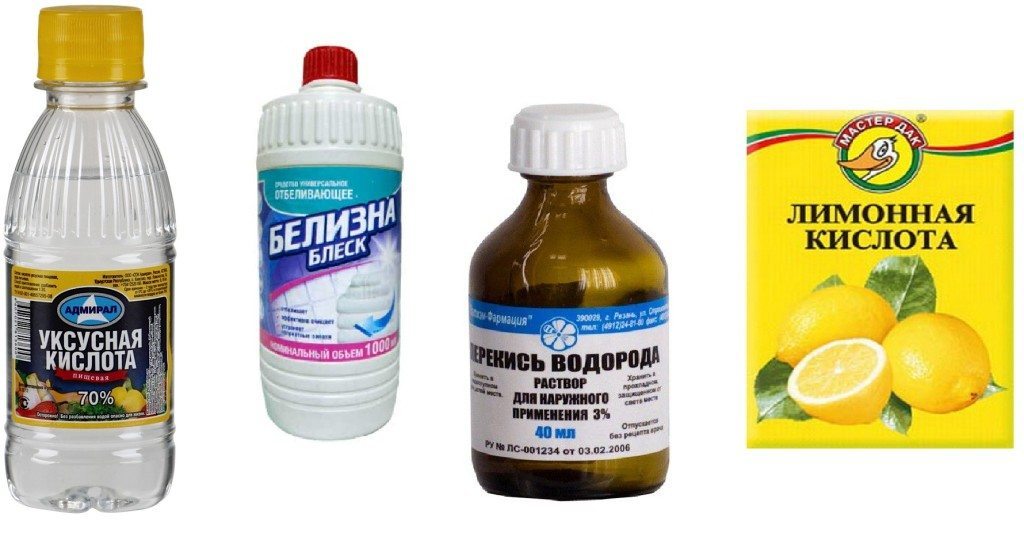
- We take a bottle of hydrogen peroxide from the pharmacy, bring it home, and generously soak a cloth in it.
- Then we carefully wipe the mold spots themselves and the areas around them with hydrogen peroxide.
- Let the dishwasher stand for 1.5-2 hours.
Please note: If possible, keep the dishwasher door slightly open to prevent mold growth.
- Take a bottle of the cheapest "Belizna" (bleach), soak a cloth in it, and wipe the mold-prone areas again. Remember to wear rubber gloves when handling the chemicals.
- Wait another 2-3 hours, then rinse the dishwasher with warm, clean water.
If this method doesn't completely eliminate the mold, either you misjudged the affected area or you need to repeat the chemical treatment, but leave it on longer, for example, for 5-6 hours. You can also additionally treat the mold stains with concentrated acetic acid.
Be careful! If mold has formed on rubber seals, membranes, or other sensitive materials, do not use vinegar essence. Stainless steel walls will withstand such treatment.
How to clean the outside of a dishwasher?
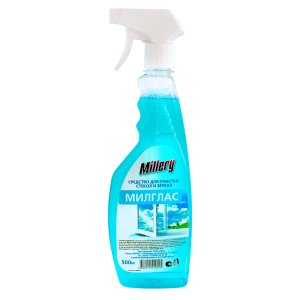 Technically, the condition of the dishwasher's exterior surfaces doesn't affect its performance, but that doesn't mean the exterior should be coated in dirt. The control panel of a Bosch dishwasher (or any other brand) should be cleaned with glass cleaner. In principle, this same product can be used to clean all exterior surfaces of the dishwasher, as it's easy to use and doesn't leave dirty marks.
If there are grease or other dirt stains on the outer surfaces of the dishwasher, you can pour a small amount of dishwashing liquid onto a cloth and apply it to the stains. After 10-15 minutes, wipe the product off the surface, taking with it any dirt. After this, you can treat the walls with glass cleaner and wipe everything clean.
Important! Do not use detergents containing alkalis, hydrochloric acid, or sulfuric acid to clean the exterior of the dishwasher. For example, do not use detergents such as "Belina," "Domestos," "Sparkling Bath," or similar products.
How to remove scale from a heating element without disassembling the machine?
Dirty deposits, mold, and grease stains aren't the only scourge of a dishwasher. Even if you keep your dishwasher spotlessly clean, it can still break down. Excessively hard water causes a layer of scale to form on the heating element, which, when it accumulates over time, can damage the heating element and send your dishwasher to a repair shop or even the trash.
To remove limescale from your dishwasher, you need to perform periodic preventative cleaning with citric acid. Persuasive advertisers urge consumers not to remove scale, but to prevent it by softening their water with special anti-scale products like Calgonit and others. People buy expensive capsules, sincerely hoping that their scale problem is solved, but then suddenly, during the wash cycle, it turns out that The water in the dishwasher does not heat up and it turns out that the heating element is broken.
Most dishwasher repair specialists strongly advise against using water softeners. These products are only effective for their manufacturers, as they generate colossal profits, and they won't protect your dishwasher from scale. It's sufficient to add 200 grams of citric acid to the detergent dispenser once every six months and run a wash cycle without any load. This is sufficient to remove a light layer of scale. And best of all, it's cheap and easy!
Please note! If you haven't cleaned your dishwasher with citric acid for several years and your water supply is hard, it's best to clean it 2-3 times, spaced 1-2 days apart.
To ensure your dishwasher lasts a long time and breaks down as little as possible, it's essential to properly care for it. It's important to clean it regularly to remove dirt, grease, and mold, and to descale it. This will ensure your dishwasher always smells fresh and your dishes come out perfectly clean.
Interesting:




10 reader comments
Add a comment
Headings
Washing machine repair




For buyers




For users


Dishwasher




What nonsense.
The washing machine is seven years old, and I've never washed it. It's spotless! I wash dishes in it every day, and I clean the inside of the machine too. I never pre-soak dishes or thoroughly scrape off any food residue (I'll throw out anything large, like banana peels or eggs, of course).
Once every 3 months I add salt, the filter is nearby, if something like a fish bone or a cherry or a chicken bone gets stuck in it, I take it out... I repeat, once every 3 months, why bother going there more often?
Mold? Where is it coming from??? Hello, everyone, to prevent mold from growing, you should leave the washing machine door slightly open if you don't use it every day (if you do, mold won't grow... it's too hot for mold at 60 degrees every day). The same goes for the washing machine... that is, dry the machine itself after washing and cleaning.
I don't have any mold in my washing machine either, and I never have. I still open the door a crack. You never know. My Indesit doesn't need excess moisture. It definitely needs cleaning. Not often, but it does.
I also leave the door slightly open, because that's what the instructions say. There's even a special drawstring on the door hinge that automatically locks the door open just a finger's breadth (some stoves have these too). Before loading, I still use the quick method of cleaning dirt—spraying it with hot water from the shower head. And never leave any food residue in the filter (no bones, no flakes). In general, it's best not to delay washing and don't let dirty dishes dry. If you're having a large meal, immediately spray the used dishes with a jet of water and put them in the dishwasher, and when they're full, turn them on.
I completely agree with the previous comment; in general, it’s better not to have a dishwasher, or not to use one.
You need to open the car after washing! Use your brain! If moisture can't escape, it will spread everywhere... even in your head!
We've never left the door open and there's no mold. The dishwasher is 6 years old.
This is my second dishwasher, I've been using them for about 20 years now. I wash the filter once a month and use a special cleaner every six months, especially since it's inexpensive (starting at 150₽). It has a complex that fights scale, grease, odor, and more. I never leave the door open, and I've never had any mold. After drying, both the dishes and the machine are dry! I use it every day. It's a Bosch dishwasher.
Here's another way: periodically run the car idle.
My washing machine is 10 years old, and I started washing it with white streaks. Cleaning it didn't help.
I don't understand the hassle at all if there's a special cleaning product. Especially since it's inexpensive. Maybe we could make homemade dishwashing tablets? Then it's easier to wash the dishes by hand.