
How to clean the rubber in a washing machine drum
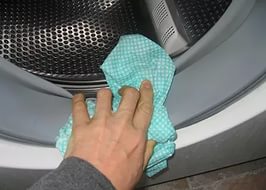 A washing machine is a perfect breeding ground for germs. If it's not cleaned promptly, it will develop an unpleasant odor, mold stains, and scale deposits on the internal components. While cleaning the outside of the machine to give it a nice appearance, many homeowners forget about the rubber seal between the drum and the door. It also needs cleaning. How and what to clean the seal will be discussed below.
Selecting a cleaning product
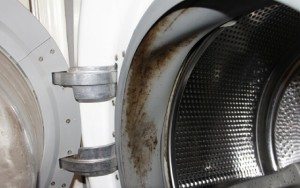
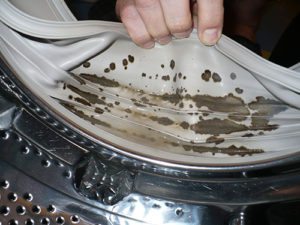
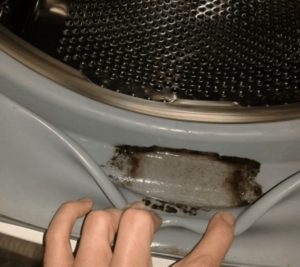
After washing, water remains in the rubber seal. If left standing for a long time, this water can emit an unpleasant, musty odor. Furthermore, the moisture can cause mold to form, appearing as black spots. To remove mold from the seal, homeowners recommend using the following products:
- chlorine-based products (Whiteness, Toilet Duck, Domestos, etc.);
- nail polish remover;
- copper sulfate.
When dealing with limescale buildup on your washing machine's rubber seal, it's best to use proven solutions. To remove it, you'll need:
- lemon;
- white vinegar;
- Antiscale.
Cleaning rules
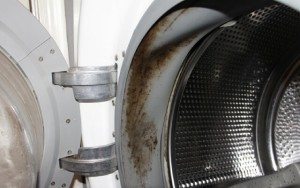 To prevent mold from developing in the drum of the washing machine and to prevent a rotten smell from appearing, it is necessary to keep the door slightly open. Also, after washing, be sure to rinse the powder tray to remove any remaining detergent. Wipe it with a dry cloth, and also wipe the slot where the tray is inserted. But let's get back to the drum rubber and tell you how to clean it.
- Use a damp cloth to remove mold and other deposits from the outside of the rubber.
- Bend back the edges of the cuff and wipe the inside, where mold usually grows.
- Soak a sponge in bleach or another chlorine-containing solution.
- Wipe the inside and outside of the rubber seal, as well as the drum surface, with a sponge. Pay special attention to the grooves of the seal, applying more product.
- Close the drum and leave the machine for half an hour.
- After disinfection, you need to run the rinse cycle to wash the drum and rubber from the detergent.
You can effectively clean the cuff from mold with a solution of copper sulfate., diluted at a ratio of 30 g per liter of water. Simply apply a small amount of the solution to the cuff, wait about 24 hours, then rinse with water and wipe with a dry cloth. You can run the machine on the "Quick 30" setting to thoroughly rinse away any remaining solution.
You should wash the elastic cuff and remove excess moisture after each wash. If you keep it clean, you won't even need to clean it. Even if mold does appear, you'll need to clean it much less often.
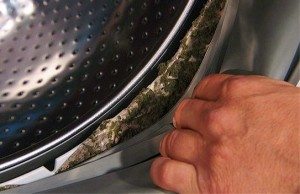 In case, When too much mold and debris has accumulated under the cuff, it will have to be removed completelyIt's not difficult to do this, the whole process is described in the article on how replace the cuff on the washing machine. This has its advantages, as it allows you to thoroughly rinse the rubber in a basin with plenty of water, then dry it and reinstall it. And if it's damaged, you can even replace it with a new one.
Complete cleaning of the washing machine
In addition to weekly and regular maintenance, your washing machine requires a thorough cleaning. To perform a thorough cleaning, follow these steps:
- descale the drum;
- clean the drum cuff;
- clean the hatch door;
- clean the drain filter;
- Rinse the powder tray.
Since tap water contains salt impurities, it causes scale buildup on the internal parts of the washing machine. Scale deposits on the heating element, the drum, and the seal. To prevent excessive scale formation, you can use water softeners., one of which is Calgon. However, even in this case, at least twice a year, you need to descale your washing machine. For this, many housewives use citric acid or a special product called "Antiscale".
To effectively descale your washing machine, add 100-200 grams of citric acid directly to the drum, then select the longest program with a water temperature of 60 degrees Celsius. You can also set an extra rinse to thoroughly remove any remaining limescale. After the program is complete, be sure to wipe the seal and ensure there is no limescale underneath.
Instead of citric acid, white 9% vinegar is used, but this is not entirely justified, because after such a wash, an unpleasant odor will remain.
Cleaning the door of your automatic washing machine from soapy water and other stains is also easy. Use any glass cleaner, and the door will sparkle again. As for cleaning the filter, it should be done as often as possible. After all, the filter can become clogged and cause problems with the washing machine.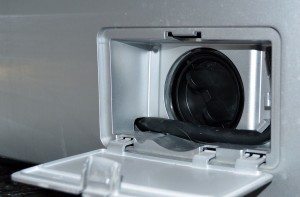
To clean the drain filter, you first need to unscrew it from the washing machine. Before doing this, unplug the machine and turn off the water supply. Then, open the panel or door at the bottom of the machine and locate the filter cover. Unscrew it counterclockwise and remove the filter. Be sure to place a cloth underneath, as any remaining wastewater will drain out. Rinse the filter under running water to remove any debris and dirt and replace it.
Therefore, when cleaning the rubber seals of your automatic washing machine, you'll need to clean both the drum and the detergent drawer. This maintenance will extend the life of the parts and the washing machine as a whole.
Interesting:
6 reader comments
Add a comment
Headings
Washing machine repair




For buyers




For users


Dishwasher




Thank you very much for the good advice!
Are you crazy, giving such advice? Chlorine and acetone corrode rubber. Then put "How to quickly kill rubber seals" in the article header.
How can I clean rust off rubber in the washing machine?
That's exactly what he wants: the faster the washing machine breaks, the more money he makes from the breakdowns. It's nothing personal—everyone has their own business. Some break things, others fix them, and still others (the advisers) connect the two.
Thanks for the advice!
Thank you so much for the advice