
How to clean the drain hose in an Indesit washing machine?
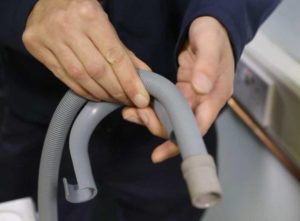 Indesit appliances most often break down due to clogs. Dirt buildup in the pipes, hose, waste filter, drain valve, or pump prevents wastewater from exiting the unit, causing malfunctions and machine shutdown. This can be an unpleasant sight, but often, cleaning the drain hose of your Indesit washing machine is all that's needed to resolve the issue. We'll explain when this is possible and how to do it correctly below.
Chemical cleaning
Natural blockages—scale, dirt, and soap scum—can be removed without disassembling the washing machine. The "tool" is chemicals added during the wash cycle that break down the blockage. The advantages are obvious: fast action, efficiency, and energy savings. This method can be used even if the warranty is still valid, as the integrity of the machine is not compromised.
Citric acid added to the dispenser instead of detergent will clean the hose perfectly.
To clean the hose and other parts of your washing machine, you'll need a suitable cleaning agent. These are available at hypermarkets and other retailers that sell household chemicals. An excellent option is citric acid, which easily combats limescale and disinfects the inside of the machine from mold and mildew. A pleasant “bonus” will be the citrus aroma that remains after its use.
Having decided on the type of cleaner, we begin cleaning.
- We turn on the machine.
- We check that there is no laundry in the drum and slam the hatch door.
- Pour 2-3 packets of citric acid into the powder container, dividing the dose into two main compartments.

- Select the highest temperature setting (for most Indesit models this is the Cotton 90 program).
- We set the minimum spin and start the cycle.
- After the cycle is complete, without opening the door, we turn on the second rinse.
- When the machine stops, open the door and wipe the glass and drum with a clean, dry cloth.
- We take out the tray by pulling it towards ourselves, wash it, dry it and return it to its place.
Many manufacturers of household chemicals for washing machines offer special cleaning compounds with a complex effect.
It's important to understand that cleaning with citric acid, baking soda, and other household chemicals is only effective for removing natural stains. If the stagnant water problem persists after this cycle, you'll need to take a different approach: disconnect the drain hose and clear the clog manually. Step-by-step instructions follow.
We remove the hose and clean it.
If dry cleaning proves ineffective, you'll have to resort to physical cleaning. It's simple: unhook the hose and thoroughly rinse by hand. But it's not as easy as it seems.
To remove the inlet hose, simply turn off the water and loosen the clamp, and to disconnect the drain hose, you will need to turn off the utilities and turn the unit on its right side.
To deal with the drain hose, you need to do the following.
- Disconnect the machine from all communications (electricity, water supply and sewerage).
- Move the unit away from the wall and carefully lower it onto its right side.
- Release the plastic latch that holds the hose to the rear wall of the housing.
- Loosen the clamp securing the hose to the drain snail fitting.
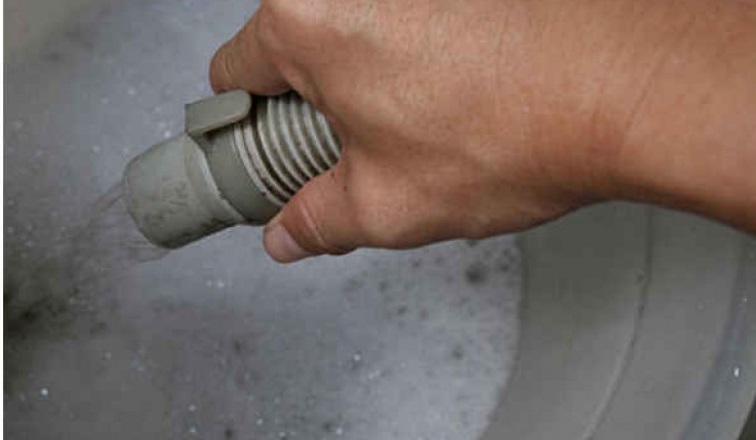
- Detach the hose from the snail.
- Pull the "sleeve" out of the washing machine.
Be prepared for the remaining wastewater to flow from the drain hose. Once the rubber is in your hands, you can begin cleaning.
We remove a strong blockage
There will be no difficulties or surprises when flushing the hose. It's quite simple: you need to prepare a container the size of the "sleeve", pour water heated to 70 degrees into it and add the detergent. In more detail, we proceed as follows.
- Carefully inspect the rubber surface for cracks.
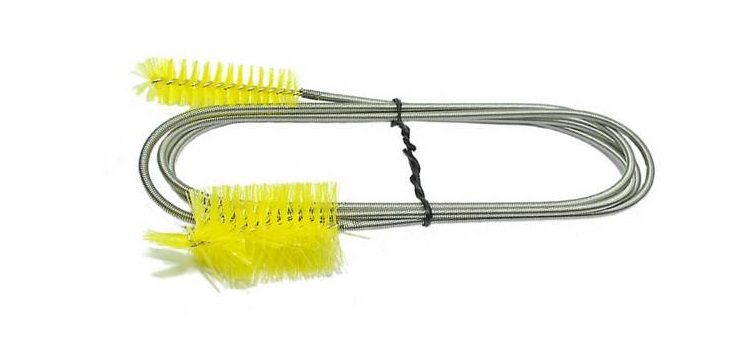
- We find a long wire and bend it into a “hook” at one end.
- We pierce and remove the blockage with wire.
- If the hook doesn't work, we proceed to soaking.
- We immerse the hose in a basin, fill it with 70-degree water and an aggressive cleaner (for example, a grease remover for a stove works great), and leave it for 40 minutes.
- Prepare gloves and a sponge.
- We carefully wipe the walls of the hose with a sponge, rinsing it under strong pressure of water.
- Having threaded a sponge onto a wire “hook”, we clean the hose from the inside.
- Leave the sleeve for another 20 minutes without water or cleaning agent.
- We treat both sides with a sponge again, and then rinse thoroughly under the tap.
- Wipe the rubber with a dry, clean cloth and leave to dry.
- We connect the hose to the snail fitting, tightening the clamp.
- We return all previously removed elements to their places, remembering about tightness.
- We start a test wash (select the fastest cycle or rinse).
There is also an express option for cleaning the hose. We attach the free end of the hose to the tap and turn on the hot water at a pressure close to maximum. During this type of washing, stretch and compress the rubber with your hands. If dirt and deposits come out, and an unpleasant odor appears, then the cleaning is successful.
What can I do to prevent blockages?
Blockages are easy to overcome, but it's much easier to prevent them from happening in the first place. Moreover, clogged hoses are often caused by natural debris, which can be easily avoided with proper operation. Just follow a few basic rules for using your washing machine:
- check all items loaded into the washing machine for foreign objects and hair caught in the lint;
- clothes with zippers should be fastened and turned inside out;
- Shoes, bras and underwear decorated with metal fittings, rivets, studs and beads should be washed in special protective bags;
- use water softeners if your water supply is too hard;
- regularly, at least once every 3-4 months, carry out a comprehensive cleaning of the machine, running a cycle with lemon juice or another similar cleaner;
- Periodically clean the debris filter and check the drum for stuck objects.
It is recommended to use only high-quality detergents suitable for the selected washing mode, otherwise the powder will not dissolve and will settle on the walls of the hose and drum.
If you follow these simple rules, you can forget about clogs. The main thing is not to put off cleaning the drain hose, otherwise the problem will worsen and make it more difficult for the water to flow.
Interesting:


Readers' comments
Headings
Washing machine repair




For buyers




For users


Dishwasher




Add a comment