
Cleaning a washing machine with washing soda
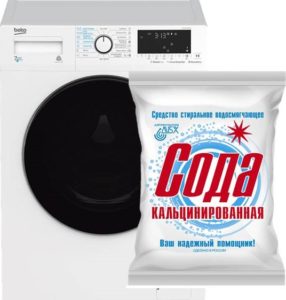 An automatic washing machine requires constant maintenance. If basic hygiene requirements are not met, over time the detergent drawer will become dirty, mold will form on the seal, the drain filter will become clogged, and individual parts will become coated with limescale. To prevent this, it's essential to regularly clean and ventilate the machine. You can use specialized household cleaning products available in stores or resort to proven, traditional methods. Let's look at how to clean a washing machine with washing soda and what its benefits are.
Is washing soda good?
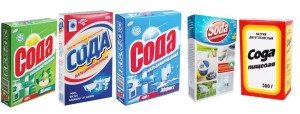
Sodium carbonate is a powder that is used by housewives for various purposes. Washing soda is used for washing clothes, cleaning plumbing fixtures, removing blockages, fighting limescale, and even washing tiles. Therefore, there is no need to buy expensive household cleaning chemicals; an inexpensive and time-tested product will be no less effective.
To understand why baking soda is so effective at removing dirt from a washing machine, you need to know what exactly is "dirtying" the machine. Some users don't understand where debris comes from, where dirt accumulates, and why limescale builds up. It's also unclear why the machine may emit an unpleasant odor, even though it seems to be washing ordinary items.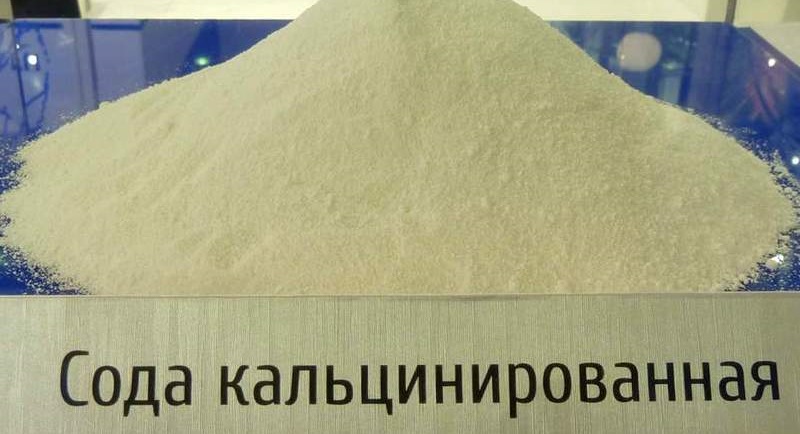
The culprit is the water used to wash clothes. Very rarely do users install a cleaning and softening filter before their washing machine. In most cases, the system is fed with hard tap water. Scale buildup on washing machine components is caused by salts, impurities, and minerals, which are present in large quantities in the liquid. This explains why limescale forms on the drum and heating element. The odor is caused by bacteria that colonize the appliance.
If you do not take timely measures to remove scale, this may lead to the failure of the washing machine.
Washing soda has a softening effect, which is especially important for fighting limescale. Sodium carbonate also kills harmful microorganisms, easily dissolves dirt, and has a whitening effect. This makes it a versatile product and ideal for washing machine maintenance. Baking soda protects equipment from contamination and has a disinfecting effect, thereby extending the life of the equipment.
Helper in the fight against scale
Limescale often forms on the washing machine's dust filter. This part is very easy to clean using washing soda. Removing the filter element from the machine's body is simple; any housewife can handle this task. Here's the procedure:
- turn off the power to the machine, turn off the water supply tap;
- remove the lower false panel covering the filter, or open a special protective hatch (depending on the design of the washing machine);
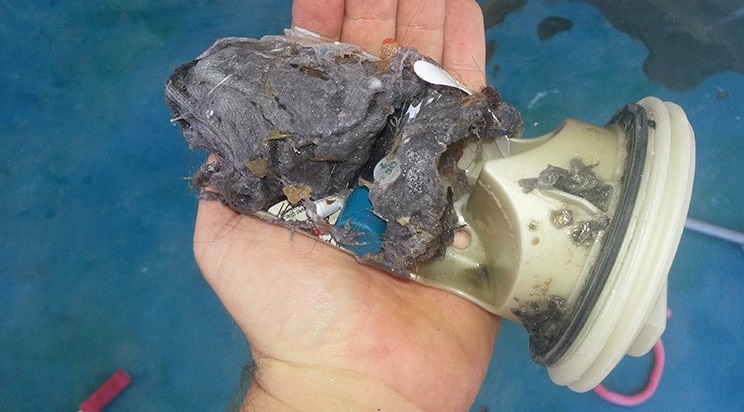
- Place a shallow basin under the machine body; you will need it to collect the liquid that flows out when you unscrew the plug;
- cover the floor around the equipment with dry rags;
- Unscrew the plug halfway, drain the water into a container, and remove the filter completely.
Next, you can begin cleaning. There are two ways to clean the debris filter with sodium carbonate:
- Add 4 tablespoons of baking soda to 1 liter of water, stir, and soak the filter element in the solution. Wait until the residue "falls off" the part, then rinse the filter and wipe with a dry cloth.
- Remove scale manually: sprinkle the powder on the surface of the part and wipe off the deposits with a cloth. Then rinse the element in warm water and dry.
You should also wipe the walls of the hole where the filter is screwed in with a cloth soaked in the baking soda solution. Then, you can replace the filter element. Make sure the plug is seated correctly, otherwise the machine will start leaking during the first wash.
We clean the outside of the machine body
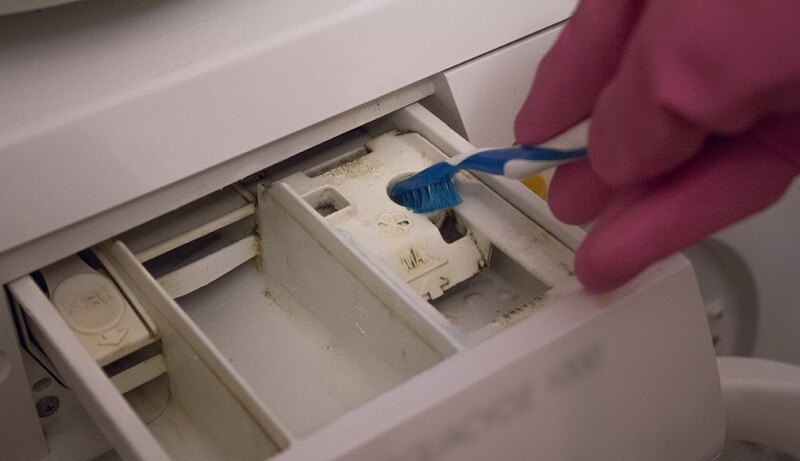
Washing soda can be used for cleaning the outside of your washing machine. Simply wiping the body, powder drawer, and seal with a damp cloth isn't always enough; more thorough cleaning is sometimes necessary. To thoroughly clean your "home helper," you'll need:
- toothbrush;
- soda ash;
- liquid soap or dish soap;
- a liter of clean water, temperature 20-25°C.
First, prepare a cleaning solution. Add 100 ml of dishwashing liquid to water and 100 grams of baking soda. Once the ingredients are thoroughly mixed, you can begin cleaning the appliance. Wipe the appliance's cabinet walls with a cloth soaked in the solution, and scrub the hatch and seal with a toothbrush. Once finished, wipe the appliance with a clean, damp cloth, then dry it.
Washing soda can help clean the drum and other insides of your washing machine.
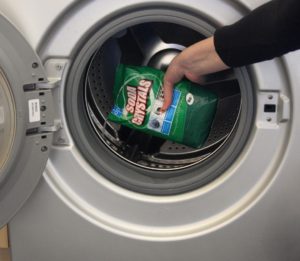
To clean the inside of the machine and descale the heating element, you'll need one packet of baking soda. Pour the powder directly into the detergent drawer. Any excess that doesn't fit into the dispenser should be placed into the drum.
Next, run a quick wash cycle and set the water temperature to at least 60 degrees Celsius. That's not all. Wait for the machine to fill with water, and before draining, press the pause button. Let the washing machine sit in this mode for about a couple of hours. This will allow dirt and grime to dissolve from the machine's components. Then, resume the cycle and complete it.
If you open the door after such a wash, you may find debris in the drum. Remove any deposits and debris, and check the cuff pocket, as loose pieces of scale often hide there. Experts recommend cleaning your washing machine with washing soda regularly, once a month. If the machine is used infrequently, once or twice a week, the period can be extended to two or three months.
Combine baking soda and vinegar essence
Vinegar, a common household item, is a great companion to baking soda. It will enhance the effectiveness of sodium carbonate and enhance its beneficial properties. To clean your washing machine, you'll need 9% acetic acid. To prepare the solution, you'll need: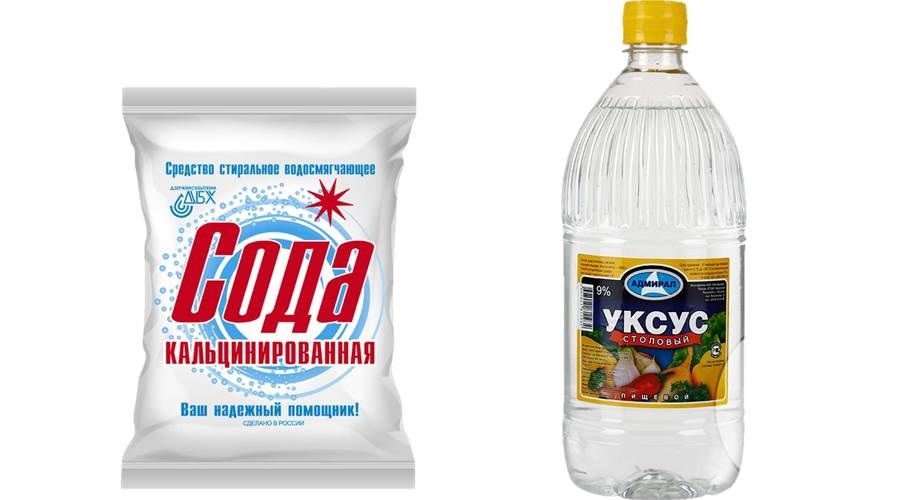
- a glass of water;
- 250 grams of soda.
You'll also need an abrasive sponge and two cups of 9% vinegar. Mix the washing soda with water, and pour the resulting solution into the detergent drawer. Before doing this, however, it's best to clean the tray itself by wiping it with a sponge soaked in the baking soda solution.
Once the detergent dispenser is clean, pour the resulting solution into it. Pour two cups of acetic acid (500 ml, to be precise) into the drum. Then run a high-temperature wash cycle for at least two hours. After this process, the inside of your washing machine will sparkle. If necessary, you can repeat this cycle twice in a row for maximum results.
Mix baking soda with citric acid
Citric acid is also often used to clean washing machines. While you can clean your machine with citric acid alone, some homeowners prefer to combine the two effective solutions.
Washing soda combined with citric acid gives amazing results when cleaning your washing machine.
For this procedure, you'll need 100 grams of citric acid and the same amount of sodium carbonate. Pour the mixture into the detergent dispenser. Then, select a long wash cycle with a water temperature of 60°C and start the cycle. The machine must be empty, so make sure there's no laundry in the drum.
These two powerful agents work together to dissolve limescale, kill bacteria, and remove dirt. They also effectively combat unpleasant odors. Even if the scale buildup is severe, regular cleaning of your washing machine with washing soda and citric acid will help gradually remove the deposits.
Interesting:

3 reader comments
Add a comment
Headings
Washing machine repair




For buyers




For users


Dishwasher




You shouldn't have skipped chemistry class at school. You can't mix alkaline and acidic solutions (such as baking soda and citric acid); they'll cancel each other out and have virtually no effect.
100% . Cannot be mixed.
I agree, colleague.