
How to clean a top-loading washing machine?
 Every washing machine requires maintenance. If you don't clean it, the walls of the detergent drawer will become coated with dirt and mold, debris will accumulate inside, bacteria will settle, and some parts will become coated with limescale. Furthermore, the drain filter will become clogged, and the appliance will start to smell. Let's look at how to properly clean a top-loading washing machine and which detergents to use for best results.
Machine cleaning instructions
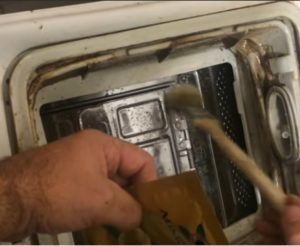
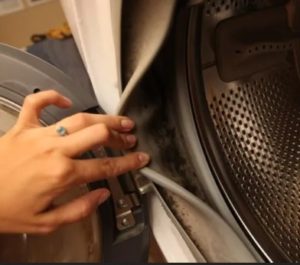
Housewives are often surprised that a washing machine, although clean on the outside, turns out to be dirty on the inside. At first glance, it's not obvious that the washing machine is long overdue for a clean, but upon closer inspection, there's no doubt. Open the lid on your vertical dishwasher and pull back the cuff – you can find mold and debris accumulations on the elastic band and underneath it.
Excessively hard tap water has a detrimental effect on your washing machine. Due to the high content of salts, impurities, and minerals, scale builds up on the heating element and drum.
If you don’t clean off limescale deposits in time, the machine will fail one fine day.
During washing, detergent particles stick to the walls of the dispenser. If you don't clean the drawer, it will gradually become coated with residue, and the detergent and fabric softener compartments will become a breeding ground for bacteria and germs. Therefore, remove the drawer from the housing—you'll definitely find dirt inside.
Remove the top of your "home helper"'s hatch; there's usually a surprise waiting under the lid in the form of dirt and mold. To clean a top-loading machine, you need to: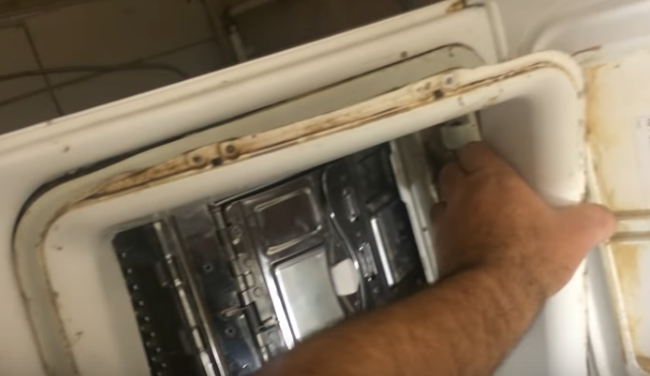
- take a packet of citric acid;
- Use a brush to apply lemon juice to problem areas under the lid, and treat the cuff, powder compartment, and conditioner compartment with the product;
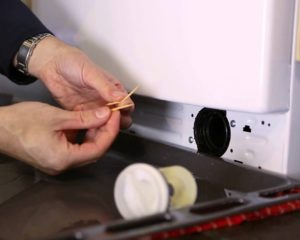
- remove the drain filter from the housing, rub it with citric acid, and put it back in place;
- treat the surface of the drum with lemon juice;
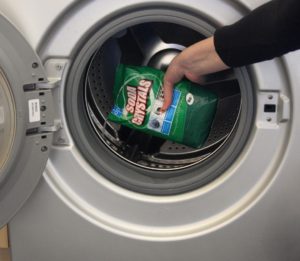
- pour 80 grams of lemon powder into the tray;
- close the machine, start a high-temperature wash program (which involves heating the water to 90°C);
- Pause the washing machine after about an hour of operation. It's important to keep the machine filled with hot water;
- leave the equipment in this state for 8-10 hours;
- Resume the program, wait until the cycle is complete.
So, using a couple of packets of citric acid, you can clean the inside of your washing machine. This solution will dissolve limescale, clean away dirt, kill mold, and combat mildew.
It is recommended to clean the washing machine with citric acid approximately once every two to three months.
How can I clean a vertical?
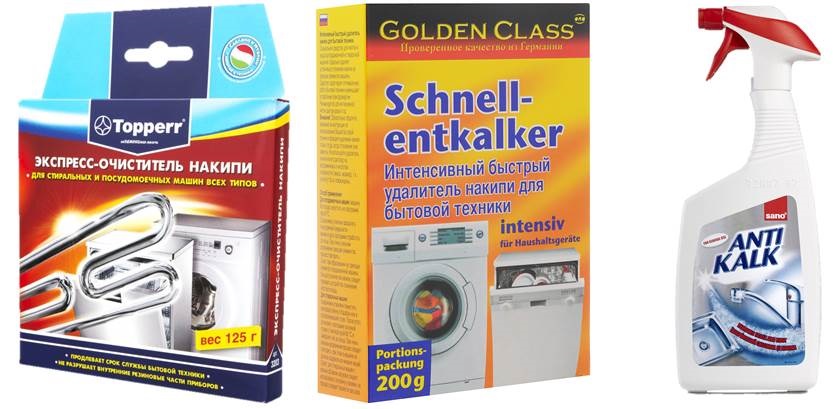
Special compounds have been developed to remove limescale deposits from the main components of washing machines and combat other contaminants. The detergent must be effective, safe for human health, and not harm some parts of the machine while cleaning others. Among professional chemicals, the following stand out:
- Topperr 3004 quickly dissolves limescale. This German-made product is suitable for washing machines and dishwashers and is inexpensive. It can tackle even the thickest layers of limescale. It effectively cleans the insides of machines and is recommended for use no more than three times a year.
- Schnell Entkalker is a fast-acting descaler made in Germany.
- Sano AntiKalk removes limescale and rust. This product prevents limescale buildup and has an antibacterial effect, which is essential when cleaning your washing machine.
- Magic Power is a universal German product that removes limescale deposits that have accumulated on the heating element, tank, and drum surface.
- Beckmann is a broad-spectrum product. It protects appliances from limescale, combats unpleasant odors, and removes dirt. While this product is effective for preventing stains, it is ineffective for removing stubborn deposits.
- Filtero 601. A powerful product designed to dissolve scale deposits on the heating element and other washing machine components. It comes in a convenient, single-use, 200-gram sachet. Recommended for use as part of a full wash cycle, no more than four times a year.
- Russian Doctor TEN and Belarusian Antinakipin are similar powders designed exclusively for limescale removal. They can be used to clean washing machines and dishwashers.
To ensure your machine works smoothly for many years, don't forget to take care of it.
Be sure to clean the machine periodically, washing away dirt and descaling the internal components. After washing, leave the lid open to allow the appliance to dry.
Interesting:


Readers' comments
Headings
Washing machine repair




For buyers




For users


Dishwasher




Add a comment