
Cleaning a Samsung washing machine from dirt
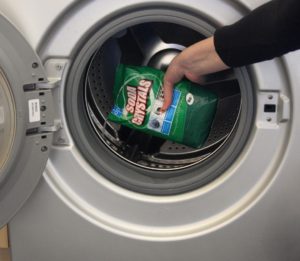 Everyone dreams of a washing machine that runs smoothly, completing cycle after cycle, and effectively removing dirt from clothes. But it's important to remember that your "home helper" also requires regular maintenance. It's essential to not only wipe down the machine's body, door, and drum, but also rinse the detergent drawer. Periodically, you'll need to clean the inside of the washing machine to remove any dirt. Let's learn how to properly care for your machine.
Why bother with cleaning?
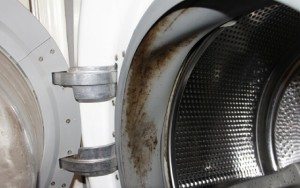
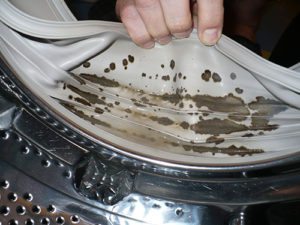
Although the main function of a washing machine is to provide the housewife with clean and fresh laundry, the condition of the equipment may be far from sterile. If the machine is not cleaned, dirt will accumulate inside and on the elements, and scale will form. Mold stains often appear on the drum seal, as the wet rubber is an ideal breeding ground for fungi. If you remove the heating element from the machine, you might be surprised to find a thick layer of deposits covering the tubular heating element.
Contamination on the internal elements of Samsung washing machines appears due to:
- excessive mineralization of tap water;
- use of aggressive low-quality detergents;
- improper operation of equipment;
- placing heavily soiled clothes in the drum (for example, overalls with stains from machine oil, clothes from gardening, etc.).
To restore your Samsung washing machine to its factory condition, a thorough cleaning is necessary periodically. A thorough cleaning begins with the appliance's exterior and ends with its internal components.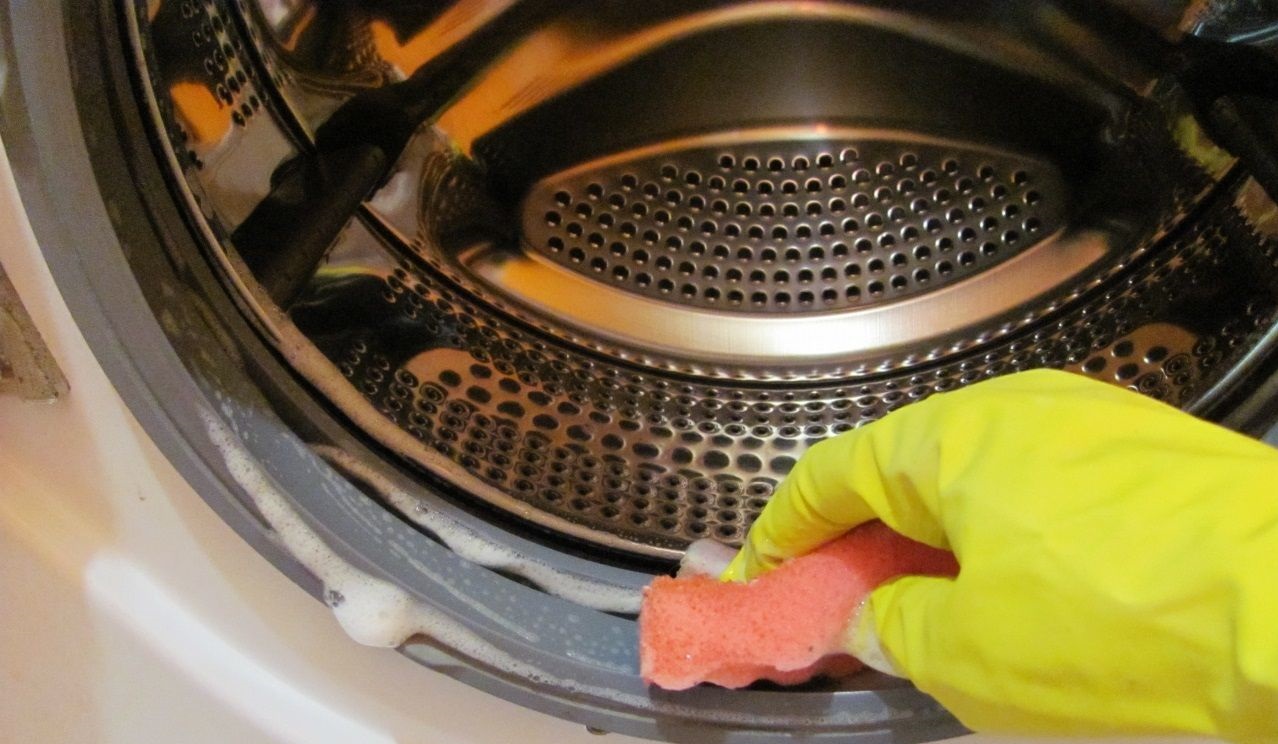
To wipe down the machine's exterior, a damp cloth or sponge is sufficient. Liquid stains, detergent residue, dust, and lint from the door will all be easily removed this way. Thoroughly cleaning the inside of the washing machine requires a bit of effort. But this effort will certainly be rewarded with flawless operation.
Keeping Your Heater Clean: Home Remedies
Quite often, a washing machine suddenly stops working due to a faulty heating element. If the appliance is not maintained, the heating element will become coated with a thick layer of scale after a while and fail. Tap water contains high levels of calcium and magnesium salts, which "stick" to the tubular heating element.
If there is no additional softening filter installed at the entrance to the washing machine, you should perform “preventive maintenance” of the washing machine once a month using special products.
You can purchase special solutions, such as Calgon, and add them to your laundry detergent during one of your washing cycles. This should be done every four weeks. These preventative measures will help prevent scale buildup on the heating element.
A cheaper way to combat salt deposits is to use citric acid. You need to pour lemon juice into the washing powder compartment, then start any high-temperature wash cycle. The principle is simple: the acid, dissolving in hot water, dissolves limescale, freeing the heating element and steel drum from limescale deposits. Calculating the required amount of citric acid is easy – about 30 grams of acid is required for a one-kilogram washing machine load.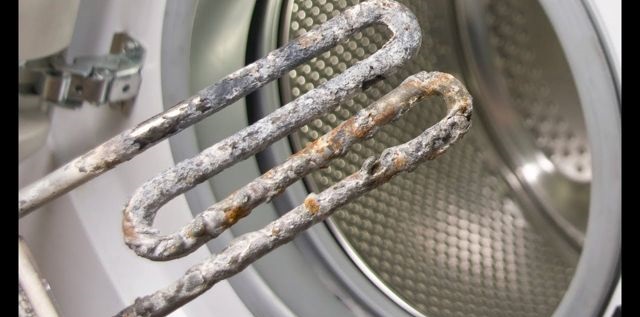
If it's been a while since you cleaned your Samsung washing machine, you can try this: pour citric acid into the detergent dispenser and run a wash cycle with a temperature of 90°C or higher. Halfway through the cycle, unplug the machine from the power outlet. Leave it overnight, then restart it in the morning.
There's one drawback to this cleaning method: if there's too much scale buildup, the loosened deposits can damage the machine's internal components. Furthermore, the loosened scale can become lodged in the drainage system, causing a blockage that can only be cleared by disassembling the machine.
There are alternatives to lemon juice that housewives use when cleaning SMA:
- Acetic acid. Pour one or two cups of table vinegar (9%) into the detergent dispenser. Next, select a high-temperature wash cycle that includes a soak. After this process, the machine may emit a distinctive "vinegar" odor, which can be easily eliminated with an additional rinse.
- Baking soda + vinegar. Two powerful ingredients combined will produce a stunning effect. Pour a solution (half a cup of baking soda diluted in the same amount of water) into the detergent drawer. Pour a cup of 9% acetic acid into the drum. Then, start the machine, selecting the hottest setting.
- Bleach. This product has long been used to disinfect washing machines. Some housewives prefer chlorine-based products.
However, when using caustic cleaners like bleach, you should be extremely careful. The effectiveness of such solutions is questionable—they won't remove limescale, but they can damage some parts of the washing machine, such as the seals. cuff or rubber gaskets, they can easily. Moreover, chlorine vapors are quite dangerous for humans.
Factory cleaning products
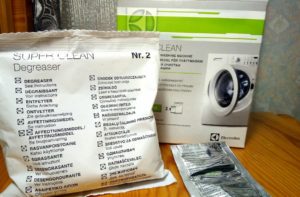
Today, in stores you can find a variety of household chemicals designed for the care of washing equipment. The cleaning agent for an automatic washing machine must be harmless to humans, safe for fabrics, and at the same time effective against scale and other contaminants.
Specialized solutions have an advantage over traditional home remedies: they're designed specifically for the specific design features of washing machines. Therefore, you don't have to worry about cleaning some parts while damaging others. Here's a ranking of effective and safe washing machine cleaning products.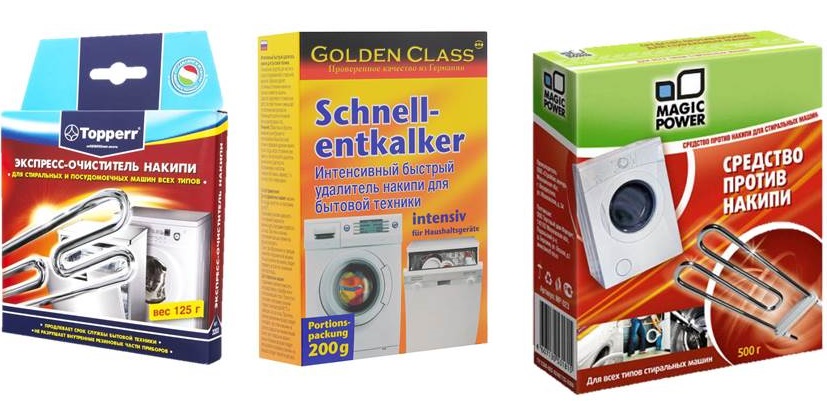
- Topperr 3004 is a German cleaner that effectively removes limescale. It can be used in both washing machines and dishwashers. It is recommended by Bosch.
- Schnell Entkalker is another German development. This powder is used for quickly cleaning the insides of automatic washing machines. It combats stubborn limescale deposits.
- Antikalk for Washing Machines is produced in Israel. The manufacturer markets it as a universal gel for preventative care of washing machines. It removes light deposits and has a strong antibacterial effect.
- Magic Power is a specialized cleaning solution for automatic washing machines. Available in two forms: powder and gel. It effectively removes deposits from the heating element, tank, and drum.
- Beckmann is a German development. Its formula protects against limescale and helps combat unpleasant odors. This multi-purpose product is more suitable for preventative maintenance than for removing heavy deposits.
- Filtero 601. Made in Germany, it's excellent at removing stubborn stains. The manufacturer recommends using it no more than four times a year for intensive cleaning of your appliances. It comes in very convenient packaging—a 200-gram packet is just enough for a single use.
- Doctor TEN (Russian manufacturer) and Antinakipin (Belarus). These powders are designed to combat scale. They are designed exclusively for removing deposits, but can be used not only in washing machines but also in dishwashers. They are inexpensive.
Many advertised products do not remove existing scale, but only prevent the formation of new plaque.
Therefore, when choosing a cleaning product, be sure to pay attention to its mode of action. For example, Calgon doesn't fight limescale; it only reduces the concentration of salts in tap water, thereby preventing scale buildup. However, it won't remove existing deposits.
It is easy to identify such compounds – they are used as an additional component, added to the tray along with washing powder. Intensive cleaning products for the internal elements of the washing machine are used separately, outside the laundry cycle.
Removing dirt from the drum
After the wash cycle, the drum walls remain damp, attracting dirt. Moisture also accumulates in the seal, which is prone to mold growth. This can lead to an unpleasant musty odor emanating from the drum.
To eliminate the "odor," run the washing machine without running and use specialized cleaning solutions. Alternatively, add citric acid to the detergent drawer. The gasket is cleaned manually. After washing, bend the edges of the rubber band and wipe the recesses with a cloth soaked in soapy water. Then, wipe the gasket dry.
If you notice mold stains on the seal, treat them immediately with either a special cleaner or a homemade "slurry." To make a cleaning paste, you'll need baking soda and water. Mix the ingredients in equal parts. Apply the slurry to the affected areas of the seal; you can also treat the drum surface with the mixture. Let the paste sit for two hours, then wipe it off with a damp sponge and run one of the wash cycles.
Drainage system
Small debris left in pockets, threads, hair, and wool lint—all of these things clog the machine's drainage system. It's important to clean the debris filter regularly to avoid problems with the machine. This should be done at least once every three months. If the machine is used daily, it's better to clean it more often.
Safety precautions must be observed: before starting to clean the drainage system, be sure to de-energize the equipment.
The drain filter is hidden behind a special panel located in the lower right corner on the front wall of the machine. It's a good idea to place a small container under the machine to catch any water that spills out when you unscrew the filter, and cover the floor with a cloth. The filter element unscrews from right to left. Rinse it under running water and wipe the hole created in the machine after removing it.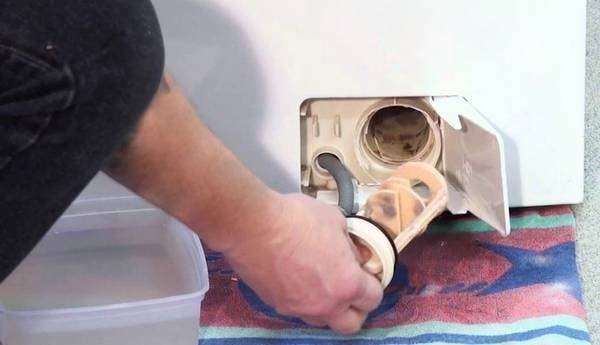
Be sure to clean the drain hose as well. After the remaining water has drained from the system, you can disconnect the hose from the trap or drain, and then from the machine.
Powder receiver
The detergent drawer is another element of the washing machine that constantly requires cleaning. It is better to wash the powder container after each use of the appliance. This will prevent the formation of plaque and mold on the walls of the cuvette.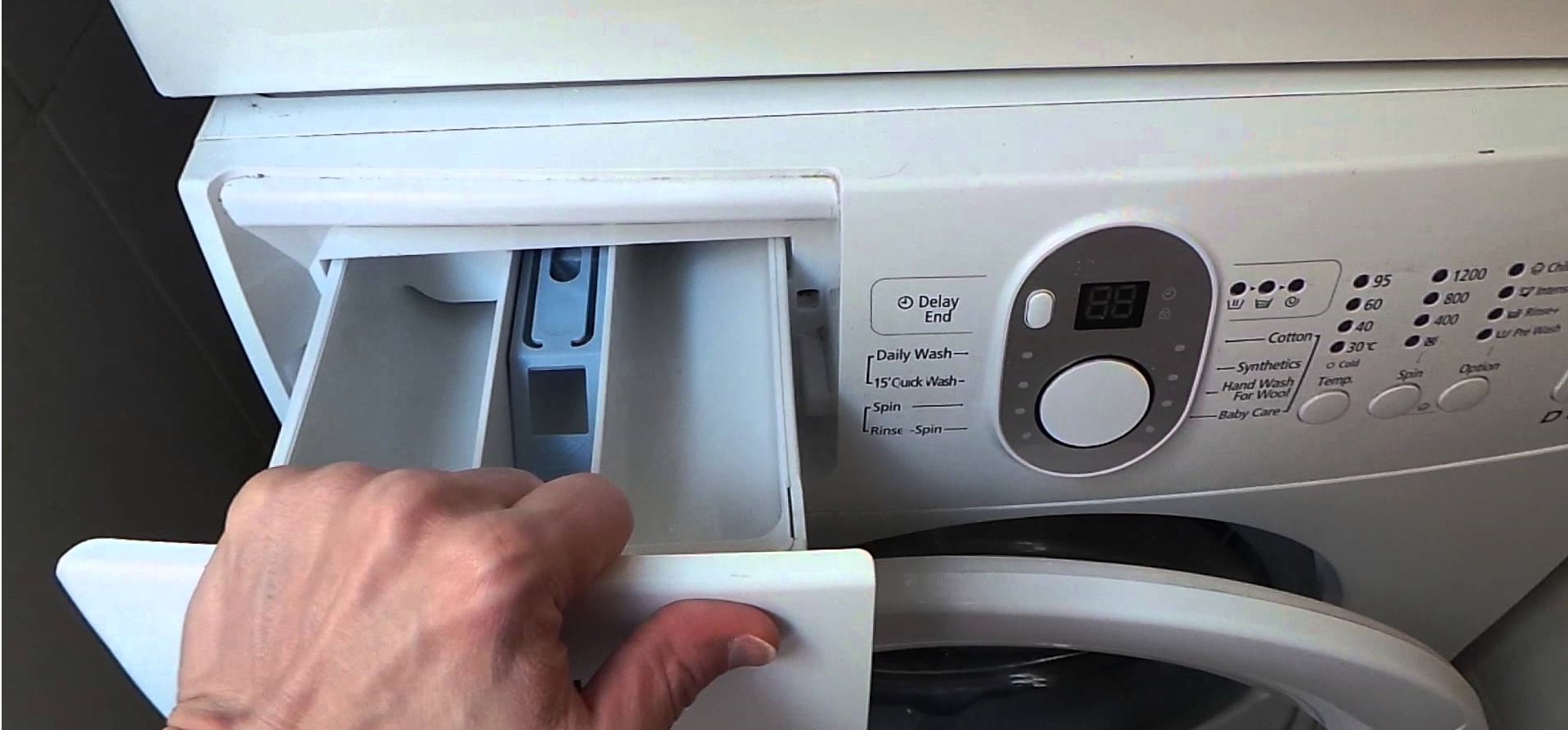
If the detergent drawer hasn't been cleaned in a while, use the "heavy artillery." You can treat the sections with a chlorine-containing solution. You can also remove plaque and mold from the dispenser using citric acid. To do this, pour a packet of citric acid into a basin, fill it with hot water, and place the drawer in the solution for several hours. Then clean the drawer with a stiff sponge or toothbrush. It's important to wipe the detergent drawer dry after cleaning and keep it open when the machine is not in use.
Interesting:

Readers' comments
Headings
Washing machine repair




For buyers




For users


Dishwasher




Add a comment