How to clean a washing machine with vinegar to remove odor?
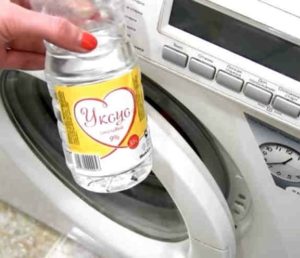
No homeowner will put up with a foul-smelling washing machine. Moreover, restoring its freshness is easy: just buy a special product. If professional cleaning products are too expensive, you can clean your washing machine with vinegar to remove the odor. Despite its pungent odor, acetic acid can effectively combat dirt and mold, eliminating unwanted odors. Now let's figure out how the product works and where to start.
Instructions for cleaning a washing machine with vinegar
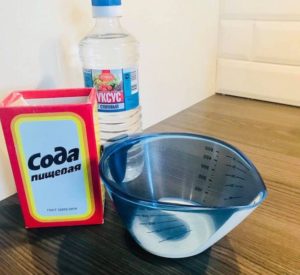
To clean a washing machine with vinegar at home, you will need time, desire, and the liquid itself. You need to purchase ready-made acetic acid in a 10% concentration or dilute the existing 70%: dilute with water in a ratio of 1 to 10Next, put on rubber gloves and begin cleaning.
To clean the washing machine, use 10% vinegar.
It is recommended to follow the following sequence:
check that there are no forgotten items in the drum;
pour 250 ml of vinegar diluted to 10% into the powder compartment (select the compartment for the conditioner);
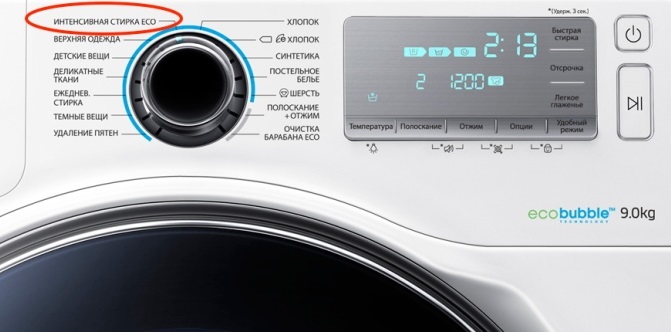
turn on the program with the longest duration (usually “Cotton”, “Intensive”, “Children's”);
set the highest possible temperature (from 60 to 95 degrees depending on the machine);
turn off the rinse to prevent cold water from being drawn in;
cancel spin;
start the cycle and pause the wash after ten minutes (if there is no such option, then you need to disconnect the washing machine from the power supply);
leave the machine with a full tank for at least 1.5 hours, giving the vinegar time to eat away the layer of scale and dirt;
After 1.5 hours, continue high-temperature washing for another 1.5-2 hours.
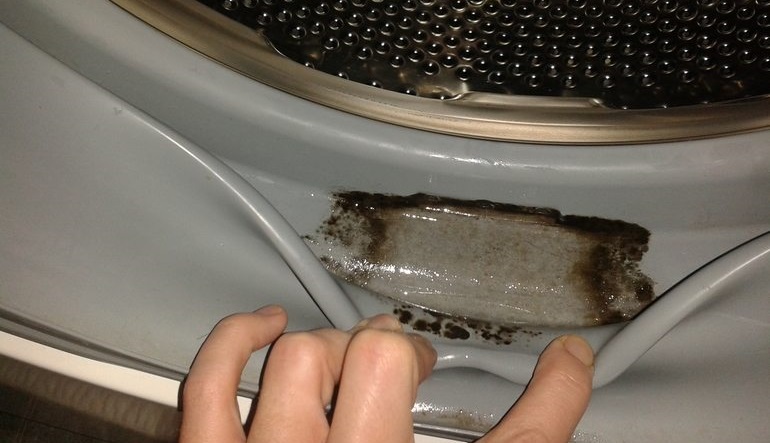
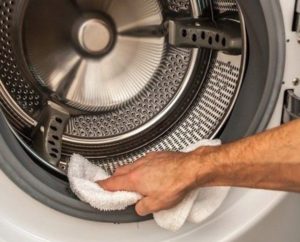
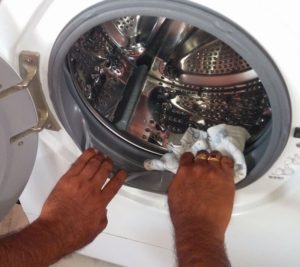
If you're cleaning your washing machine for the first time in a while, it's best to repeat the process at least three times in a row. It's a good idea to wipe the door seal with the remaining vinegar solution to remove accumulated dirt, film, and mold. Simply soak a sponge in vinegar and thoroughly clean the seal.
After this procedure, the machine will be descaled and will no longer emit unpleasant odors. All that's left to do is rinse the machine a few times and dry it to remove the vinegar vapors.
The Pros and Cons of Cleaning with Vinegar
Before adding vinegar to your washing machine, it's worth familiarizing yourself with its advantages and disadvantages. Like any other cleaner, acetic acid has its strengths and weaknesses. The former include its high effectiveness, affordability, and safety.
Thus, the composition of acetic acid is characterized by high chemical activity and disinfectant properties. Vinegar easily and quickly dissolves limescale deposits down to the smallest particles, washes away soap scum without leaving any residue, and kills mold, fungal bacteria, and other microorganisms. By the way, it, along with bleach, is often used in the sanitization of premises.
Vinegar is effective in combating mold, scale and unpleasant odors.
Vinegar effectively neutralizes the odor that often occurs with prolonged use of a washing machine. Moreover, the acid remains safe and harmless to both the appliance and humans, provided it is used correctly and in the recommended dosage.
The cleaner also has an advantage of being readily available. Firstly, it can be purchased at any nearby store. Secondly, the cost of the acid is significantly lower than that of professional cleaning products. Thirdly, most homeowners already have it on hand.
But vinegar also has several significant disadvantages:
pungent odor (removed by additional rinsing and airing);
aggressive effect on rubber and silicone components of the washing machine (the risk is minimal if you follow the dosage and do not use it too often).
Vinegar is a proven and effective solution that will help you clean your washing machine of mold and limescale without unnecessary effort or expense. The key is to follow the instructions strictly and not add acid to the machine more than once every 3-6 months. Twice a year is optimal.
Where does the stench and dirt come from?
If your washing machine constantly smells unpleasant, cleaning alone won't solve the problem—you need to find the source of the stench. Typically, diagnosing the cause isn't particularly difficult: it's unlikely there's some rotten fish left lying around under the machine. No, the unpleasant odors in the machine are caused by mold, debris, limescale, or a combination of all three. This "wealth" is caused by the following factors:
poor tap water (often the water in the tap is hard, contaminated and weighed down with impurities);
use of low-quality detergents (cheap powders dissolve poorly and settle inside the machine);
frequent use of the "Intensive Wash" program;
Irregular cleaning of the washing machine (so much dirt accumulates inside that the smell goes beyond the unit).
Scale is formed due to water that is too hard!
All this leads to the washing machine not only smelling but also performing poorly, and mold and mildew emitting harmful fumes. There's also a risk to the machine itself: a thick layer of scale causes the heating element to overheat, causing it to burn out and break. Rubber components, seals, oil seals, and hoses are also at risk, becoming damaged by bacteria and scale.
What if the hose stinks and it's not available in stock, the only way to order it is to Moscow, but I don't have time? Is it possible to clean the hose? It's rubber and can't be cleaned. What should I do?

 No homeowner will put up with a foul-smelling washing machine. Moreover, restoring its freshness is easy: just buy a special product. If professional cleaning products are too expensive, you can clean your washing machine with vinegar to remove the odor. Despite its pungent odor, acetic acid can effectively combat dirt and mold, eliminating unwanted odors. Now let's figure out how the product works and where to start.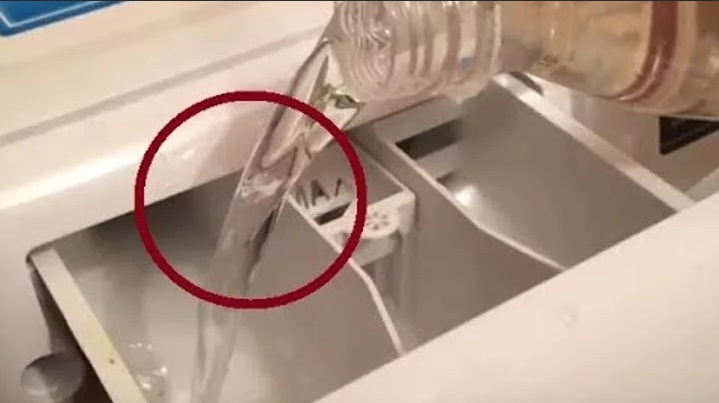















What if the hose stinks and it's not available in stock, the only way to order it is to Moscow, but I don't have time? Is it possible to clean the hose? It's rubber and can't be cleaned. What should I do?