
How to clean a washing machine's heating element
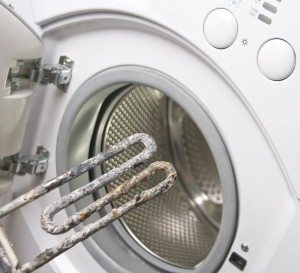
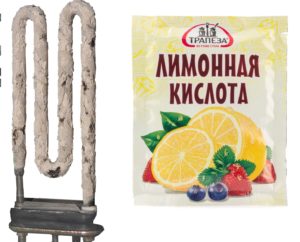 The heating element of a washing machine is a vital, yet vulnerable, component. Situated quite close to the rotating drum of an automatic washing machine, it slowly but surely becomes coated with layers of limescale deposits due to hard water. If the heating element isn't cleaned, over time the layer of scale will become so thick that it will begin to touch the drum walls. Once this happens (unless the element burns out first), failure is inevitable. Learn how to descale a heating element in this post.
Cleaning products
There are many products that, according to the manufacturer, can be used to clean the heating element, but not all of them are equally effective. Moreover, success largely depends on the cleaning method chosen. But let's not get ahead of ourselves. The main product that housewives use to clean the heating elements of their "home helpers" is citric acid. Incidentally, this is a good product, but far from the only one. You can find a lot of manufactured chemicals in stores.
There are many products on the market for cleaning the heating element of a washing machine, and all of them are more expensive than regular citric acid.
- Top House;
- Topperr;
- Magic Power;
- Zool;
- Frau Schmidt and others.
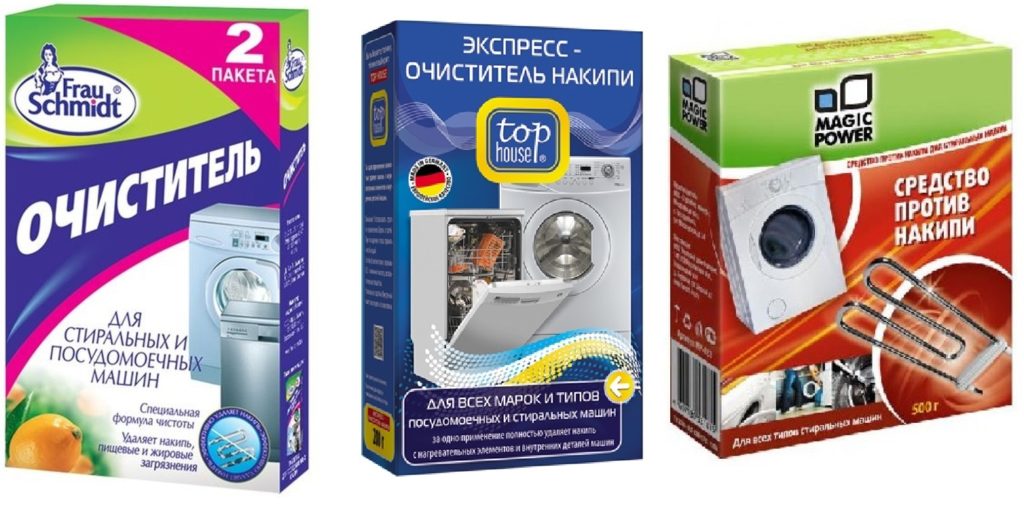
The principle of action of the above mentioned products is the same: cleaning with the help of active chemicals. They actively dissolve scale deposited on the heating element, gradually cleaning the heating element, and at the same time other parts of the machine from limescale deposits. There's one caveat, though. Many commercial descaling products contain citric acid. The question arises: why pay extra for an expensive foreign product when you can use regular, inexpensive citric acid and get the same cleaning results? The answer, in our opinion, is obvious. And for experienced homeowners, cleaning with citric acid has always been a top priority.
Some housewives sincerely believe in the miraculous properties of Calgon detergent, a widely known product thanks to aggressive advertising. They use it both to prevent limescale buildup and to clean the heating element of their washing machine. How justified is this?
There's no justification for this! Firstly, Calgon is not designed to remove limescale from washing machine heating elements, and this is stated by the manufacturer itself. Cleaning with Calgon is doomed to failure. Secondly, Calgon is not even able to soften the water enough to prevent scale from settling on the heating element. Our independent tests showed that in washing machines using Calgon, scale also formed and coated the heating element, albeit at a slightly slower rate. Ultimately, you'll spend many times more on Calgon than on subsequent repairs and replacements, although, of course, the decision is yours.
Calgonite and products similar in composition to Calgon are also considered ineffective. Collectively, they cost a considerable amount of money, but offer little benefit.
When there is little limescale
If you've never descaled your washing machine's heating element before, but your washing machine is new, you can safely use the chemical cleaning method without removing the heating element. To do this, follow a few simple steps.
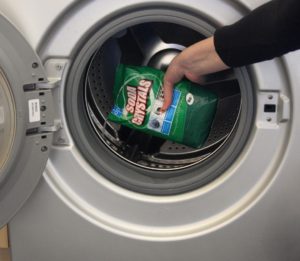
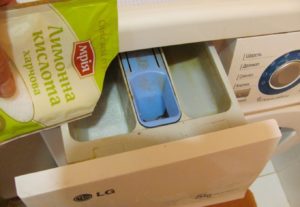 To clean scale from the heating element of the machine, take 100 g of citric acid and pour it into powder trayYou need to pour it into the main wash compartment.
- Close the tray and remove everything from the washing machine hatch, especially the dirty laundry.
- Set the washing program for at least 1.5 hours at a temperature of at least 600C, the lower the temperature, the slower the reaction, so in our opinion it is better to set 90-950WITH.
- Wait until the program is complete and that's it. You don't have to clean it with citric acid for 3-4 months; the heating element will be fine.
A small amount of limescale can be removed with lemon juice without any problem. But here it is important to repeat the procedures at least once every 3-4 months. Even if you think you have soft water and the heating element is not “suffering”, still carry out the above procedure - you will not regret it.
When the car heater is covered with scale
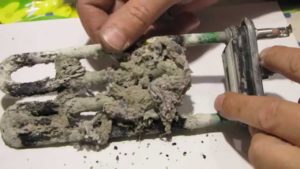 You can clean a small amount of scale from a heating element using citric acid or other safe chemicals, but what should you do if you suspect that the heating element is completely covered in scale? In this case, dry cleaning of the washing machine cannot be used.
The problem is that chemical cleaning in this case can be detrimental to both the part itself and the washing machine as a whole. When using citric acid, limescale particles will begin to flake off the heating element and end up in the pipes or remain in the drum, risking blocking the drum and contaminating your laundry. In short, such cleaning will do more harm than good, so what can you do to clean the part without damaging the washing machine?
Large pieces of scale can hang around in the machine for hundreds of washes and cause damage to your "home helper," causing it to break down.
There's only one solution: clean the heating element after removing it from the washing machine. This can be challenging, as not everyone is willing to disassemble the machine before it breaks down, and even then. Not everyone can remove this part themselves, although we believe it's quite simple. We understand the concerns and uncertainty of automatic washing machine users, but we also understand that if the heating element isn't removed and cleaned now, it could simply burn out in a month or two, forcing repairs at additional expense. What should we do?
- We determine the location of the heating element in your washing machine model. The easiest way to remove the heating element from a top-loading washing machine is through a service hatch located inside the drum. In front-facing models, the heating element can be located either behind the front wall of the case or behind the back.
- Removing the heating element from the washing machine. We've already covered how to remove the heating element from a washing machine for inspection or replacement in various publications on our website, so we won't repeat ourselves. If you're interested in more details, you can read the article Replacing the heating element in a Bosch washing machine.
- We take the part covered with limescale and rinse it under running hot water, while at the same time using our fingers we try to remove the pieces of scale.
Never attempt to remove the plaque with sandpaper, a wire brush, or, especially, scraping it off with a knife. This can easily damage the part, causing problems.
- Once we've cleaned the heating element and removed any large scale deposits, take a two-liter plastic bottle, cut off the top, and pour 3-4 tablespoons of citric acid into the bottle. Pour hot water into the bottle, stir the citric acid, and then place the heating element in the bottle.
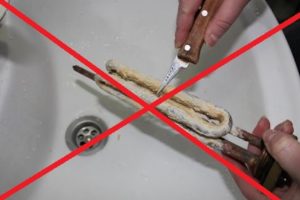 Now we just have to wait about a day. During this time, the concentrated citric acid solution will dissolve any remaining scale from the heating element, and the part will shine like new again. Rinse the part under running water, wipe it with a cloth, and you can reinstall the heating element. It's done.
Cleaning the heating element of an automatic washing machine isn't difficult, especially if you prevent it from becoming excessively coated with limescale. If this does happen, you'll have to remove and clean it manually, otherwise the heating element will simply burn out. Good luck!
Interesting:

2 reader comments
Add a comment
Headings
Washing machine repair




For buyers




For users


Dishwasher




Simple, accessible and understandable.
But they didn't tell me how to put the heating element back with the worn rubber seal 🙂