
How to choose a washing machine based on your parameters?
 When buying a washing machine, almost everyone faces the dilemma of choice. Any major retailer offers dozens of models from several brands, so how can you choose when you're faced with hundreds of "home helpers" that look virtually identical? There's only one solution: choose a washing machine by evaluating its features, and we'll explain how in this article.
What to focus on?
When you're heading to a home appliance store to choose a new washing machine, you should already have some criteria in mind. If you go in blind, you'll likely get short-changed by the salespeople, and you'll end up buying something the solicitous salespeople try to sell you, not what you want. I hate to speak ill of home appliance salespeople, but they're known to do this.
 It's much harder to deceive a well-informed buyer who knows what to look for and already understands a thing or two about washing machines. So, what should a potential washing machine buyer focus on? What features should they pay attention to? Let's start with the most important features, the ones that should be of primary interest to you.
- Price. The vast majority of potential washing machine buyers are not wealthy, and it's no surprise that they want to spend as little as possible on their purchases. The main thing here is not to get carried away; remember that not every expensive machine is worth the money and not every cheap washing machine is worth your attention.
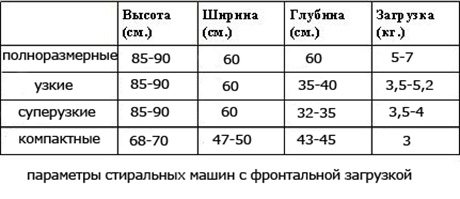
- Dimensions. Choosing a washing machine is often tied to its size. Buyers are willing to accept many shortcomings of the appliance, as long as it fits into a cramped bathroom or kitchen. In their minds, any size is better. washing machine in a small bathroom, than there will be none, and there is some reason for these considerations.
- Reliability. Washing machine reliability is a relative concept. Some judge reliability by the brand name, others by the model's manufacturing location, and only a small number consider objective criteria that can influence the overall reliability and longevity of their "home helper."
- Appearance. A washing machine's appearance is also a significant factor among the evaluated parameters. Modern users often opt for machines with unusual and attractive designs, without paying attention to their technical specifications.
- Brand. The choice of washing machine brand is largely determined by its popularity and advertising. It's not uncommon for a washing machine to be unremarkable, yet its models are constantly featured on TV screens, and consumers choose it because advertising information lodges itself in their minds against their will, often manipulating their buying behavior.
Please note! Washing machine brand is often associated with its place of manufacture, with the assumption that, for example, a Bosch washing machine must be assembled in Germany, meaning it's good. In fact, this isn't the case, as the country of manufacture can be anywhere.
 Stock. Quite often, sellers manipulate customers by organizing various promotions, sales, and bonus programs. Often, by offering a big discount, they try to push less-than-stellar or outdated washing machine models. The buyer, looking at the discounted price tag, becomes enamored with the prospect of buying a cheap washing machine and forgets about any other features, focusing solely on the hugely discounted price tag.
In addition to the basic washing machine specifications you should consider when choosing a particular model, there are additional parameters that can also be very important. It's impossible to ignore them, so let's first simply list them and then expand on them in the following sections of this article.
- Loading type.
- Drum design and capacity.
- The level of noise emitted during operation.
- Number and composition of functions and programs.
- Control features.
Where is the washing machine hatch?
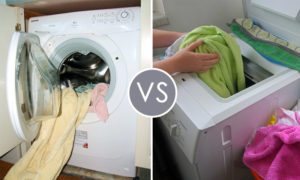
 All modern automatic washing machines can be roughly divided into two types: top-loading machines, in which the hatch is located on the top, and front-loading machines, in which the hatch is located in the front wall. For some, the issue of loading their future car may not seem important at first glance, but if you think about it, it is a very important parameter.
- If you're looking for a narrow washing machine to fit into a tight space like a closet or bathroom, a top-loading washer is a better choice, as its body is narrower than many side-by-side models.
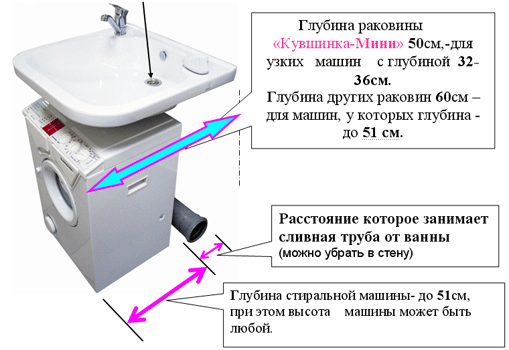
- A front-loading washing machine can be placed under a sink or countertop, while vertical machines are generally freestanding.
- Loading type is often tied to drum capacity and price. Top-loading washing machines are often more expensive than side-loading machines, and they also have a smaller capacity for a number of reasons.
- It's much more convenient to put laundry in top-loading machines because you don't have to bend over. On the other hand, if you choose a front-loading washing machine, you can place powders and various detergents on its top lid, like a shelf.
Please note! The location of the door greatly influences the appearance of the washing machine. Vertical machines often look plain, while front-loading machines can be a reflection of the ideal of technical aesthetics.
Let's look at the drum
If you have a large family and, consequently, need to do a lot of laundry frequently, you need a washing machine with a large capacity that can hold 8 kilograms or more of laundry at a time. A machine with a large drum is also necessary if you frequently wash bulky and large items, which, by definition, cannot be washed in drums with a 4.5-6 kg capacity. What do experts recommend?
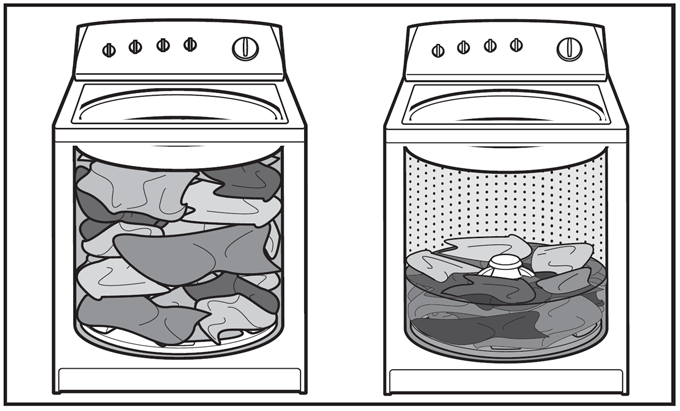
They advise that before choosing a particular model, you should calculate the composition of the items you wash most often and their quantity. In most cases, a drum capacity of 8 kg of dry laundry is sufficient – you can wash large items and, if necessary, a lot of small items.
Inspect and feel the interior surfaces of the drum. The cells and ribs should be smooth and smooth. If you encounter a steel or plastic burr during this inspection, do not purchase this washing machine.
Noisy or quiet?
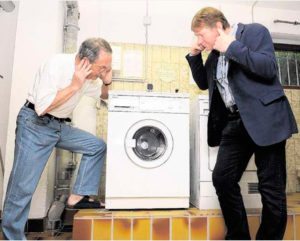 Many buyers want a quiet "home helper" so they can load their laundry and then run the wash cycle overnight. However, many models are too noisy to use at night. And some washing machines are so noisy that even using them during the day will frighten small children and neighbors, as they operate almost like a hammer during the spin cycle.
To avoid such a rattling machine and choose a washing machine that produces a normal amount of noise, carefully read the model description. Almost always, manufacturers indicate in the model description the noise level during washing and the noise level during spinning in dB. We will be interested in the noise level during the spin cycle, since at this time it is usually higher.
So, if the washing machine you're interested in produces more than 80-85 dB during the spin cycle, it's best to choose a different model, as normal spin noise is between 70-75 dB. It's better to find a model that produces 60-65 dB during the spin cycle, but in this case, it will likely spin at a low speed, which is also not good.
Be careful! Some unscrupulous washing machine manufacturers provide inaccurate information in their model descriptions, particularly regarding the machine's noise level during the spin cycle. If possible, it's best to listen to the washing machine in operation before purchasing it.
Functions and programs
Some people try to choose a new washing machine by considering the number of features and programs a particular model has. And as soon as they find the model with the maximum number of programs and functions, they buy it. Is this justified?
- Additional and unusual washing programs and features in a particular washing machine will cost you more money.
- The more functions and programs a machine has, the more complex its electronics are and the more likely it is to fail.
- Quite a few of the advertised features of modern washing machines are practically useless, but you'll have to pay a pretty penny for them.The question is why?
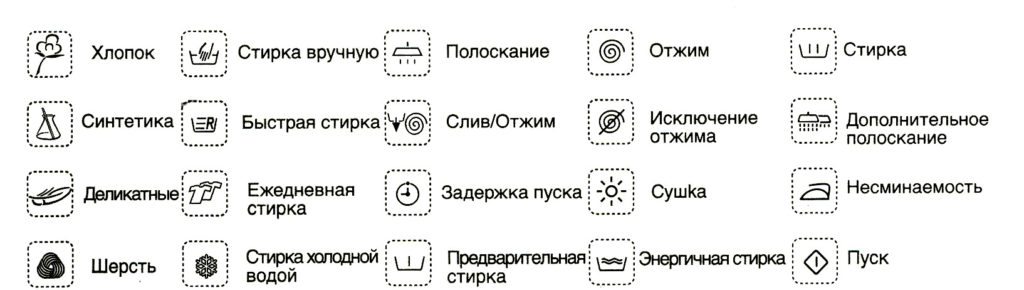
Our advice, in this case, is to carefully examine the features integrated into the washing machine model you're considering. Select only those you really need, and then, based on these features, choose your "home helper." In 95% of cases, the following washing programs and features are actually needed:
- quick wash (within 30 min);
- synthetics;
- quick wash cotton;
- outerwear;
- shoes;
- gentle wash;
- rinsing;
- spin;
- child lock;
- easy ironing;
- half load.
The effectiveness of a feature like Eco Bubble has not been proven, so in our opinion, there is no point in paying extra for it.
Control
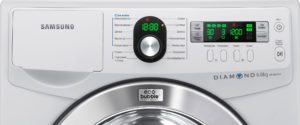 When choosing a washing machine, check how intuitive its controls are. Preference should be given to car models that have informative control panels on which each button and each selector is labeled in Russian. It would be great if the machine had a display that would accurately show the progress of the washing program; this would be very convenient.
Ideally, all available functions should be activated intuitively by the user. No complex codes or key combinations are required; this should only be present in exceptional cases. In this regard, Korean-brand washing machines are considered the most user-friendly, while Italian-brand washing machines are considered the least intuitive.
In conclusion, we've listed the parameters you should consider when choosing an automatic washing machine. If you have this information and the desire to understand the matter, you'll never be deceived by a sly appliance salesperson. Happy shopping!
Interesting:

1 reader comment
Add a comment
Headings
Washing machine repair




For buyers




For users


Dishwasher




Thanks for the information!!!