Connecting a washing machine to a faucet is necessary when the bathroom or kitchen has already been renovated, and cold water connection points for the appliance are not yet installed.
There could be many reasons. For example, you planned to connect the washing machine somewhere else, but your plans fell through, or you simply forgot to install a branch pipe for the washing machine and hid the pipes under the tiles. It doesn't matter now; the important thing is that there's only one other option left for connecting the washing machine—the faucet—and you need to find a way to implement it.
The pros and cons of such a connection
When there are no alternatives to connecting a washing machine to the water supply, there's little point in debating whether it's right or wrong—it has to be done anyway. However, we'll outline the advantages and disadvantages of this method of integrating a washing machine into the water supply to give you some additional food for thought. You might even decide that remodeling your bathroom is better than trying to hack something like this. Let's start with the disadvantages.
The adapter and hose coming from the faucet will somewhat spoil the appearance of the bathroom. Even if you choose more attractive adapters, it still looks far from presentable.
While your faucet used to sit flush against the wall and look neat, now, thanks to the adapter, it protrudes significantly, which is dangerous. Accidentally snagging such a faucet properly could cause the faucet to be torn out, with all the ensuing consequences.
If you have a "Soviet"-style faucet, meaning one made in Russia or even the Soviet Union, where the main mounting nuts hang on eccentrics rather than on the faucet itself, then connecting a washing machine this way will be difficult or even impossible.
If the pipes under the mixer were initially laid crookedly, and then during the normal installation of the mixer This curvature was compensated for with the help of eccentrics, it will appear again when you install additional taps and extension adapters. As a result, the mixer tap and extension will no longer fit properly, and you'll have to come up with something to ensure the crooked connection doesn't leak water and maintains pressure.
The advantages of connecting a washing machine to a faucet include its relative simplicity. No need to crawl under the sink or bathtub, break tiles, or damage pipes; the connection is quick, relatively simple, and convenient. It's also worth considering that if a problem occurs with the washing machine, you can quickly shut off the water supply, since the main faucet is located right next to the faucet.
In the same vein, it's easier to monitor the condition of your washing machine's inlet hose, as it's always in plain sight. You'll certainly notice any damage the moment you go into the bathroom to wash your hands.
Components and tools
Before attempting to connect your washing machine to the faucet, you'll need to stock up on basic components and the appropriate tools. Tools are readily available, as they're rarely needed. In fact, you can get by with just a screwdriver and an adjustable wrench. No drills, grinders, hammers, or pliers are required here; the connection is quick, neat, and quiet. No fancy components are required either; here's a list of what you'll need.
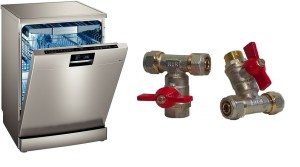
A 3/4" tee tap with two main outlets and one outlet for the inlet hose.
A 3/4 main extension corresponding in length to the tee taken.
Nowadays, you can easily buy plumbing kits that include a tee faucet, an extension cord, and a set of silicone gaskets, just right for connecting a washing machine to the faucet.
Silicone gaskets 3/4.
High-quality, expensive FUMka.
When purchasing a tee, make sure it matches your faucet. After all, there's no point in buying a gold-plated part and installing it on a chrome faucet, creating a "color and aesthetic disparity." The general logic, we hope, is clear; we won't go into details.
Progress of work
Once we've gathered everything we need for installation, let's prepare the work area. Some of you might ask: what's there to cook here? Maybe so, but if we were you, before wielding a steel adjustable wrench in the bathroom or kitchen, we'd remove all breakable objects that might end up within reach at an inopportune moment: glass shelves, breakable soap dishes, and toothbrush cups. Once all these fragile items are out of reach, we can get to work. Here's what to do.
We turn off the water.
Carefully unscrew the nuts holding the mixer.
We unpack our tee tap with an extension and inspect the parts. If the outputs of these parts are already equipped with rubber or silicone gaskets, then there is no need to insert anything additionally, If there are no gaskets, then take 3/4 silicone gaskets and insert them into each outlet.
We put the mixer aside and wrap FUM tape around the joints.
The FUM must be wound correctly, firstly against the thread, and secondly, moderately, without excess!
We screw on the tee tap so that the shut-off valve is positioned nicely and conveniently, and the hose outlet is directed downwards.
Screw in the extension. When screwing these components in, be careful not to overtighten them to avoid damaging the gaskets.
Now we very carefully screw our mixer to the tee tap and extension.
We connect the inlet hose of the washing machine to the tee.
We turn on the water and make sure that the connections are sealed.
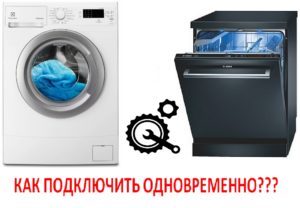
To check the operation, you will need to open the cold water tap and simultaneously start the washing machine. Keep in mind that when the washing machine fills the tank with water, the pressure in the mixer will drop slightly, but this is not such a big problem, especially since it will only last for a short time. There are other options for connecting a washing machine, especially if you need connect the washing machine and dishwasher at the same time, you can read more about this in the article of the same name on our website.
In summary, connecting a washing machine directly to a faucet isn't particularly difficult, but we do recommend paying attention to the quality of the components. Use only the highest-quality gaskets, tees, and extension cords to avoid unpleasant incidents like flooding your neighbors. Good luck!

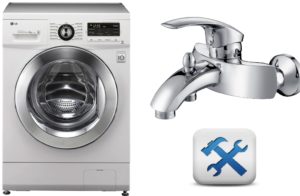 Connecting a washing machine to a faucet is necessary when the bathroom or kitchen has already been renovated, and cold water connection points for the appliance are not yet installed.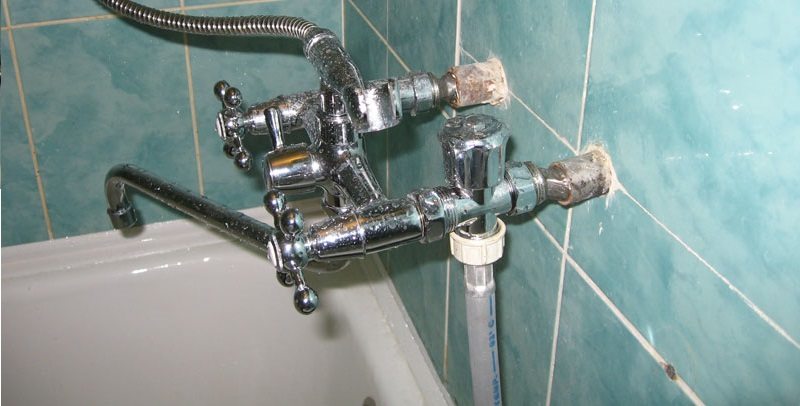
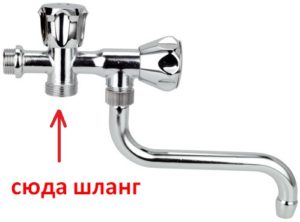 This curvature was compensated for with the help of eccentrics, it will appear again when you install additional taps and extension adapters. As a result, the mixer tap and extension will no longer fit properly, and you'll have to come up with something to ensure the crooked connection doesn't leak water and maintains pressure.
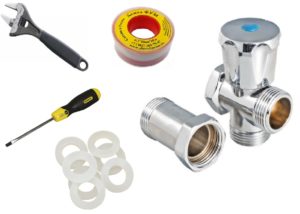 Before attempting to connect your washing machine to the faucet, you'll need to stock up on basic components and the appropriate tools. Tools are readily available, as they're rarely needed. In fact, you can get by with just a screwdriver and an adjustable wrench. No drills, grinders, hammers, or pliers are required here; the connection is quick, neat, and quiet. No fancy components are required either; here's a list of what you'll need.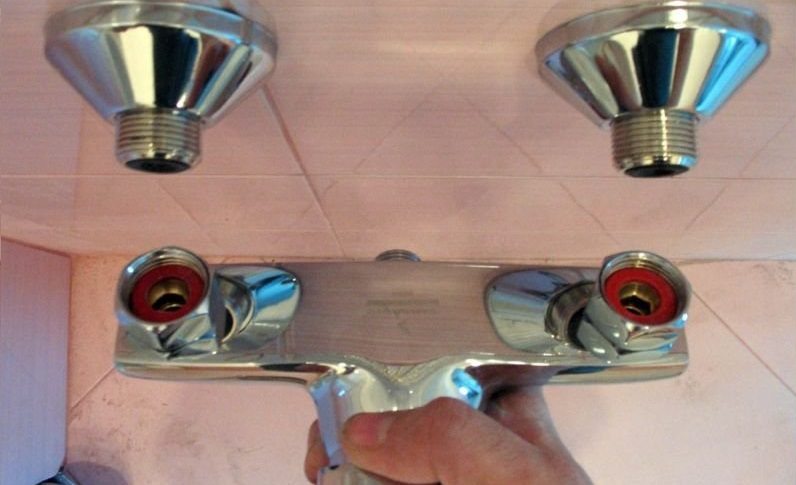














Add a comment